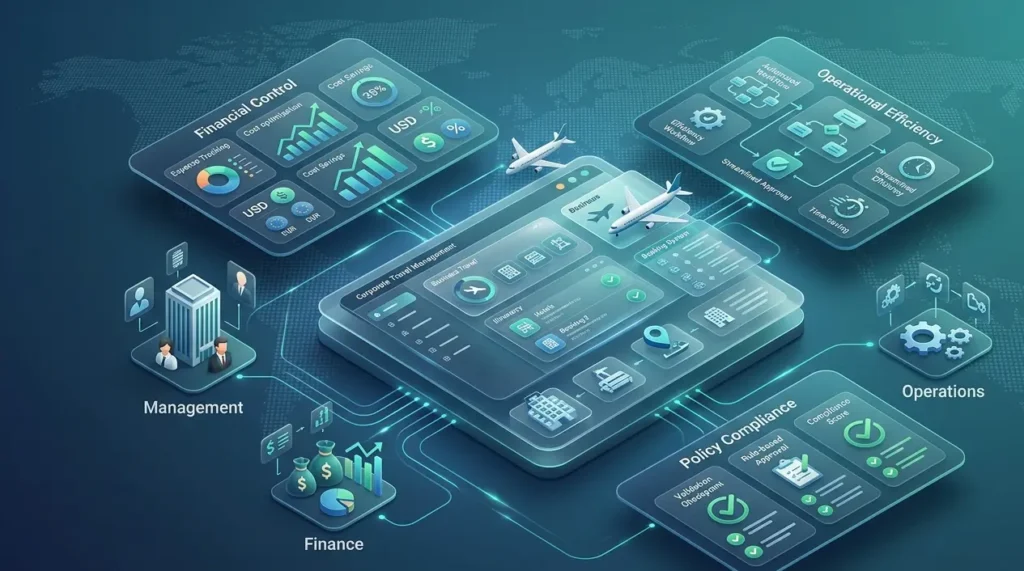
Serving corporate accounts is one of the most profitable segments a travel agency or tour operator can develop. It is also one of the most demanding. Companies that contract travel services for their teams do not tolerate errors, slow response times, or incomplete reports.
The problem isn’t the complexity of travel itself. It’s the complexity of managing multiple corporate accounts—each with its own policies, budgets, and demands—without an operational structure to support it.
When an agency tries to handle that volume with generic tools or fragmented processes, limitations quickly emerge. And the first to notice aren’t the internal operators: it’s the clients.
The Corporate Client Has a Different Operational Logic
A company that contracts travel services from an agency does not behave like an individual traveler. Their needs have another dimension: they need to justify every expense to their finance department, comply with internal travel policies, obtain consolidated reports by period or area, and maintain visibility over commitments before the month closes.
This means that the agency serving them also needs to operate with that logic. It’s not enough to confirm bookings and send vouchers. The agency must be able to deliver organized, traceable information exactly when the client needs it.
An operator managing corporate accounts without a centralized system ends up absorbing an enormous administrative burden: manually building reports, reconstructing each account’s history, calculating margins per service without automation. This is unbillable time that cannot be sustained as volume grows.
To understand why this operational fragmentation ends up being a structural risk, it’s worth reviewing what happens when an agency’s systems are not connected to each other.
Financial Control by Account, Not by Intuition
Managing ten active corporate accounts without real-time financial visibility is operating blindly. Each account has its own budget, its own billing cycle, its own negotiated suppliers, and its own commercial terms.
Without a system that centralizes this information, real financial control becomes almost impossible. How much is account X committed to this quarter? What is the actual margin of the account’s last event after applying all operating costs? Which accounts are generating profitability and which are consuming resources without a proportional return?
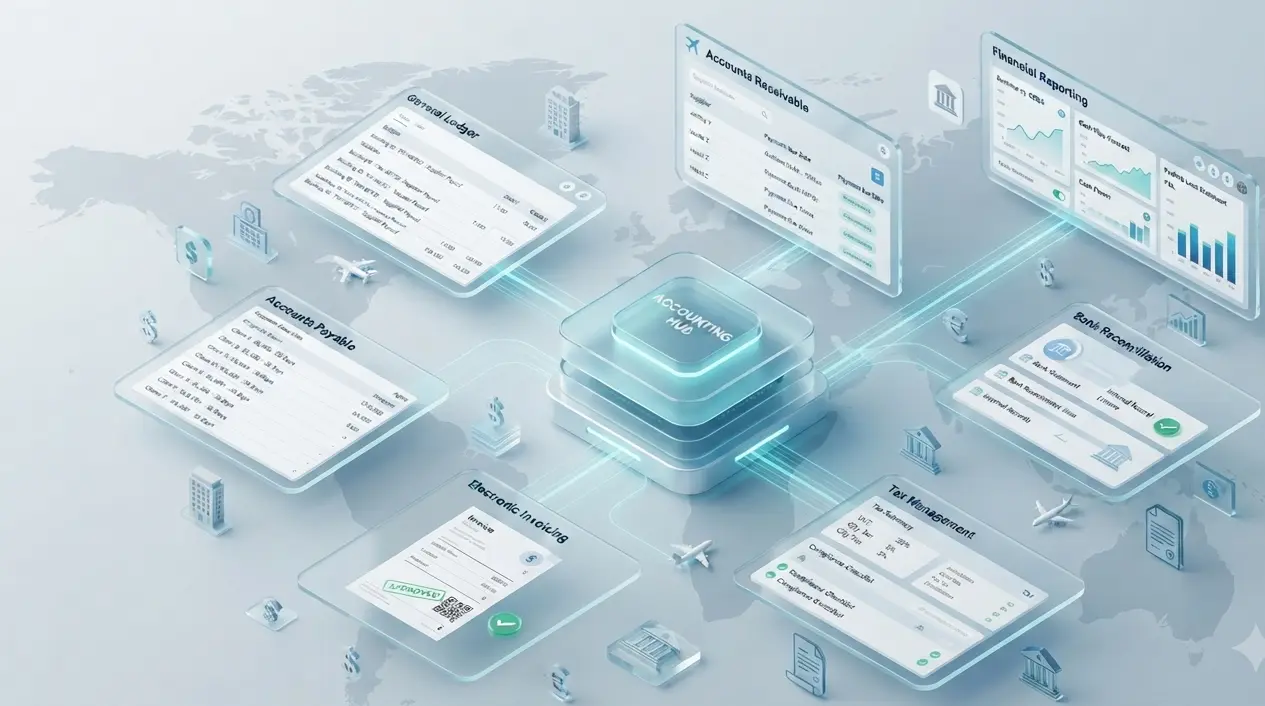
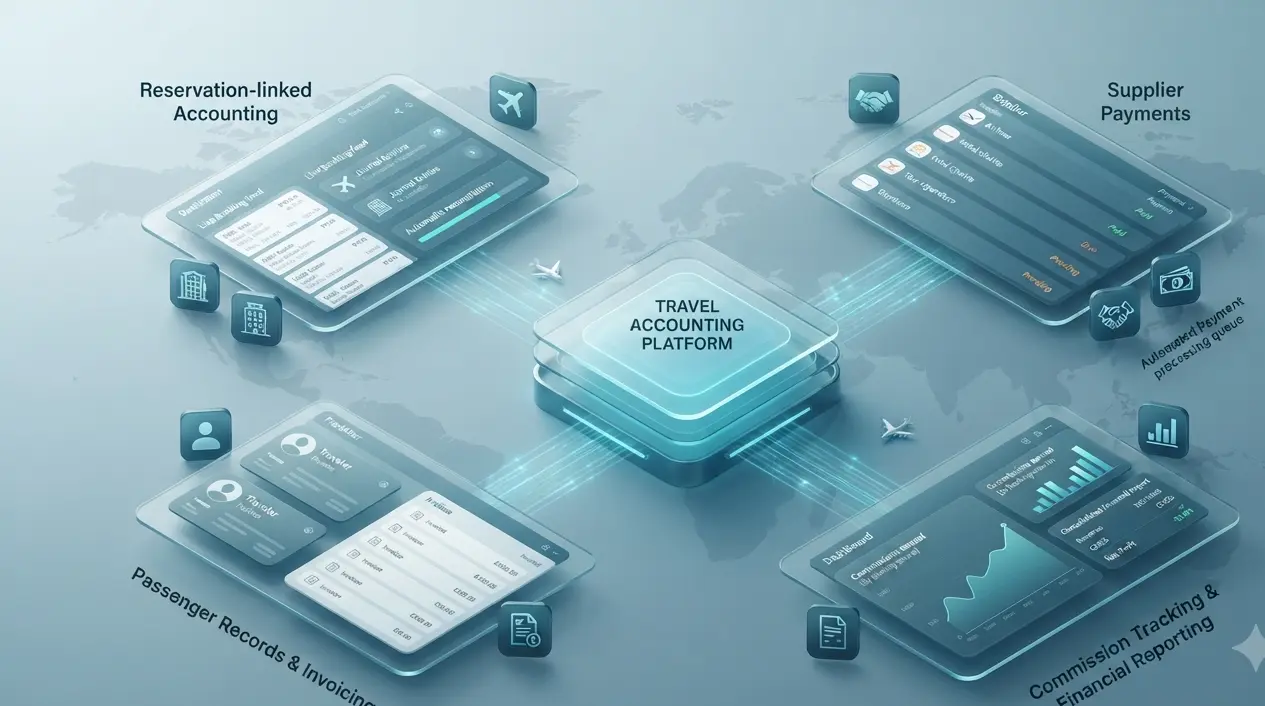
These questions are not answered with a weekly updated Excel sheet. They are answered with a system that automatically records every movement—prepayments to suppliers, commissions, operating expenses, payments received—and connects them to the corresponding account and service. When accounting is integrated with operations, this control ceases to be a closing task and becomes permanent visibility.
The difference is not just operational. It’s strategic. An agency that can answer these questions in real-time has a concrete advantage for negotiating, growing, and retaining its corporate clients.
Client Travel Policies: From Promise to Execution
Many companies have defined travel policies: fare limits by service category, preferred suppliers, minimum advance booking periods, hierarchical authorization levels. When they hire an agency, they expect these policies to be systematically respected, not on a case-by-case basis.
Ensuring compliance without a system is practically impossible. The operator processing the booking has to remember each account’s conditions, consult them in a separate document, and manually validate that each service complies. With the volume generated by an active corporate portfolio, this process leads to errors. And every error has a cost: in credibility, in correction time, and sometimes in money.
Specialized software allows you to parameterize each client’s business rules directly on the platform. Commercial conditions, agreed rates, and authorized service categories are recorded once and applied to every operation. When the quote is structured from this basis, subsequent reconciliation ceases to be a correction process and becomes a verification. This makes policy compliance a reliable process, not a constant effort.
Operational Efficiency: The Argument Large Clients Value Most
Companies that generate higher travel volume have something in common: they value process efficiency much more than the individual price of each service. A corporate client with thirty trips a month doesn’t want to negotiate every booking. They want their agency to work.
This implies short response times, complete and well-structured quotes, fluid coordination with suppliers, and reports that don’t need to be requested three times.
An agency operating with a centralized system can offer exactly that. Quotes are built with pre-loaded rates and precise control of costs and selling prices per operation. Itineraries are generated quickly, with all the information the client needs for internal approval. The CRM keeps each account’s history active and accessible, without relying on someone remembering the details of the last meeting. The team doesn’t work harder: it works with less friction.
This efficiency is what sustains relationships with large accounts in the long term. And it’s also what allows agencies to compete with larger operators without needing twice the staff.
To explore how this operational transformation impacts the comprehensive administration of the agency, the analysis of the hidden benefits of digitizing administration in travel agencies develops this angle in depth.
Reports the Client Doesn’t Have to Ask For
One of the most valued differentiators by corporate companies—and least frequent among the agencies that serve them—is receiving information without having to request it. A monthly expense report by project, a consolidated report of services used in the quarter, an analysis of profitability by event type: this type of deliverable turns the agency into a strategic partner, not just a booking provider.
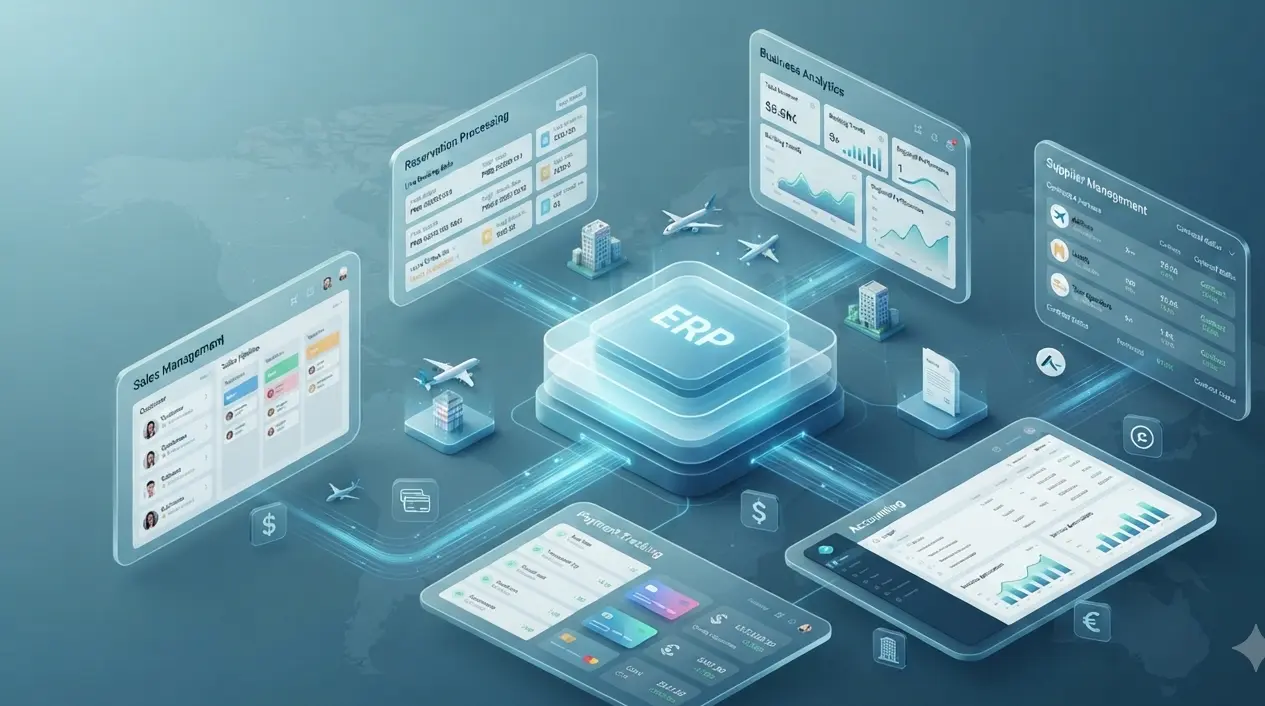
Building these reports manually consumes hours. With a system that records each operation in a structured way and connects sales, operations, and finance in the same environment, the report is generated from the data already in the system. The time previously spent assembling tables is reinvested in analyzing the information and presenting it with added value.
This change is subtle in appearance but profound in its consequences. It changes the type of conversation the agency has with its corporate client.
MICE Quotes and Operational Agendas: Where the Difference Becomes Visible
The corporate segment includes operations that go far beyond a single booking. Team meetings in different cities, multi-day congresses, sales force incentives, events with dozens of participants, and chained services that must be precisely coordinated. All of this is MICE, and it has its own operational logic.
Quoting this type of operation in a differentiated way—with details of each service, cost and selling price control, and a proposal that the client can confidently approve—requires a system that understands this logic. An adapted spreadsheet is not enough.
And once the quote is approved, coordination continues. In MICE events, the operational agenda is the document that translates quoted services into a concrete execution plan: what happens, when, who operates it, and what each team needs to execute it without relying on anyone’s memory. When this agenda lives within the same system that generated the quote, information is not duplicated or lost in the handover between departments.
This continuity between proposal, approval, and execution is what makes a large event successful. And it’s also what makes the client want to repeat it with the same agency.
Scaling the Corporate Portfolio Without Scaling Chaos
Adding a new corporate account should be good news. When operations lack structure, it can become a problem. Each new account means more booking volume, more coordinated suppliers, more reports, more billing cycles. If the system supporting all of this is a combination of emails, spreadsheets, and disconnected platforms, each new account amplifies the existing disorder.
An agency operating with technology designed for corporate tourism does not face this dilemma. The same platform that manages five accounts manages fifteen, with the same traceability and level of control. Portfolio growth does not generate proportional friction because the structure is already prepared to absorb it. That is the real difference between growing and growing sustainably.
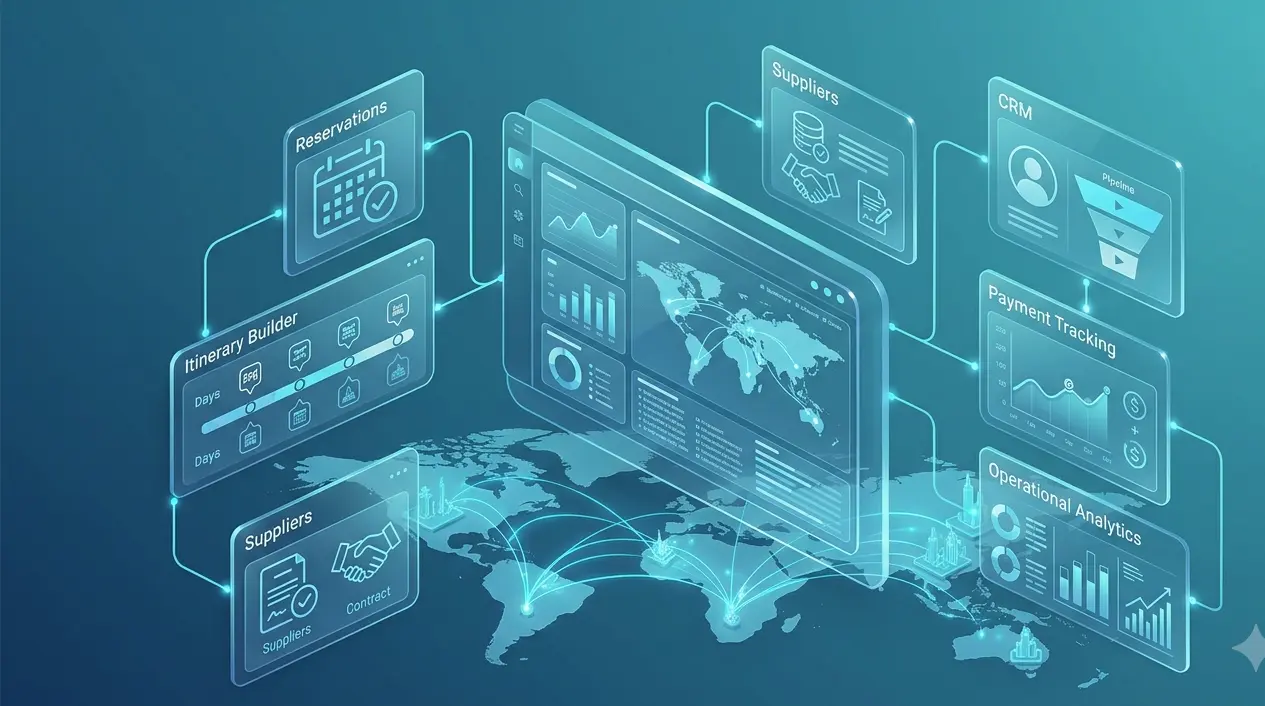
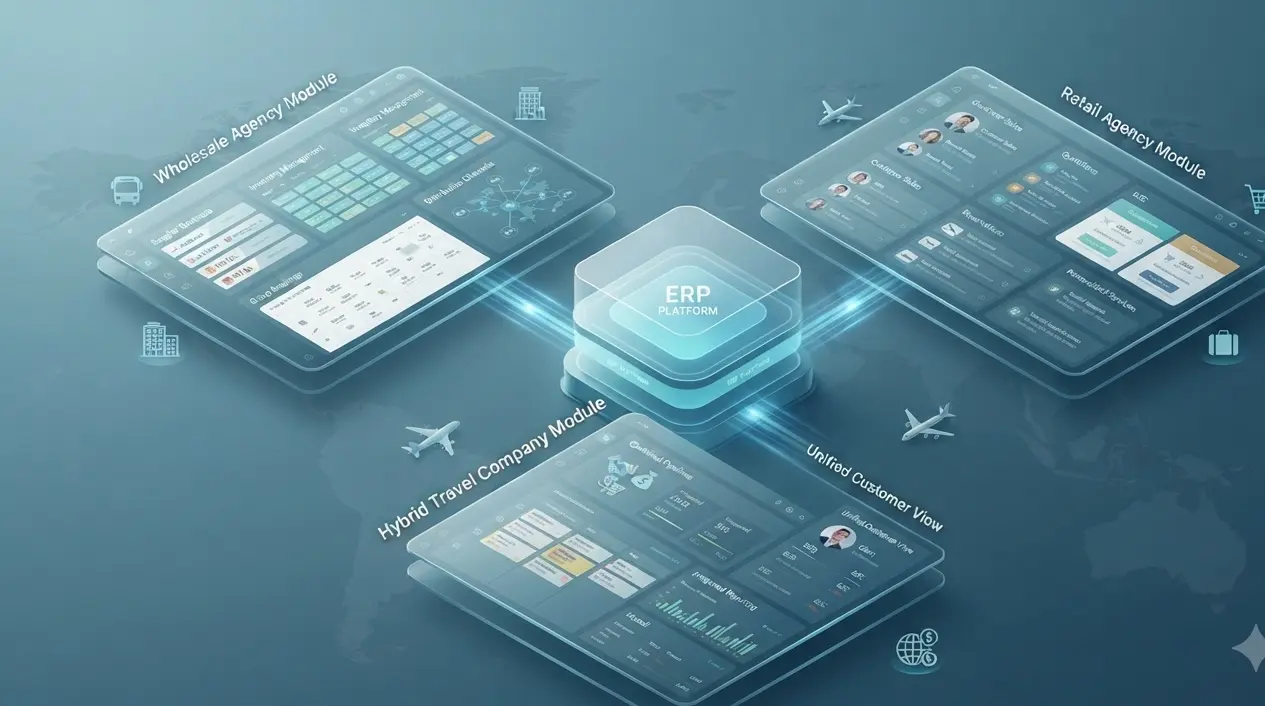
Platforms like Toursys—built specifically for travel agencies and tour operators—integrate corporate account and MICE event management into a single environment, with modules for quotes, bookings, itineraries, operations, CRM, accounting, and reports that communicate with each other from day one. If you want to explore how this solution is built for the corporate segment, the Toursys corporate travel management page details its capabilities precisely.
The Operation Corporate Clients Demand Already Exists
The corporate client is not asking their agency to become a multinational. They are asking it to operate with the same logic they use to run their own business: with data, clear processes, and information available when needed.
An agency that can offer this does not compete on price. It competes on value. And in that arena, the barriers to entry are much higher for anyone trying to take away the account.
The starting point is not technological. It’s operational. The question is not what software to use: it’s what kind of agency you want to be for your corporate clients.