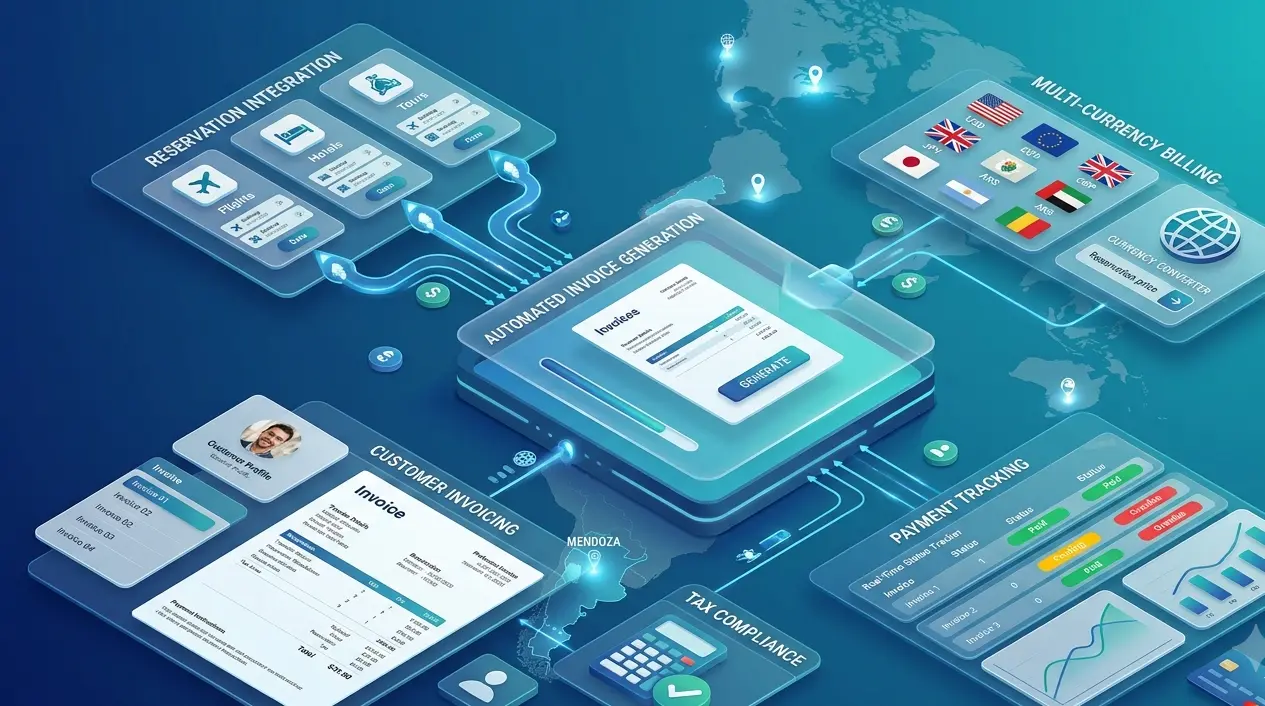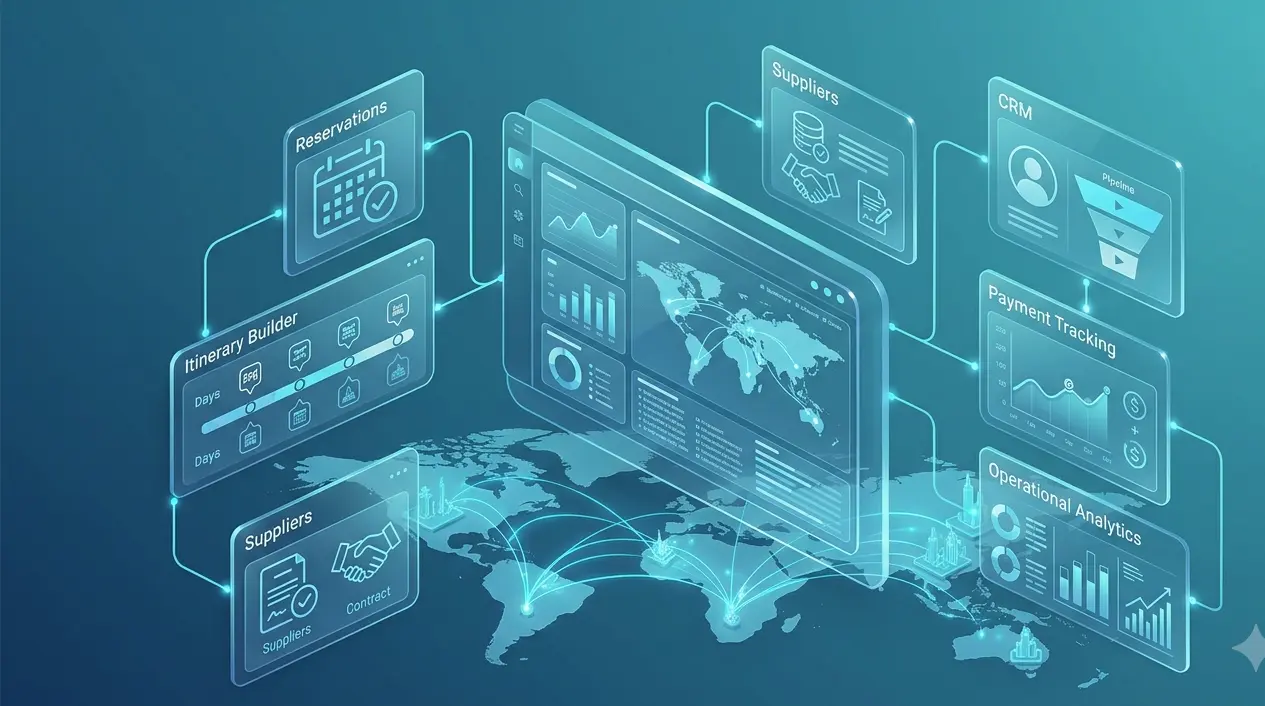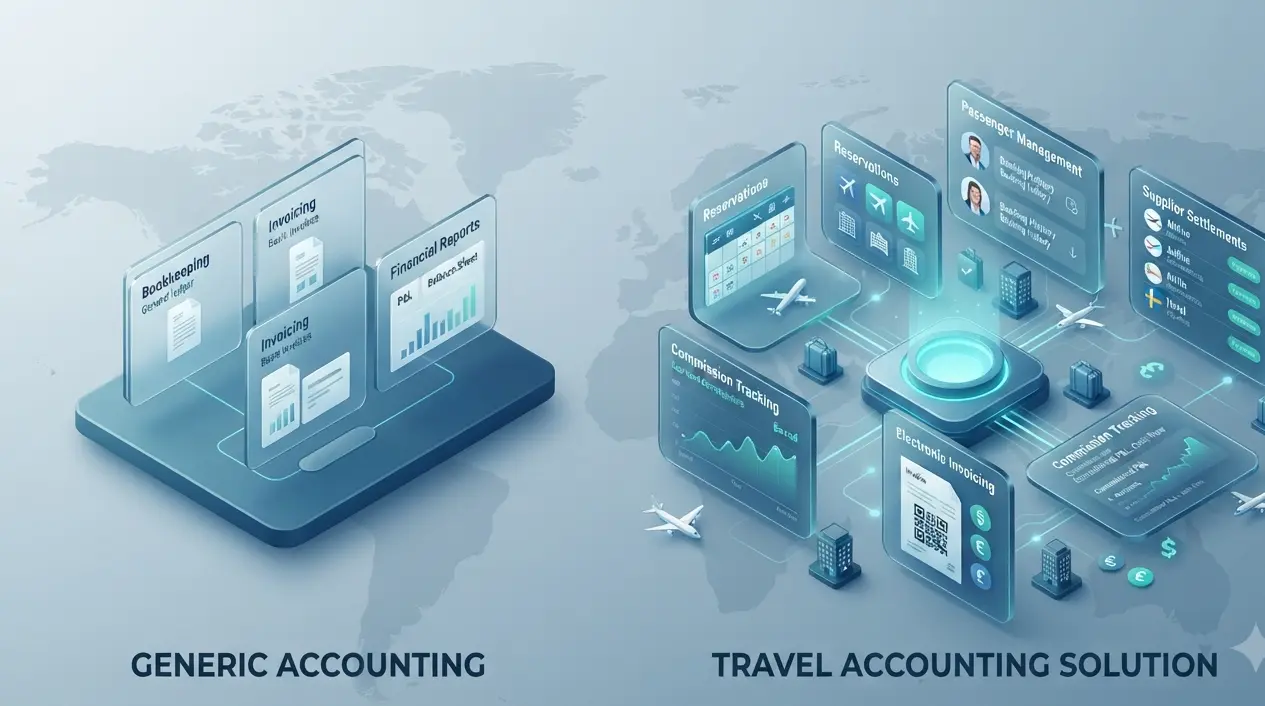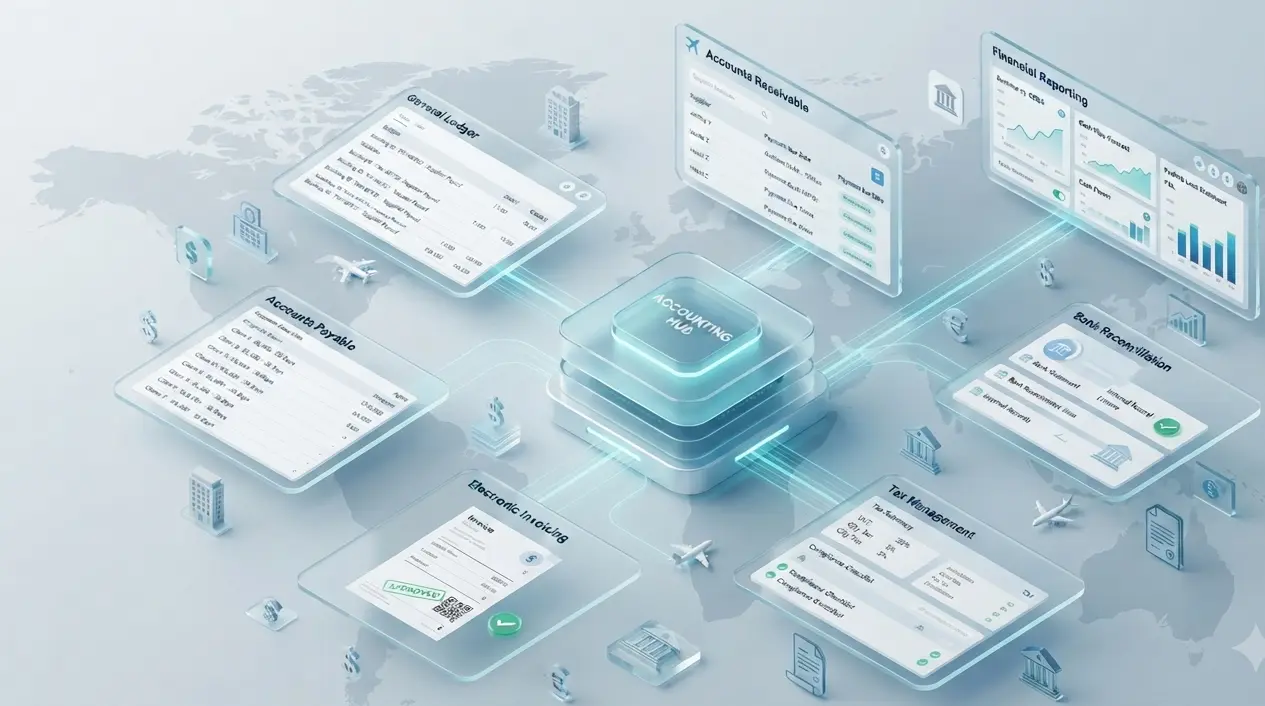
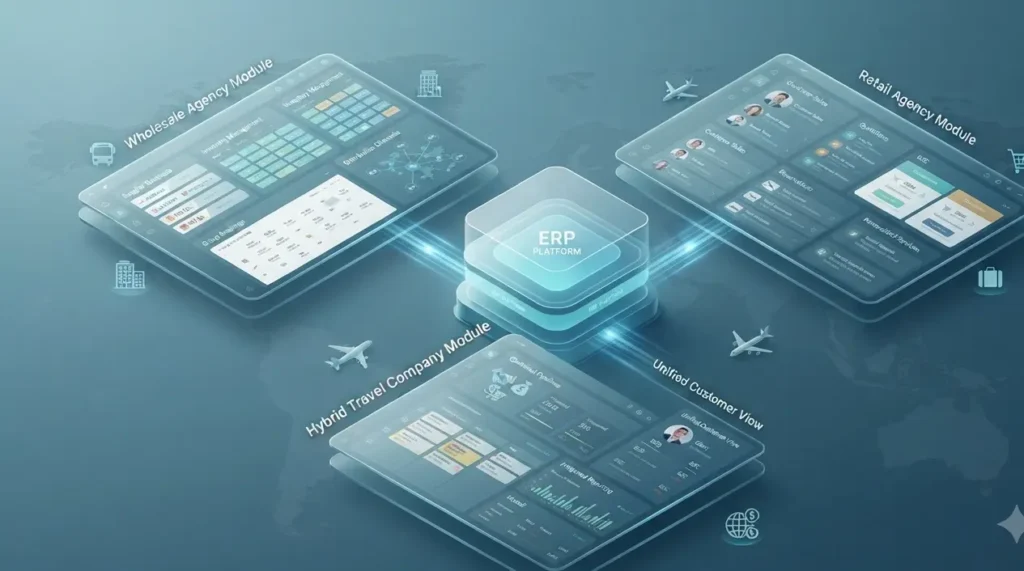
A tourism ERP connects quotes, bookings, and accounting in the same system. That’s already a step forward from the spreadsheets and disconnected systems that many agencies still combine daily. But there’s a question almost no one asks before implementing it: does that system understand how your agency makes money? Because a wholesaler, a retailer, and an agency that combines both models generate revenue in completely different ways, and that difference should be reflected in the very structure of the ERP, not solved through parallel spreadsheets.
Why a Wholesaler and a Retailer Don’t Operate with the Same Financial Logic
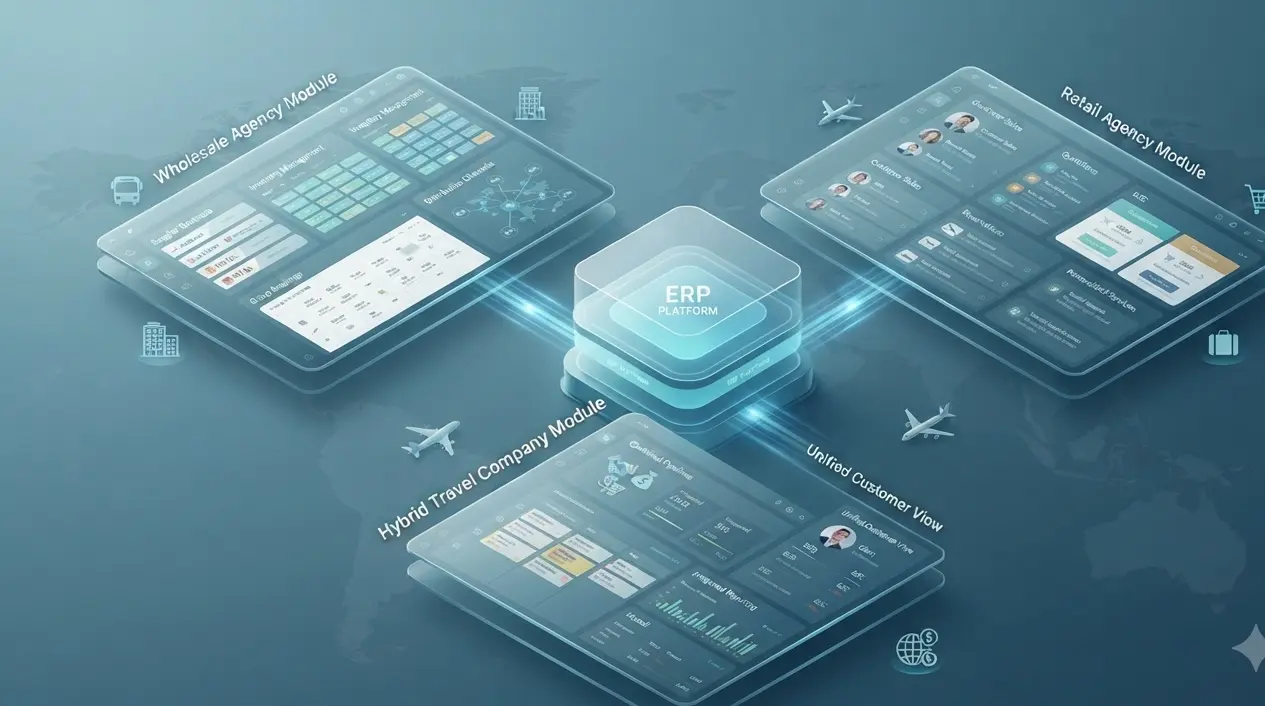
A wholesale tour operator builds its own products and sells them to other agencies, not directly to the traveler. Its revenue comes from a margin on the net rate it negotiates with suppliers: the better it negotiates, the more it earns, regardless of what the retail agency later charges the end customer. A retailer, on the other hand, sells directly to the traveler and its revenue usually depends on a commission on the sale value. These are two completely different revenue structures and require the ERP to calculate and report differently from the very beginning.
If you want to first understand what an agency gains, in general terms, by connecting sales, operations, and accounting in the same system, this article about the benefits of an ERP in modern travel agencies is a good starting point before diving into the specifics of each model.
What Changes in Each Process According to the Business Model
The difference between wholesale, retail, and mixed is not limited to who receives the invoice. It changes when the money comes in, it changes who assumes the risk of a cancellation, and it even changes how quickly you can know, at any given moment, how much the agency is actually earning. The following table summarizes these processes.
| Financial Process | Wholesale | Retail | Mixed |
| Who it invoices | Other agencies (B2B) | The end traveler (B2C) | Both, in parallel |
| How it generates revenue | Margin on net rate | Commission on sale value | Both schemes coexist in the same system |
| Payment timing | Usually operates with credit or agreed terms with the buying agency | More immediate payment, linked to booking confirmation | Requires managing two different payment schedules at once |
| Relationship with suppliers | Negotiates net rates directly | Depends on rates already negotiated by the wholesaler or supplier | Negotiates its own terms and resells at the same time |
| Risk if the system doesn’t distinguish the model | Miscalculated margins and invisible profitability | Commissions misattributed between agents or channels | Both flows mix and neither is really clear |
If you’re also evaluating what other features a complete tourism ERP should have, beyond this financial distinction, this checklist with the features a good ERP for travel agencies should have can serve as your next step.
No generic ERP contemplates this table by default. Most were designed for a single type of business and force the agency to squeeze its processes into that single logic, even though in practice it operates differently. That’s where the manual adjustments begin that, over time, become the unwritten explanation for why reports never quite add up.
The Particular Challenge of Mixed Agencies
The mixed agency is, in several ways, the most demanding of the three. It buys and resells as a wholesaler for certain products, while selling directly to the end traveler for others, often within the same month or even the same week. This means simultaneously maintaining two payment schedules, two ways of calculating revenue, and two types of customer relationships: the agency that buys in volume and the traveler who books a single package. If the system doesn’t clearly separate these two worlds, the financial information starts to mix in a way that’s difficult to untangle later.
If in addition to the financial side you’re interested in understanding how the rest of the software (bookings, operations, customer service) changes according to the role your agency plays, this article about types of software according to business model deepens that more operational perspective.
What the Digitalization Gap in Wholesale and Retail Sales Reveals
The B2B tourism channel, which connects wholesalers, retailers, and associated agencies with each other, still has a clear lag compared to other segments of the sector. According to Civitatis Pro data for 2026, only 35% of tourism activities are currently marketed through digital channels within the professional segment of agencies and wholesalers, compared to over 65% in categories such as accommodation. The gap is no coincidence: much of that professional marketing still depends on manual processes, PDF rate sheets, and email confirmations—precisely the same processes that a well-designed ERP should absorb.
How You Sell Should Define Your ERP, Not the Other Way Around
The fundamental question is not how many functions an ERP has, but whether those functions were designed for your specific way of generating revenue. A system that treats a wholesaler, a retailer, and a mixed agency the same way ends up, sooner or later, forcing the team to manually correct what the software should resolve on its own.
To support these three logics simultaneously, a tourism ERP needs to sustain at least four concrete capabilities:
- Configurable business rules per account. Margins, commissions, payment policies, and rate categories are defined independently for each customer or operating model, without forcing the entire agency to share a single financial structure.
- Profit and loss statement per booking. Each transaction shows precisely what was charged, what was paid to the supplier, and what the final margin or commission was, without needing to reconstruct that information only at month-end.
- Multi-currency management with automatic conversion. Relevant for the wholesaler negotiating net rates in another currency, for the retailer charging the traveler in local currency, and even more so for the mixed agency doing both simultaneously.
- Differentiated user roles by area. Each team accesses only the information it needs, preventing wholesale business data from getting mixed with retail business data within the same system.
These four capabilities work together, not in isolation. An ERP can have configurable business rules and still fail if it doesn’t calculate the actual margin per booking. It can calculate that margin and still generate confusion if it doesn’t separate access by role. The utility appears when all four work together: that’s where a single system can operate as a wholesaler for one customer, as a retailer for another, and as both at once when the operation requires it, without the team having to maintain parallel spreadsheets to compensate for what the software doesn’t contemplate.
The Toursys ERP follows precisely this logic. Business rules are configured per account, the profit and loss statement is calculated per booking, and currency conversion happens automatically between different transactions. This allows wholesale, retail, and mixed agencies to work within the same platform without forcing their financial processes to fit into a mold designed for a single type of business.