Imagine you’re the travel manager for a mid-sized company. You need to organize twelve trips this month for different teams, with different budgets, approvals from two department heads, and a financial close that won’t accept missing invoices. You hand it all over to your trusted agency.
The agency does good work. They know your usual destinations, have solid suppliers, and the service is excellent. But at the end of the month, reconstructing the actual spend for each department takes you two days. Three invoices don’t match the quotes. And the report you send to finance? You built it yourself—not them.
Is the agency the problem? Not exactly. The problem is that the agency operates with a logic designed for a different type of client.
When the corporate client grows faster than the structure serving them
A traditional travel agency builds its operation around the trip. Quote, book, operate, bill. That cycle works very well when the client is a traveler—or even a group—whose process ends when the trip ends.
The corporate client lives in a different cycle. Their process doesn’t end with the trip: it ends with reconciliation. With the expense report approved by finance. With the internal audit verifying that every service was within policy. And with the contract renewal, which depends on all of the above working without friction.
An agency serving that client with the same architecture it uses for leisure travelers isn’t failing in execution. It’s failing in the model. The mismatch doesn’t show up in the first few weeks—it may not show up for months. It shows up when volume increases, when the client requests a consolidated report for the first time, or when there’s a date change across three simultaneous bookings and the team takes hours to propagate it.
To understand what operational structure this type of client requires from the start, the article on what a corporate travel management system is develops that foundation in detail.
The corporate travel cycle: where the two models diverge
The mismatch between a traditional agency and a corporate management system doesn’t occur at a single point. It occurs throughout the entire operational cycle. Seeing it this way—as a continuous process, not isolated moments—makes it possible to understand why the problem isn’t solved with more staff or more effort.
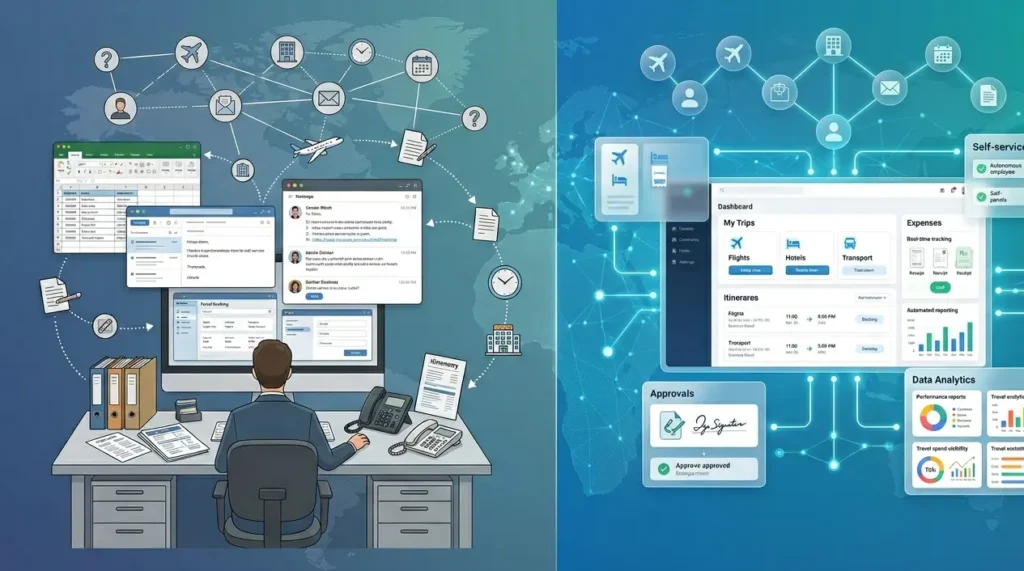
In the request. In a traditional agency, the request arrives by email or phone, is manually recorded, and sits in the agent’s inbox. In a corporate system, the request enters with the traveler’s parameters already identified—destination, dates, type of service—and from that first moment is linked to the corresponding account. The operation starts with context, not with questions.
In the quote. When the trip involves events, meetings, or groups—the territory of the MICE segment—the complexity of quoting changes scale. It’s not a one-off booking: it’s a proposal with multiple linked services, each with its own cost and selling price. An agency without a specialized system builds that proposal by hand, cross-referencing rates from different sources and formatting the document separately. A system with a MICE module quotes that type of operation in a differentiated way, with precise control of costs and selling prices per service, and generates proposals the client can evaluate and approve with clarity.
In the operation. Once the proposal is approved, coordination begins. This is where the operational agenda becomes indispensable: the document that translates quoted services into a concrete execution plan, with what happens, when, and what each party needs to execute it. In an agency without a system, that agenda is built in a separate file that lives disconnected from the original quote. When there are changes—and there always are—updating one doesn’t update the other. In an integrated system, quote and operational agenda feed from the same source. The team works with a single version of reality.
In the close. The corporate client needs an expense report by department, by project, or by period. An agency without a system builds it by hand, cross-referencing different sources. An agency with a system generates it from data that’s already recorded. The difference in time is significant. The difference in reliability is even greater.
What the corporate client evaluates and rarely says out loud
When a company evaluates which agency to trust with its travel program, there are criteria that come up in conversation—price, catalog, destination experience—and criteria that aren’t mentioned but weigh equally or more in the decision.
Do proposals for events and groups arrive clearly itemized, with each service and its cost identified? Can the agency coordinate an event with multiple suppliers—hotels, transport, activities—from the same environment without losing the thread between areas? Do their reports reflect the actual operation or are they approximate reconstructions?
These questions aren’t asked by the travel coordinator. They’re asked by the CFO reviewing the contract before signing it. And the difference between an agency that can answer with data and one that answers with good intentions often defines who retains the account the following year.
An agency backed by an integrated platform can go further: connect with suppliers through bedbanks, process payments with integrated gateways, and manage the CRM for each corporate account from the same environment where quoting and scheduling operate. That’s not a technological extra. It’s what turns the agency into part of the client’s operation, not just another external supplier.
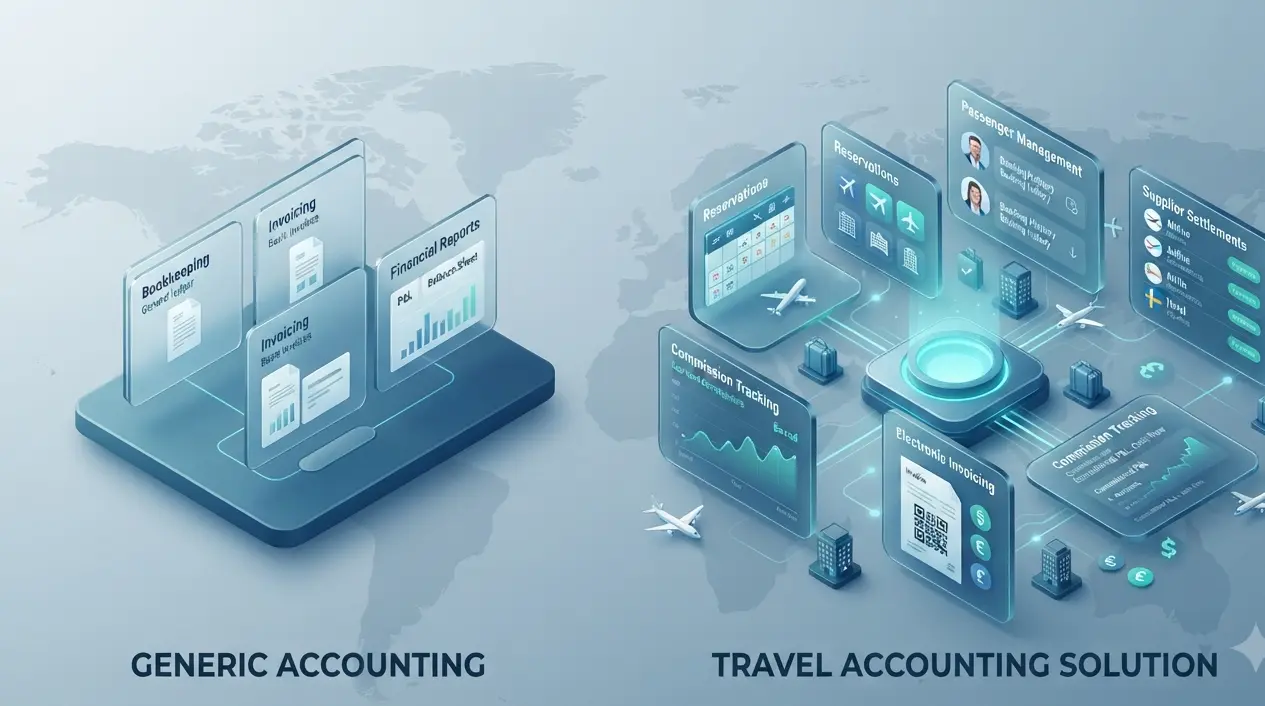
To evaluate what specific capabilities make that operational integration possible, the analysis of the differences between specialized tourism software and generic tools shows exactly what’s lost when the platform wasn’t designed for tourism logic.
The question few agencies ask themselves before losing an account
Losing a corporate account rarely happens because of a serious error. It happens through accumulation: small frictions the client tolerates at first and that, over time, they start to perceive as part of the service. A report that arrived late. An event proposal that didn’t match what was executed. A confirmation no one could give because the agent managing that account was on vacation.
None of these problems are the fault of the people. They’re symptoms of an operation where information lives in people, not in the system. When the agent is available, everything works. When they’re not, continuity breaks.
A corporate management system solves this differently: the information for each account—history, commercial terms, active proposals, ongoing agendas—lives in the platform and is accessible to any team member. No one depends on “remembering” how that account works. The knowledge is in the system, not in a person’s memory. That operational continuity is, for the corporate client, a sign of maturity. They don’t mention it in follow-up meetings. But they notice when it’s not there.
When it makes sense to take that step
Not every agency needs a corporate management system from day one. An agency that occasionally serves business clients can sustain itself with more manual processes without the cost being critical.
The tipping point arrives when the corporate portfolio stops being the exception and starts being part of the model. When there are several active accounts with recurring volume. When event proposals consume more hours than they should. When bringing on a new account generates tension in the team instead of generating enthusiasm.
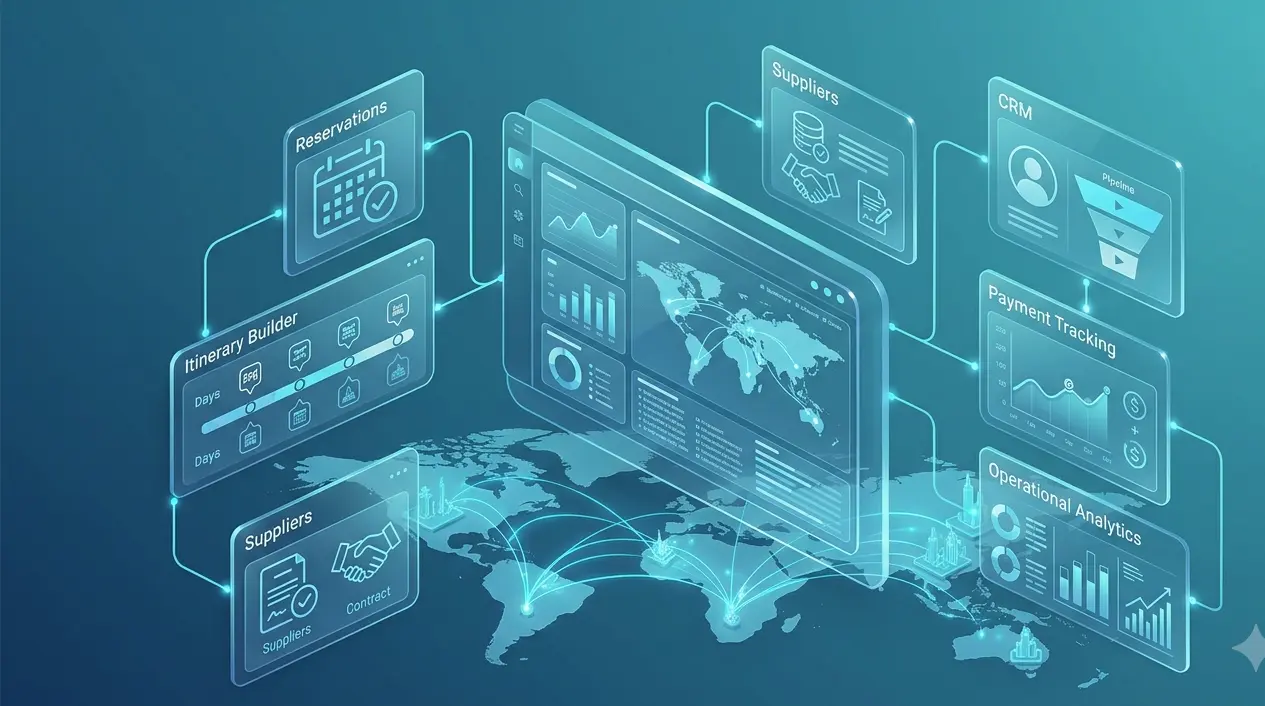
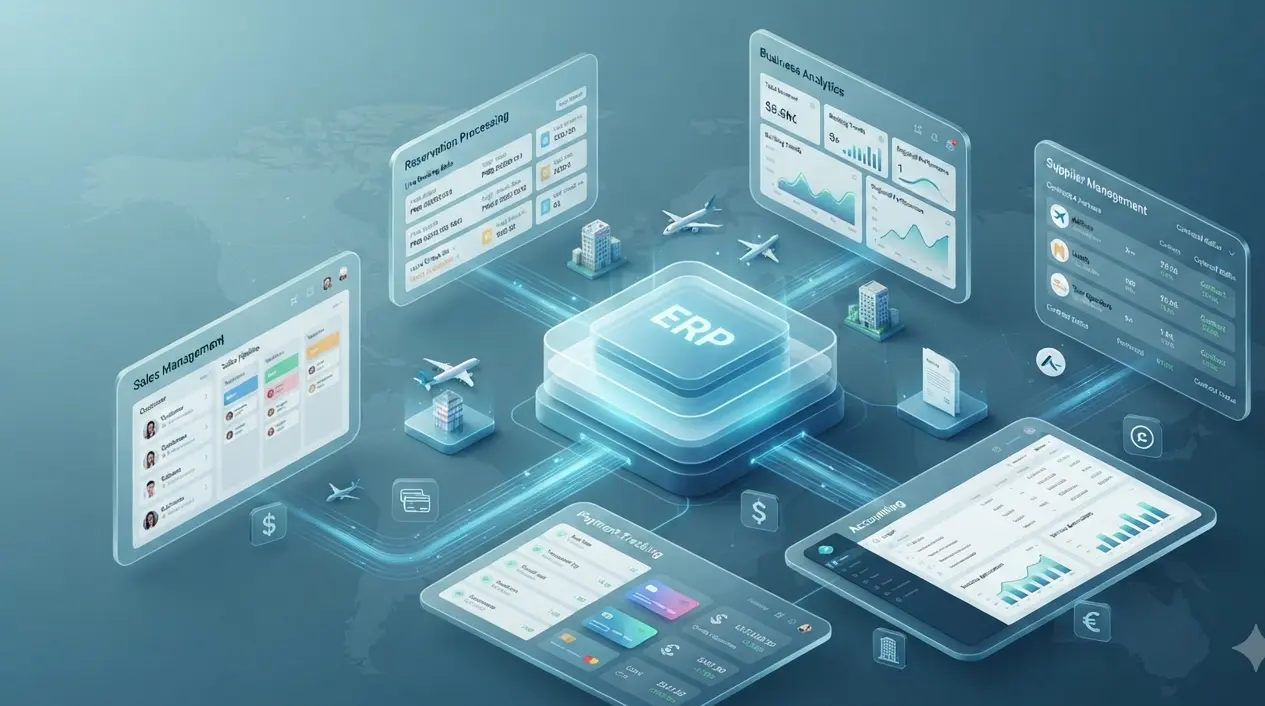
Platforms like Toursys—built for travel agencies and tour operators—include a specific module for the MICE segment that allows managing differentiated quotes with cost and price control per service, generating operational agendas for each event, and leveraging the rest of the platform’s ecosystem: supplier integrations, digital itinerary builder, CRM, invoicing and ERP, all from the same environment. The transition to the corporate model doesn’t require changing systems: it’s incorporated within the same platform the agency already operates.
If your agency manages or is exploring the MICE and corporate segment, the Toursys corporate travel management page shows how that architecture applies in practice.
The difference the client feels before being able to explain it
Working with an agency that has a system and working with one that doesn’t produces very different experiences, even if the client can’t always articulate why. One generates confidence because information is available when needed, proposals arrive complete, and coordination doesn’t generate follow-up questions. The other generates dependency: on specific people, on schedules, on institutional memory that isn’t documented anywhere.
The corporate segment is demanding not because clients are difficult. It’s demanding because it operates with standards their own business imposes on them. An agency that can operate with those same standards isn’t making an extra effort. It’s working from the right structure.