Managing hotel bookings manually has a cost that few agencies quantify precisely. It’s not just time. It’s the sum of confirmations that are delayed, rates that are checked outside the system, prepayments that are recorded on separate sheets, and quotes that are built from scratch each time. A fragmented process that, seen from the outside, seems to work. Seen from the inside, it consumes a disproportionate share of the team’s operational energy.
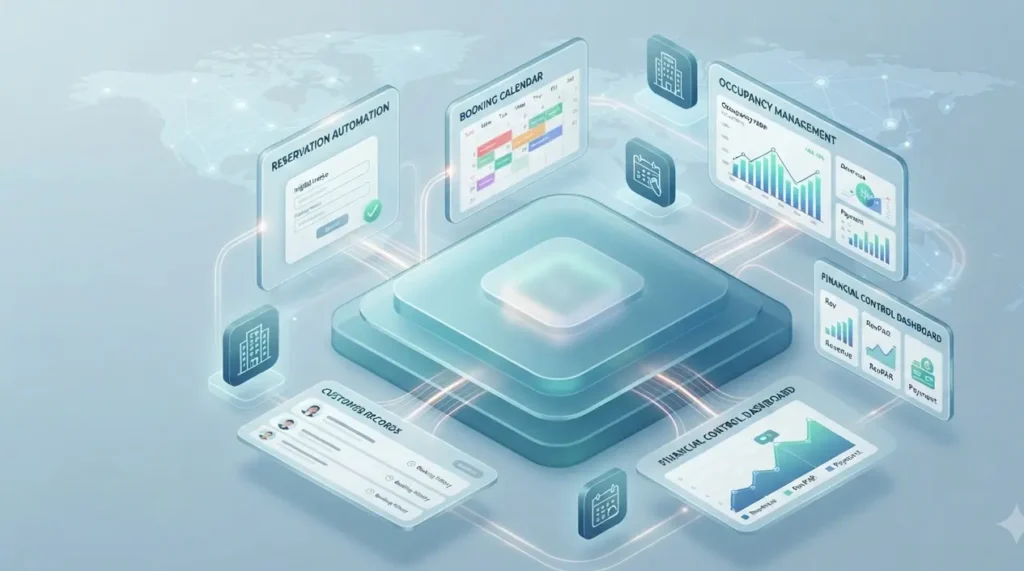
Digitizing hotel booking management is not simply switching to a new tool. It’s reorganizing that process from its internal logic: connecting availability, rates, confirmations, and finances in a flow that moves forward on its own, without manual intervention at each stage.
The benefits of digitizing hotel bookings within an agency’s operation are seen in three concrete dimensions: speed of response to the client, financial control over each operation, and the professional image the agency projects in the market.
The benefits of digitizing hotel bookings start with the quote
The first friction point in manual hotel booking management is not in the confirmation: it’s in the quote. When an advisor needs to check hotel availability to put together a proposal, the usual process involves accessing multiple sources, comparing rates manually, recording the information in a separate document, and building the quote from scratch. That cycle can take between two and four hours for a moderately complex package.
A system that centralizes hotel booking management shortens that cycle structurally. Availability is checked in real time, rates are updated automatically, and the quote is generated from the same platform where the booking will later be confirmed. The advisor doesn’t build from scratch: they start from a base that already has the information loaded.
What does that mean in practice? That the agency can respond in minutes where it previously took hours. And that speed difference is not just operational: it’s commercial.
If your agency’s booking process still depends on disconnected sources, it’s worth reading about what happens when internal systems don’t evolve at the pace of operations.
Financial control: what changes when bookings and finances are connected
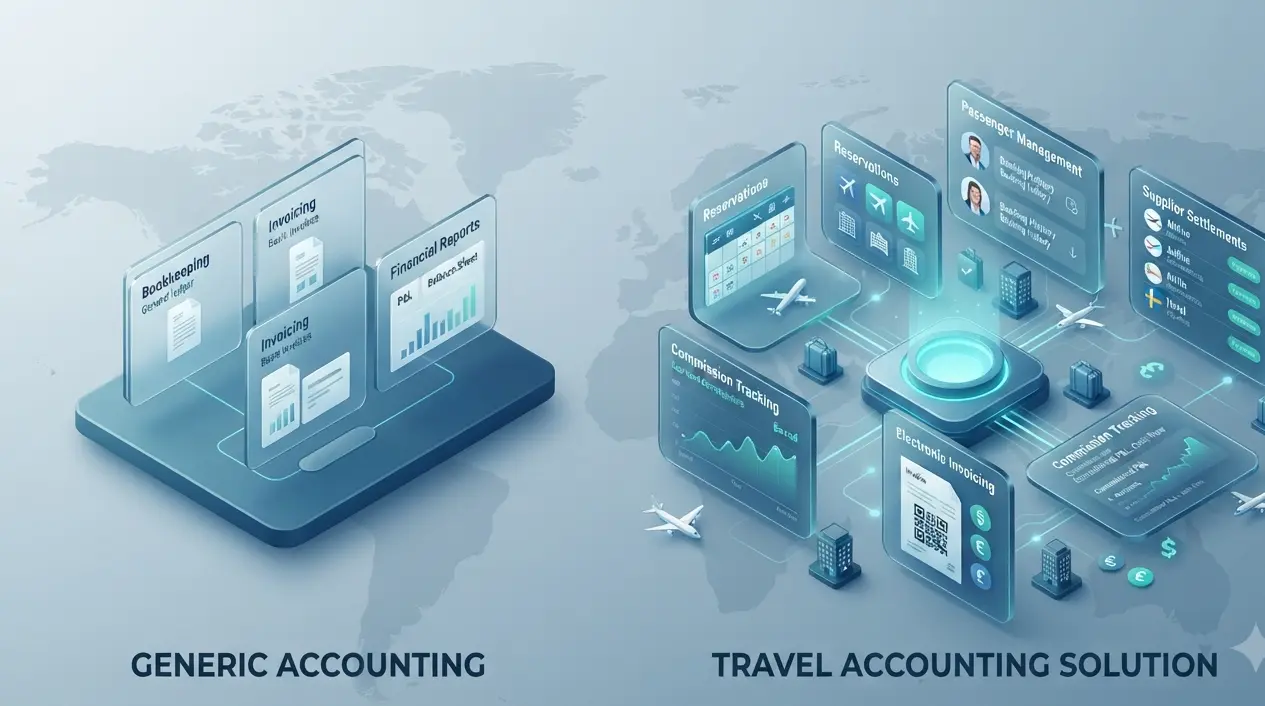
One of the least visible aspects of manual hotel booking management is its financial impact. When a booking is confirmed outside the accounting system, the chain that follows (recording the prepayment to the supplier, invoicing the client, tracking the commission) becomes a series of manual tasks that depend on someone executing them correctly and at the right time.
Error is not the exception. It’s the logical result of a process that demands too many human interventions at critical points.
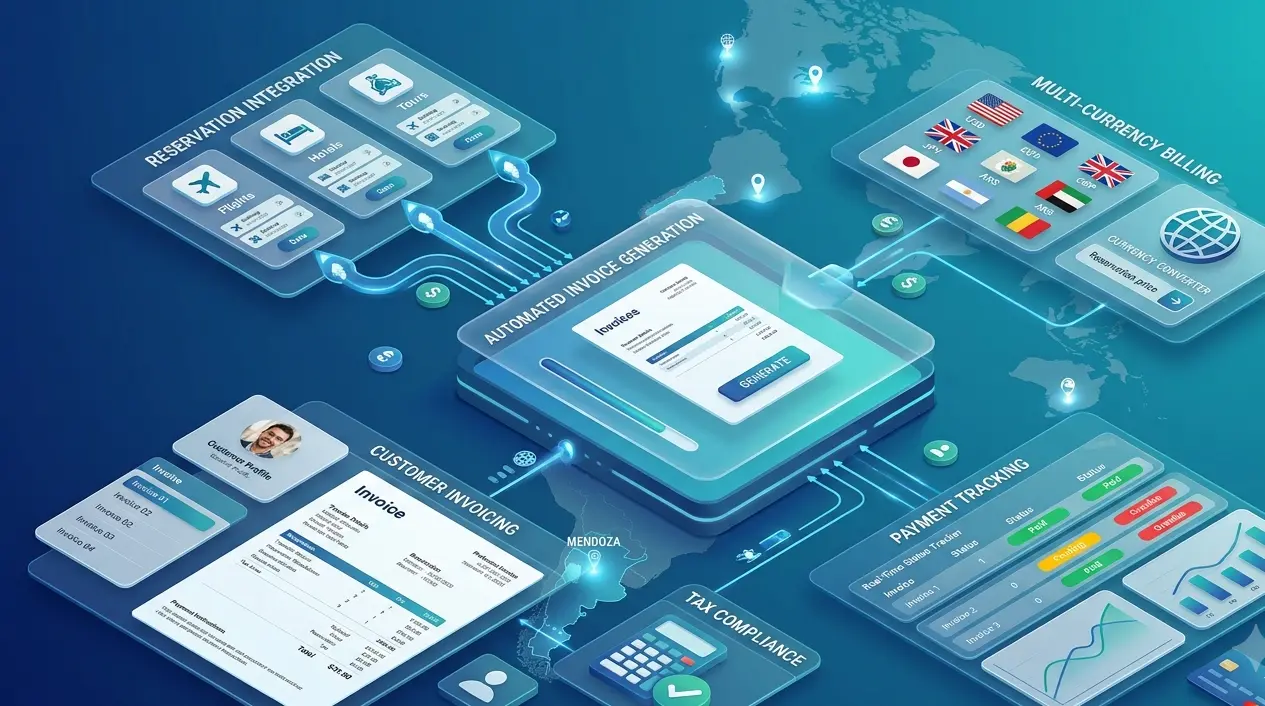
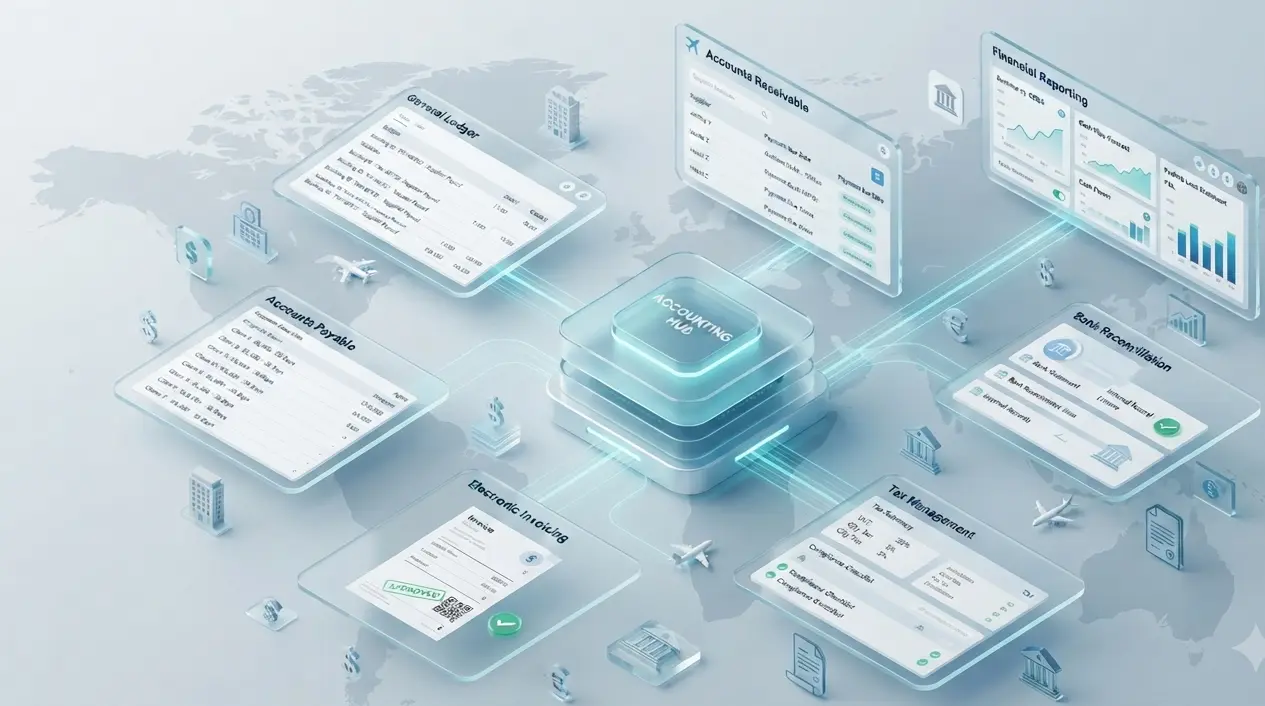
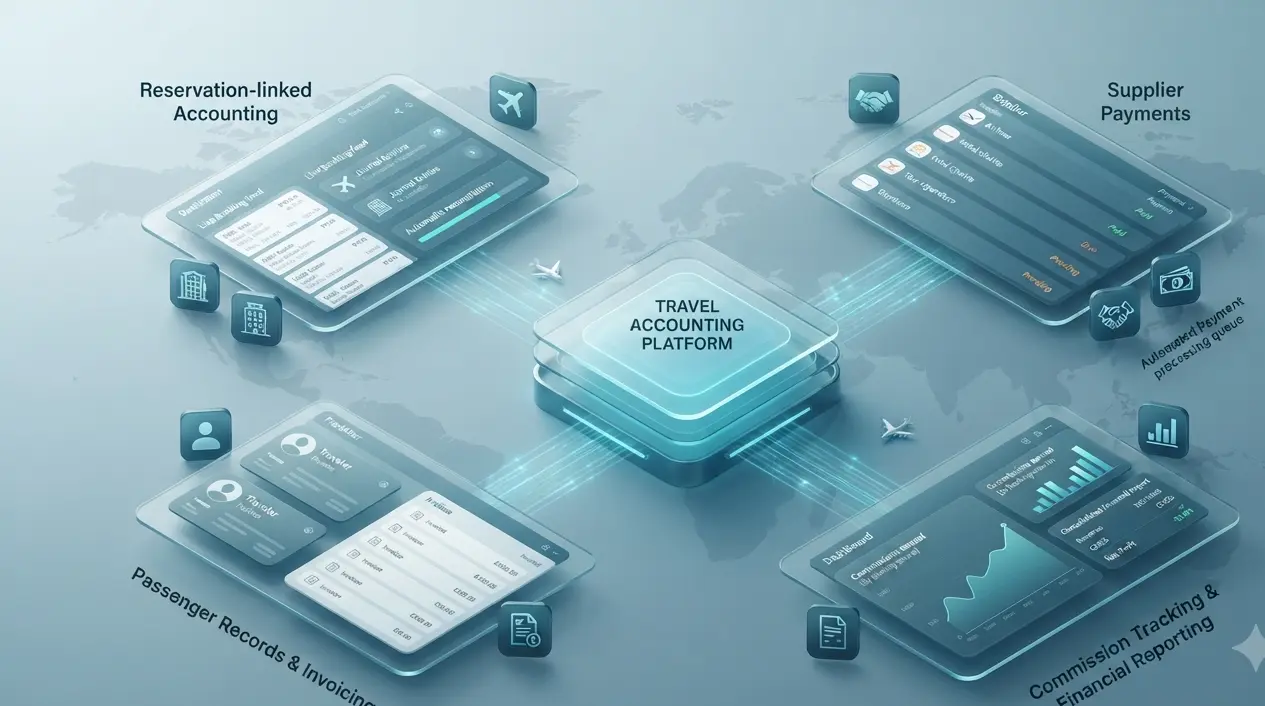
Digitizing hotel booking management connects each confirmation with its financial record automatically. When a booking is confirmed, the system generates the entry in accounts payable, records the prepayment if applicable, and updates the operation status for the finance team. There’s no transfer of information between departments. There’s no window for error between what operations confirms and what administration records.
For an agency that handles volume, that integration is not an efficiency detail. It’s the difference between having real control over the profitability of each operation or reconstructing it after the fact from incomplete records.
To understand how that integration works technically, the article on how a travel booking system works explains the process architecture in more detail.
Professional image: how digitization changes what the client perceives
There’s a dimension of booking digitization that rarely appears in operational efficiency analyses: what the client experiences on the other side.
An agency that works with an integrated hotel booking engine can deliver to the client a visual, updated, and traceable proposal in minutes. The client can see the hotel details, booking conditions, price breakdown, and confirmation status in a format that conveys order and professionalism. They don’t receive a PDF with information copied from different sources. They receive a coherent itinerary that reflects the agency’s level.
That perception matters. In a market where the client compares in parallel with multiple channels, the speed and presentation of the proposal are conversion factors as relevant as price.
For outbound agencies that sell international packages with a strong hotel component, this dimension is especially critical. The client who receives a quote in twenty minutes with all the information organized perceives a different agency from the one that takes a day and delivers a manually assembled document.
| Manual hotel booking management | Digitized management |
| Availability check across multiple external sources | Real-time availability from the platform |
| Quote built manually by the advisor | Quote generated automatically with updated rates |
| Confirmation recorded outside the financial system | Confirmation connected to accounts payable and prepayments |
| Status tracking by email or phone | Status of each booking visible in real time for the entire team |
| Margin calculated after the fact | Margin visible from the quote |
What changes in operations according to agency type
Hotel booking digitization does not impact all business models in the same way.
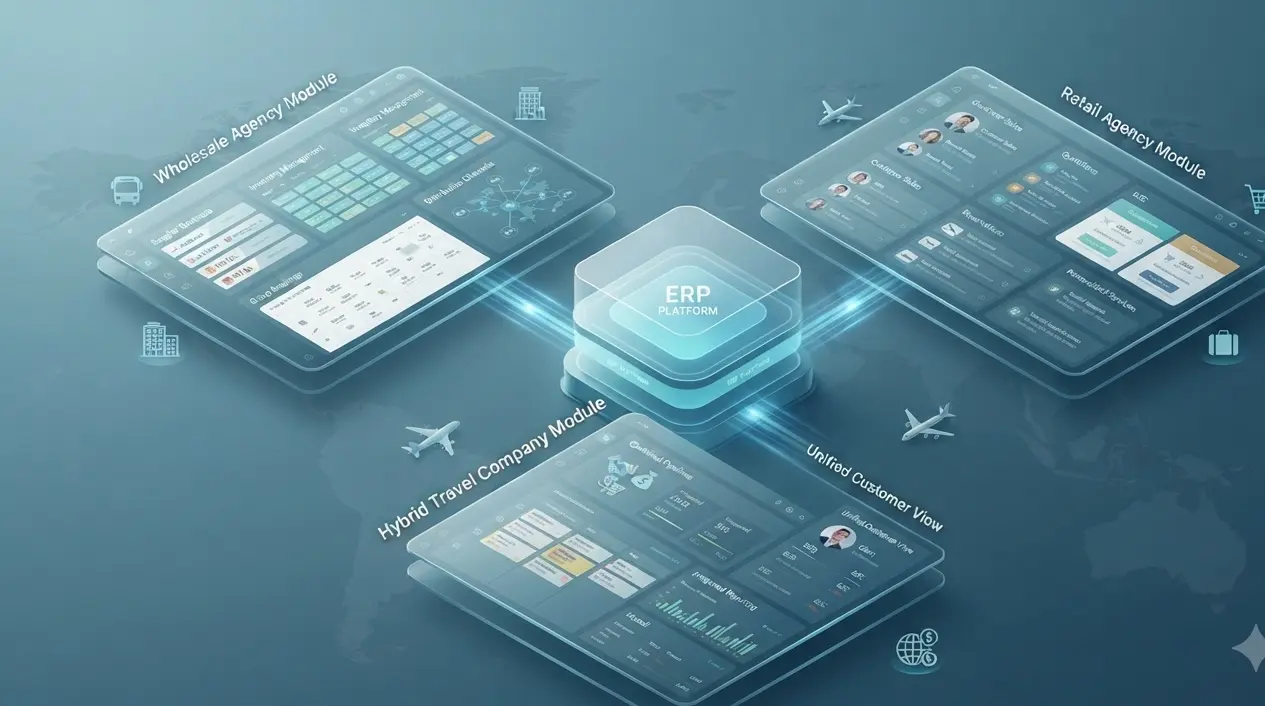
An outbound agency that builds packages for individual travelers or groups benefits mainly from quote speed and professional presentation of proposals. Its competitive advantage with the end client depends on responding quickly and flawlessly.
A wholesale tour operator that handles volume of room nights with allotment agreements with hotels needs visibility over committed availability, available quotas, and the flow of payments to suppliers in real time. Here financial control and contract traceability are the critical factor.
A DMC that operates travelers at the destination works with local hotel suppliers that often are not in the major global bed banks. Digitizing their bookings requires flexibility to load their own rates and specific conditions without depending on standard integrations.
Three different models, three ways to capture value. What they share is that none can compete long-term with hotel operations managed from spreadsheets or systems without integration.
Connected management transforms the complete booking cycle
Digitizing hotel booking management is not a change in just one part of the process. It’s a change in the logic with which information flows from when the client makes their inquiry until the operations team closes the booking with the supplier.
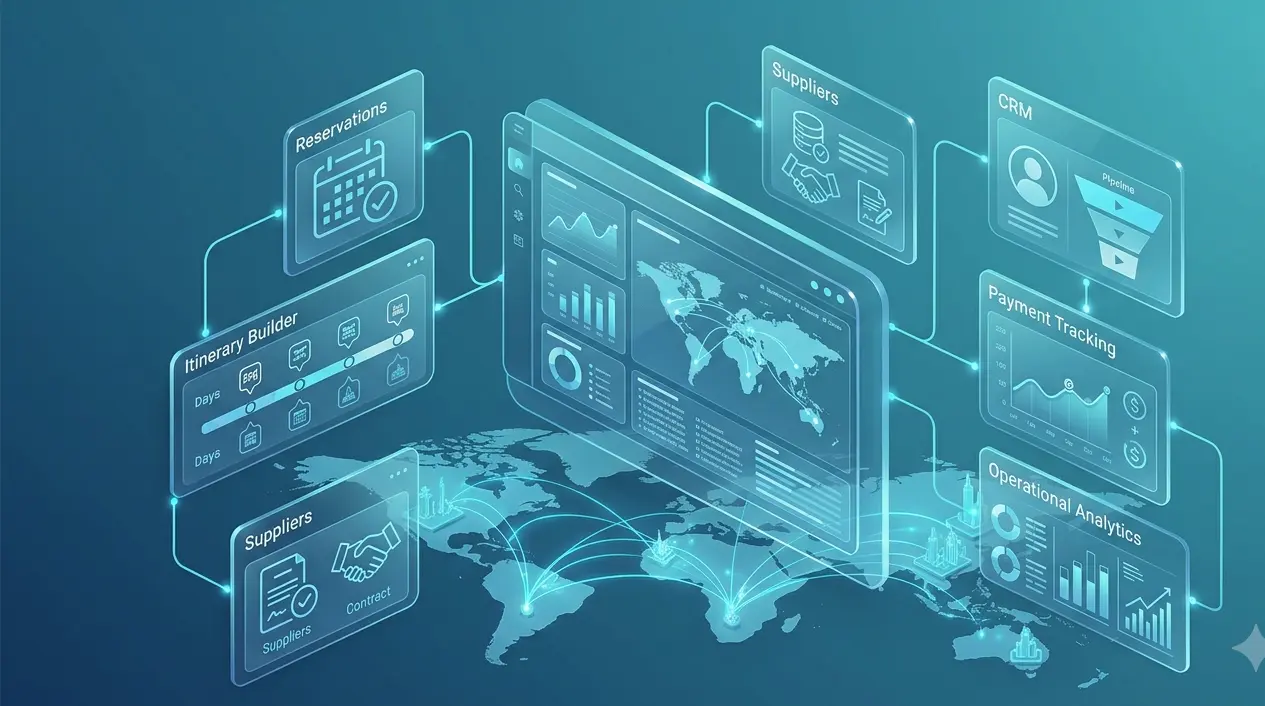
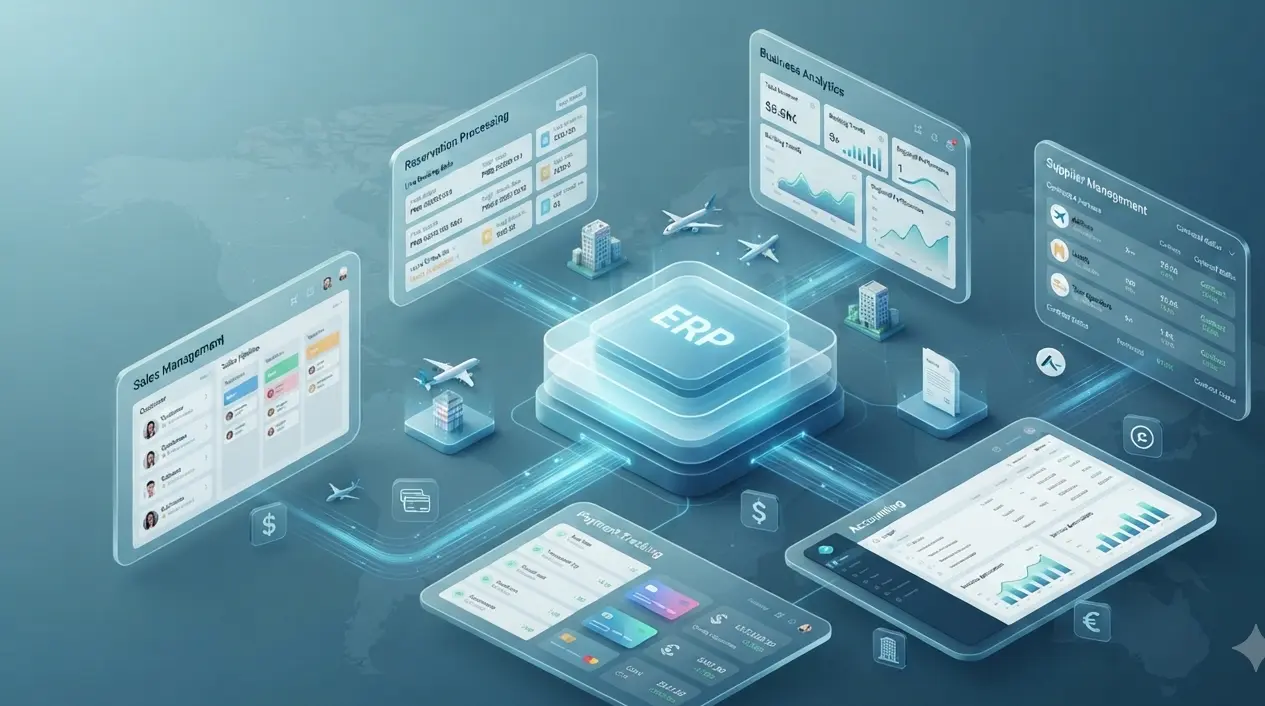
When that flow is connected (quote, confirmation, operations, and finances on the same platform), teams stop transferring information manually between departments. Each update is reflected in real time for everyone who needs to see it. Transfer errors disappear. And the team can dedicate their time to what generates value: serving the client better, building better packages, and growing the business.
Platforms specialized in tourism management like Toursys allow managing this cycle in an integrated way, connecting the hotel booking module with operations, finances, and client relations from the same environment.
If you want to see how a hotel booking system works within a complete tourism platform, you can explore the specific hotel booking module for agencies.