The question any agency manager asks when evaluating technology options is usually the same: what booking system do I need? The answer depends less on the catalog features and more on a prior question that is rarely asked clearly: what type of agency am I and how does my business operate?
A booking system is not a standard product. It is a tool that must understand the logic of the user. And the logic of an outbound agency selling packages to families is structurally different from that of a DMC coordinating international groups or a wholesale tour operator managing committed availability with hundreds of sub-agents. Using the wrong system doesn’t cause an immediate error. It generates constant friction: processes that don’t close on their own, information that has to be duplicated, and decisions made without the correct data.
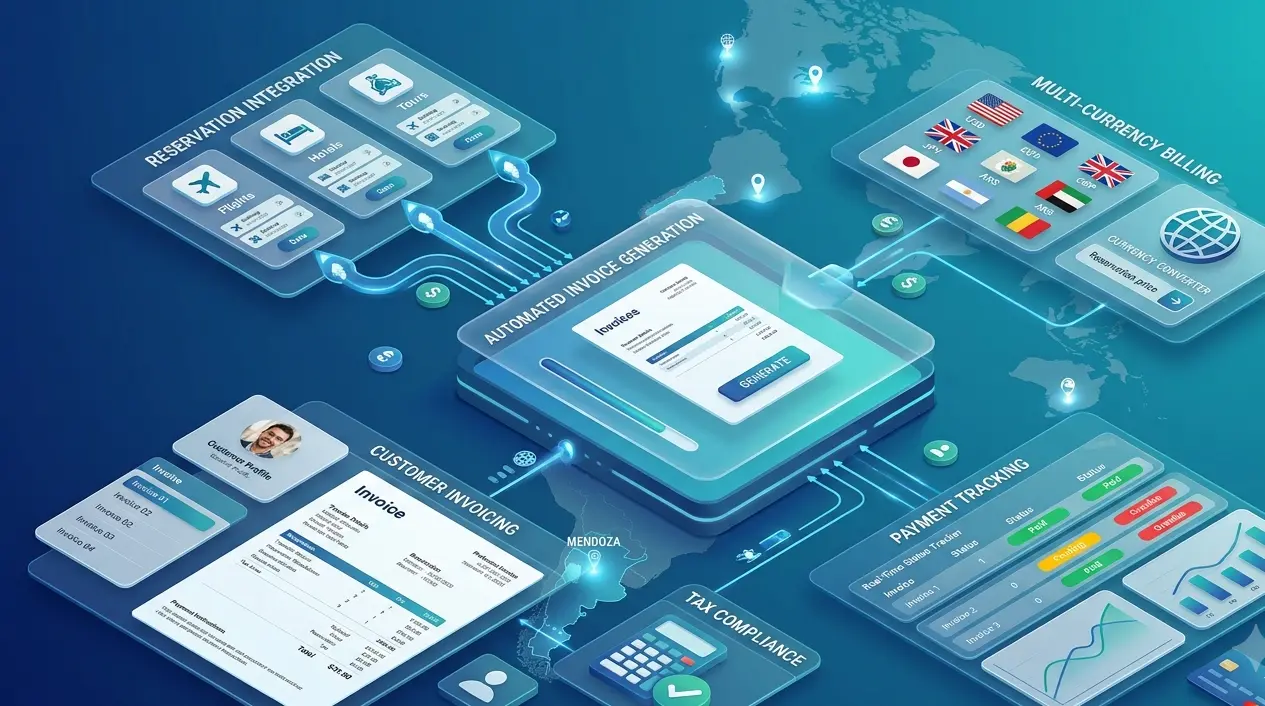
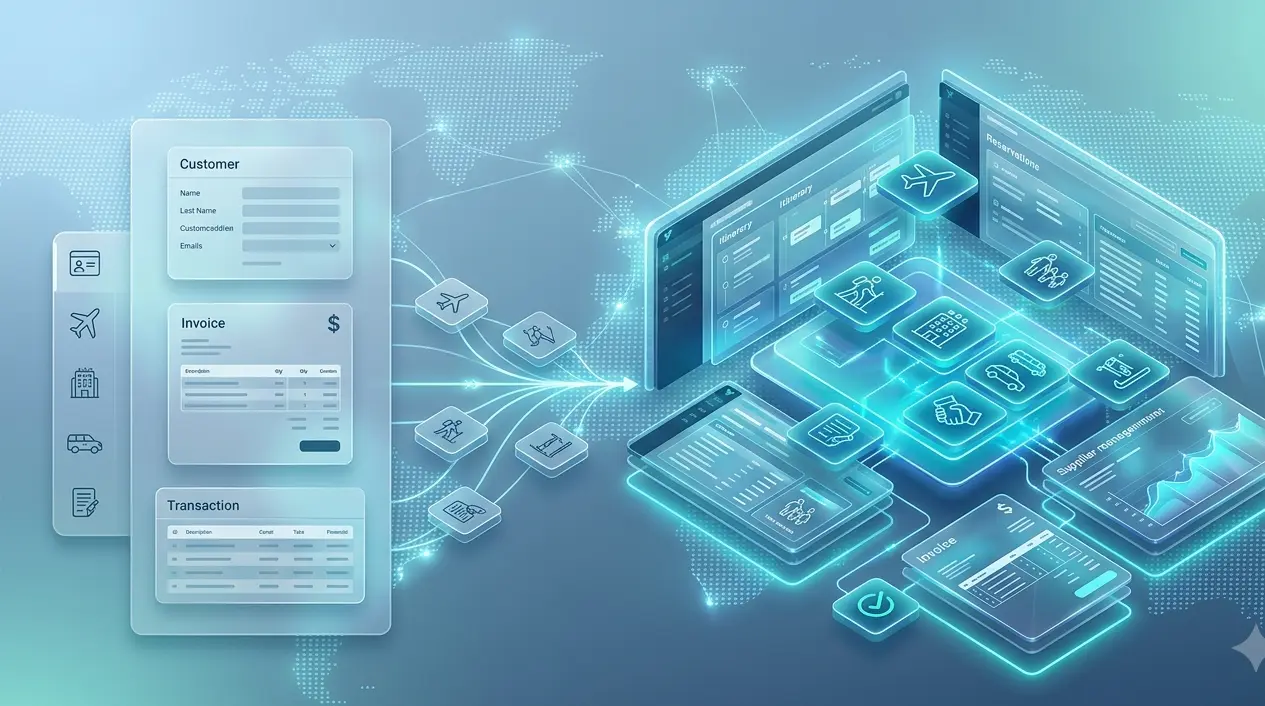
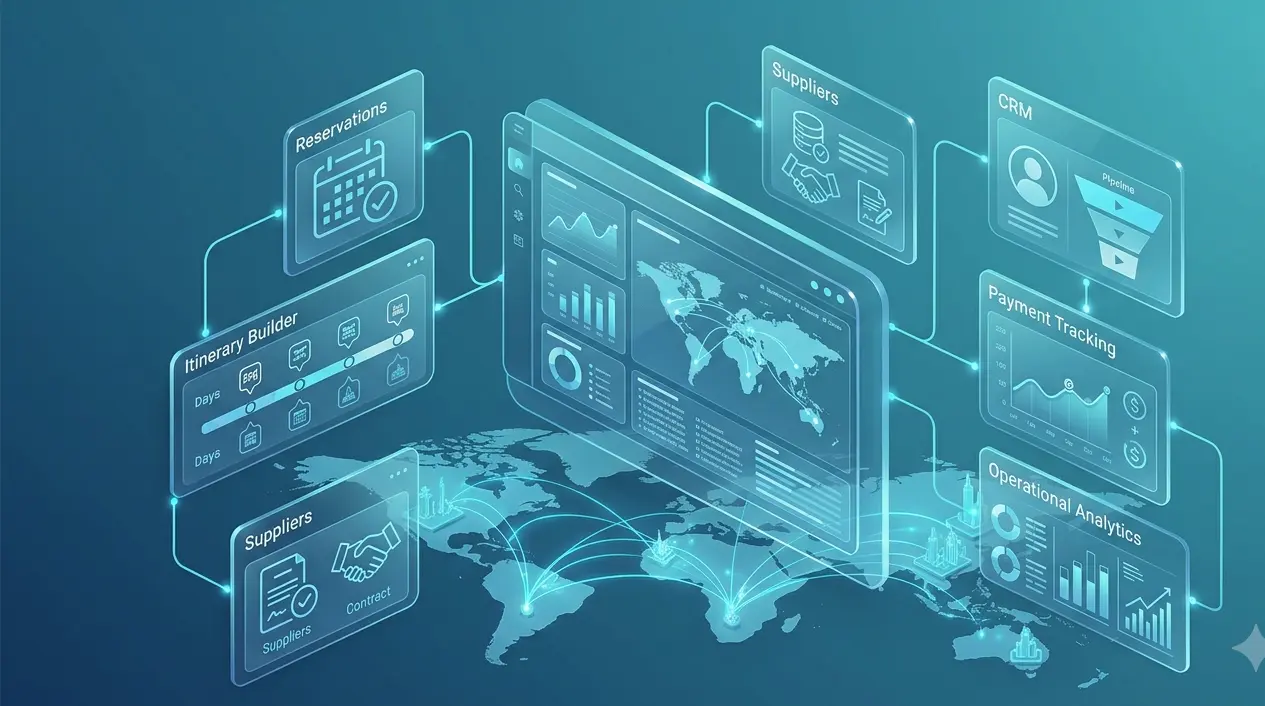
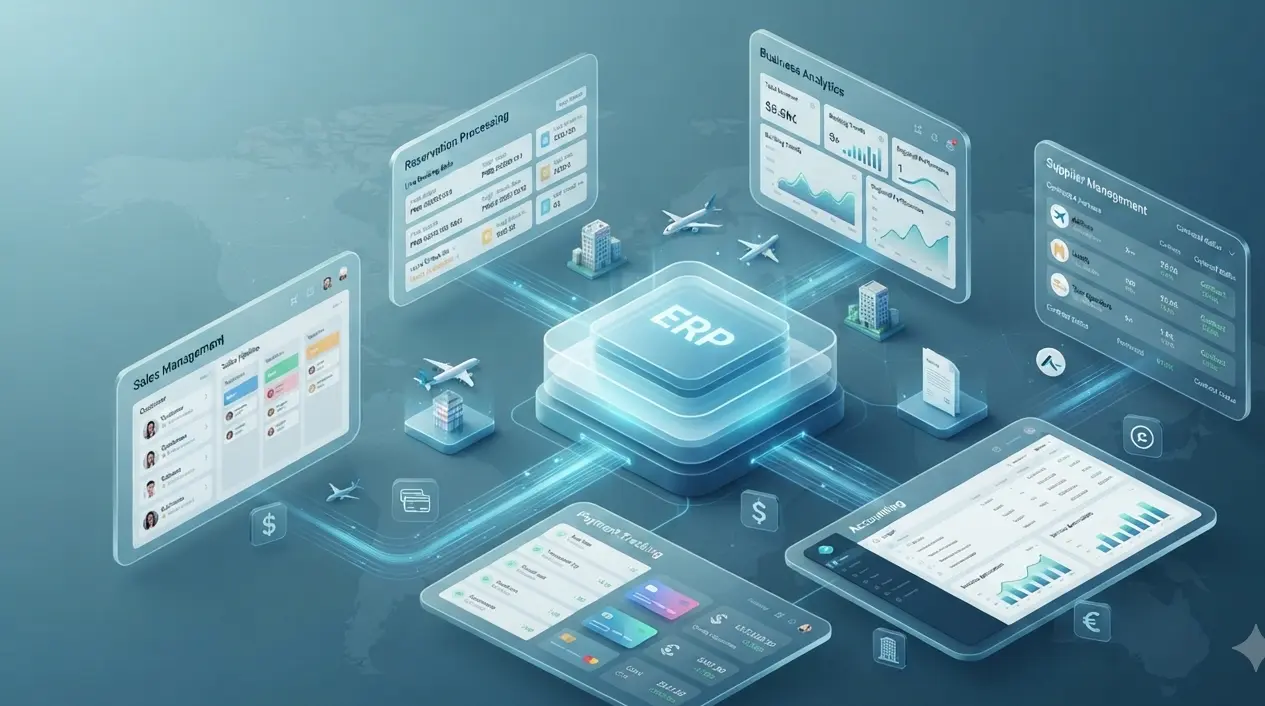
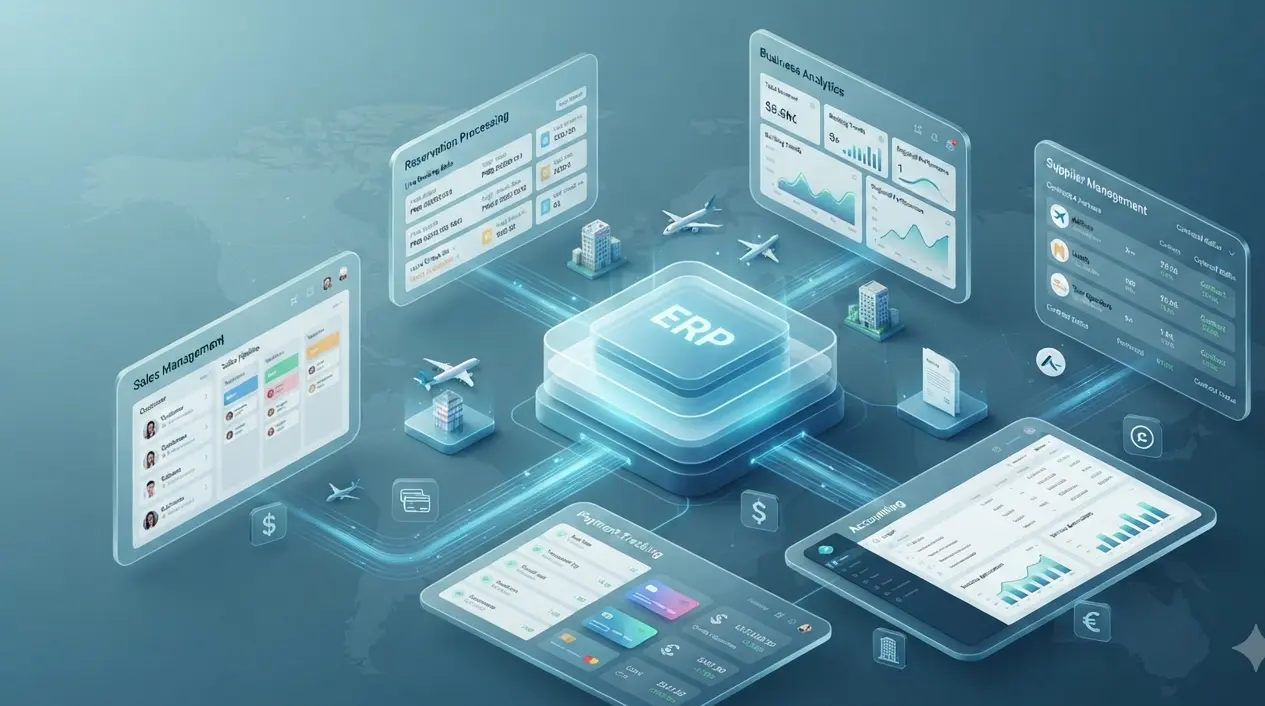
To understand why the business model matters so much when choosing technology, it is worth starting from how a travel booking system works in general terms: its role is not just to record sales, but to connect availability, rates, operations, and finances in a single flow. If that flow is not calibrated for your type of operation, the system only works halfway.
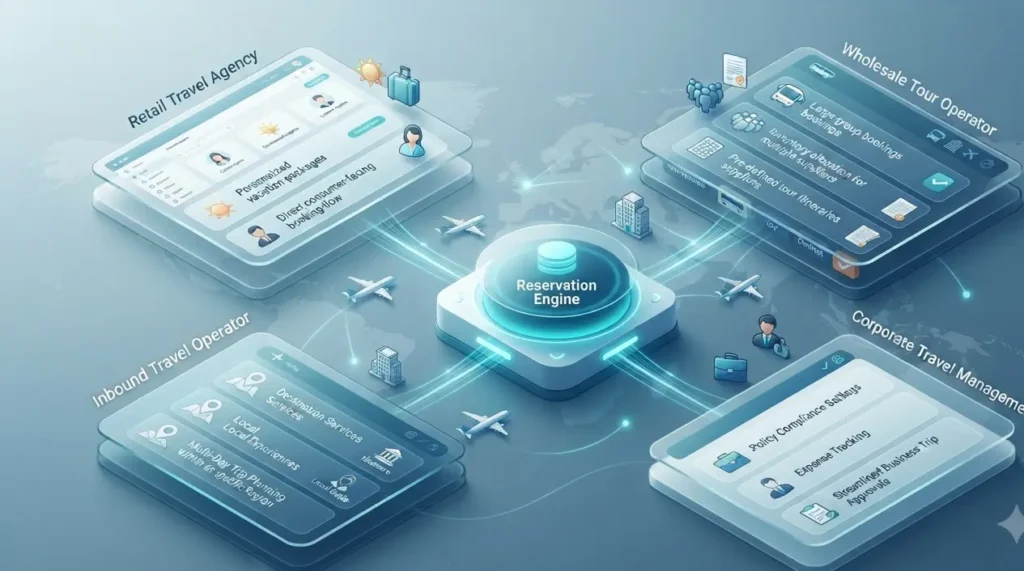
Types of booking systems according to the agency’s business model
Booking system for outbound agencies
An outbound agency sells to the final traveler. Its operation starts with a client inquiry, moves through quoting, is confirmed with the provider, and ends with the operated trip. The booking system this model needs is oriented toward the commercial experience: it must allow for quick, structured, and visually attractive quotes, with itineraries that the client can read and understand before approving.
Response speed is critical. An outbound agency that takes too long to quote loses the sale to whoever responds first with a clear proposal.
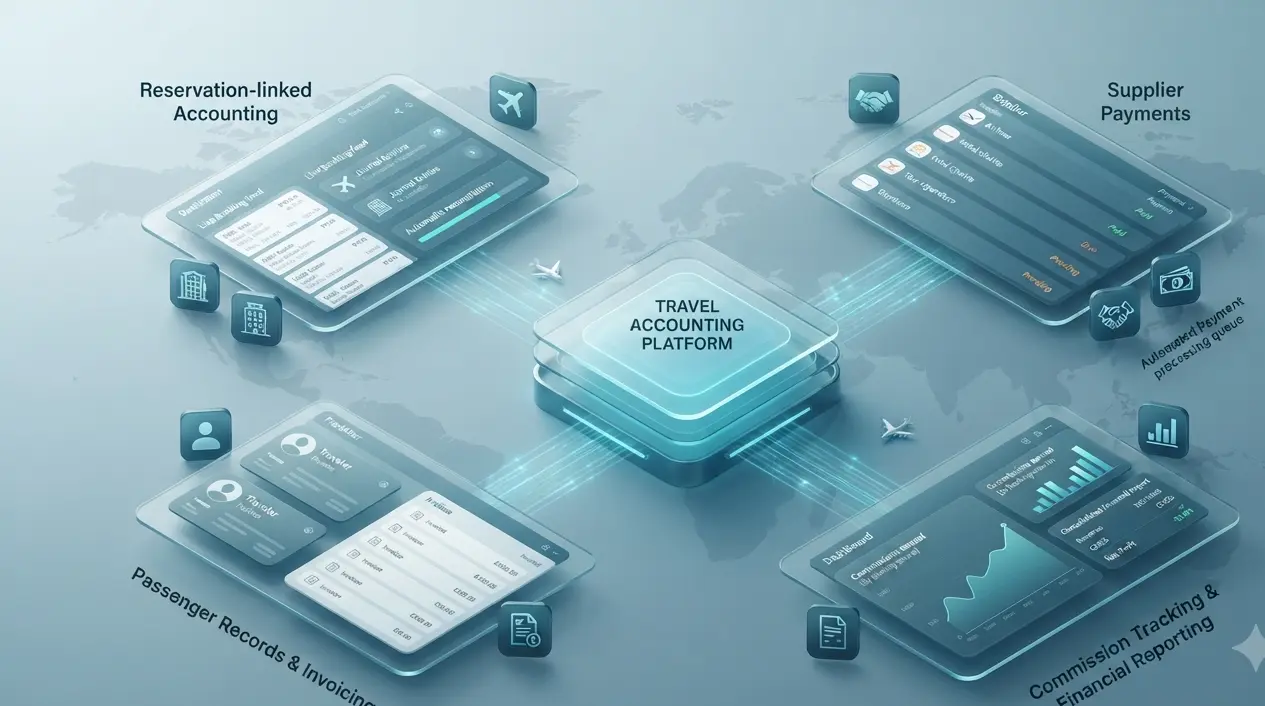
Beyond the quote, the system must manage client follow-up with full traceability: when the proposal was sent, if it was reviewed, and when the blocked rate expires. And when the sale is confirmed, it should automatically trigger communications with providers and accounts receivable entries, without the agent having to do it manually.
What this model rarely needs as an operational priority is the management of own allotments or a B2B portal for sub-agents. Whether those capabilities exist on the platform doesn’t add or subtract much: what matters is that the system doesn’t force the outbound agency to operate from a logic designed for another model.
Booking system for inbound agencies and DMCs
The inbound model reverses the logic. The agency does not look for the final client: it receives groups or travelers sent by outbound agencies or wholesalers from other countries. Its direct client is the agency that sends the request, not the tourist who arrives at the destination.
That changes everything the system must do. The first difference is the operational scale: a DMC may be simultaneously managing dozens of active bookings for different source agencies, with services occurring in the field (transfers, excursions, guides, hotels) that must be coordinated in real time. The system needs a centralized operational view, commonly called a control tower: a panel where the team can see what is departing each day, with which provider, with which assigned guide, and act on changes without leaving the environment.
The second difference is language and currency. A DMC operating in European, North American, and Asian markets simultaneously cannot quote in a single language or invoice in a single currency. The system must be natively multilingual and multi-currency, not as an additional extension.
The third difference is the B2B channel. The inbound agency does not work with the final consumer, but with intermediaries. A well-designed system for this model includes B2B access where the outbound agencies sending requests can check rates, see availability, and in some cases confirm services directly, without needing to go through email for every inquiry.
Agencies that are clear on why obsolete systems slow down this type of operation better understand which specific capabilities make the difference between scaling and getting stuck.
Booking system for tour operators
The tour operator designs the product before selling it. They put together packages, circuits, or experiences, distribute them through other agencies, and manage demand from multiple channels simultaneously. Their relationship with providers is different from the outbound and inbound models: in many cases, they work with committed quotas or allotments, which involves managing their own availability with a different logic than a quote-on-request system.
A tour operator’s booking system needs, on one hand, product management capabilities: parameterizing services, defining rates by season, group, and base, and keeping availability updated. On the other hand, it needs a distribution channel: if it sells through sub-agents, it needs a portal where those agencies can access its catalog, check availability, and confirm their own bookings with differentiated net rates.
Managing volume confirmations is also a specific need of this model. When dozens of sub-agents confirm services simultaneously, the system must manage those confirmations in bulk without the team having to do it manually one by one.
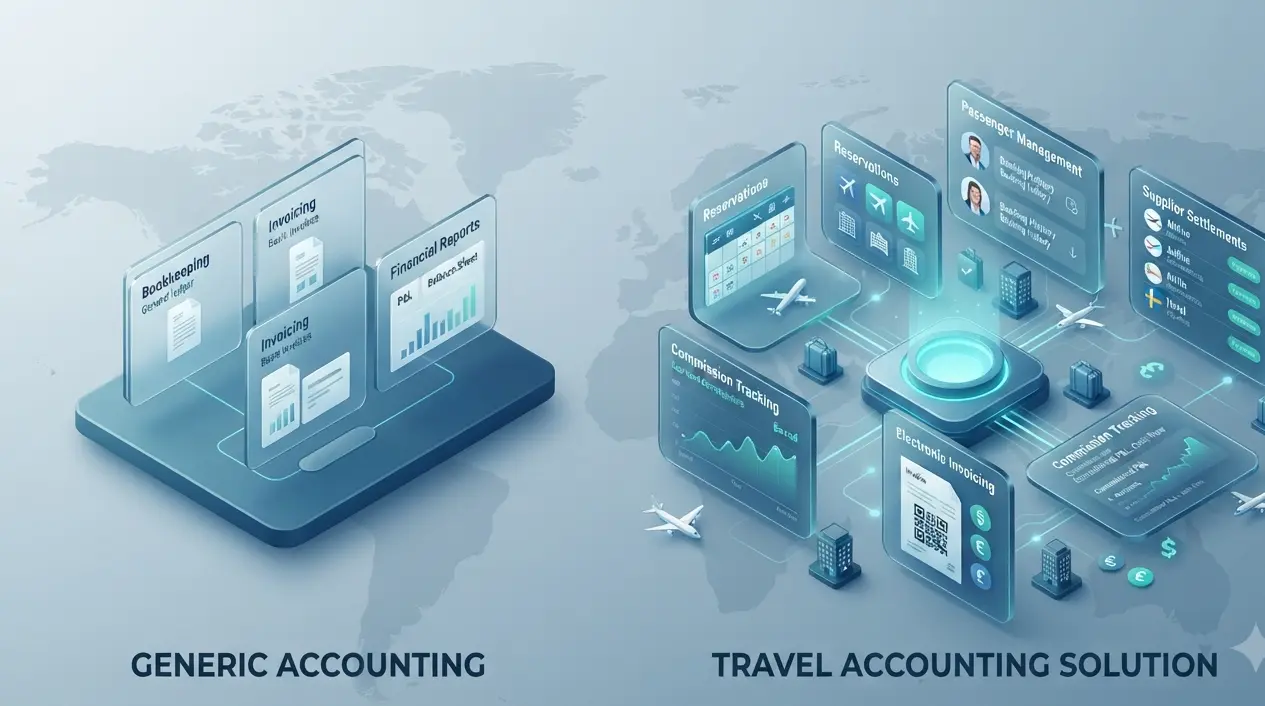
A tour operator evaluating technology options without being clear on whether the system they are looking at is designed for their business logic runs the risk analyzed in depth in the article on tourism software versus generic tools: adopting a tool that requires adapting the operation to its logic, rather than the other way around.
Booking system for corporate travel agencies
The corporate model manages business travel. Its client is not the individual traveler choosing their destination, but the travel manager of an organization that has internal policies, approved budgets, and reporting requirements. The sale doesn’t start with a wish: it starts with a corporate policy that determines what can be booked, under what conditions, and with what approvals.
The booking system for this model must understand that logic. It needs to manage corporate client profiles with personalized business rules: negotiated corporate rates, spending limits per traveler or per area, specific billing conditions, and recording all movements for expense control reports.
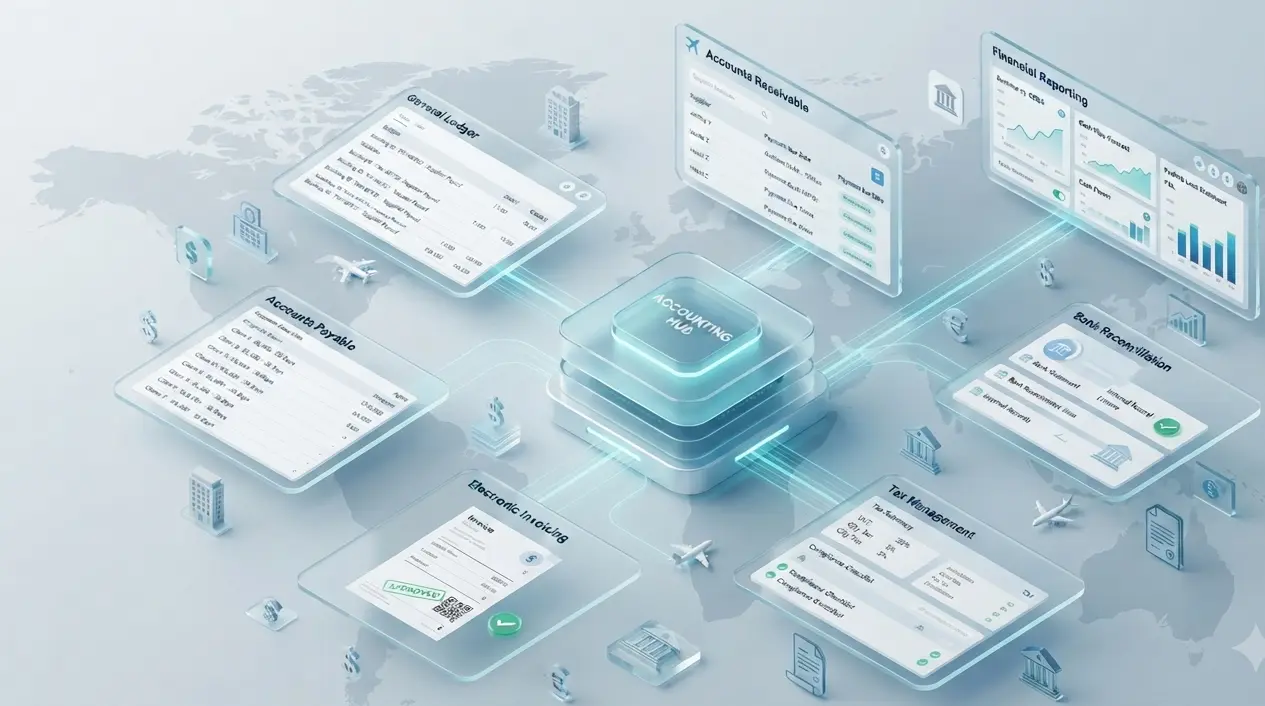
Accounting integration is also more demanding in this model. Corporate clients often require invoicing with cost centers, periodic reconciliations, and documentation that can be presented in internal audits. A generic booking system does not have that logic built-in.
What differentiates each model in operational terms
The following table summarizes the capabilities each type of agency needs from its system, based on its business model. These are not just lists of features: they are concrete operational needs that the system must solve so the agency can operate without friction.
| System capability | Outbound agency | Inbound Agency / DMC | Tour Operator | Corporate agency |
| Fast commercial quoting | Critical | Media | Media | High |
| Integrated itinerary in quote | High | High | High | Media |
| Operational control tower | Low | Critical | High | Media |
| Allotment / quota management | Not applicable | Media | Critical | Not applicable |
| B2B portal for sub-agents | Not applicable | High | Critical | Not applicable |
| Multilingual and multi-currency | Media | Critical | High | Media |
| Business rules per client | Media | High | High | Critical |
| Corporate expense control | Low | Low | Low | Critical |
| Accounting integration per booking | High | High | High | Critical |
Reading this table from left to right shows something rarely mentioned when talking about tourism software: there is no “complete” system in the abstract. There is a system that is well-calibrated for your business model. A system designed for wholesale tour operators may be excessive and complex for an outbound agency quoting family packages. One designed only for the outbound model may fall short for a DMC coordinating multi-language operations.
The question worth asking is not “what features does this system have?” but “does this system understand how my business operates?”
When the system does not match the model
There is a sign that appears when technology and the business model are not aligned: the team starts working in parallel to the system. The tool records the sale, but confirmations with providers are done by email. The system has an operations module, but the team uses a separate spreadsheet to coordinate daily services. There is an accounting area within the platform, but invoices are issued with another tool.
This parallel work is not a team discipline problem. It is a sign that the system does not correctly cover the needs of the model.
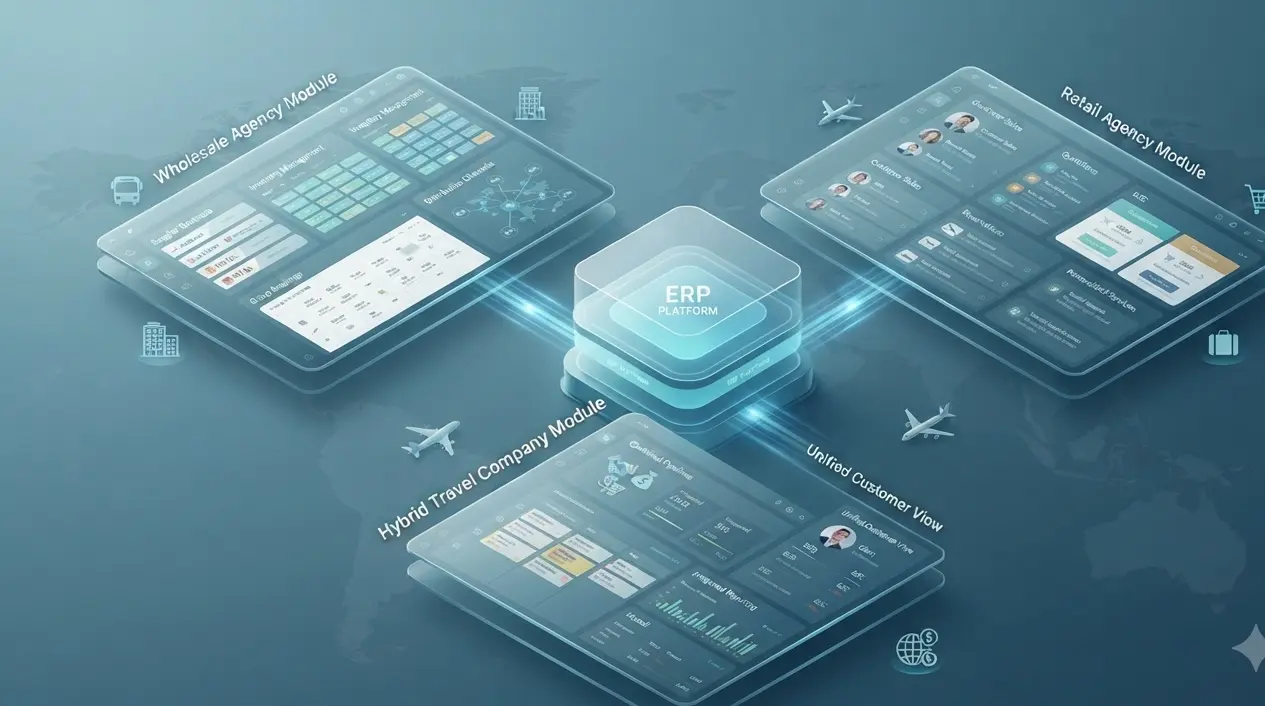
Understanding what type of system your agency needs is the first step to not repeating that cycle. Specialized tourism booking systems, when well-designed, absorb the logic of different business models into a single environment. Some platforms offer configurations adapted to outbound, inbound, tour operators, and corporate agencies from the same technological base, with modules that are activated according to the needs of each operation and with real support to accompany implementation from day one.
The business model is not a secondary detail when choosing technology. It is the starting point.