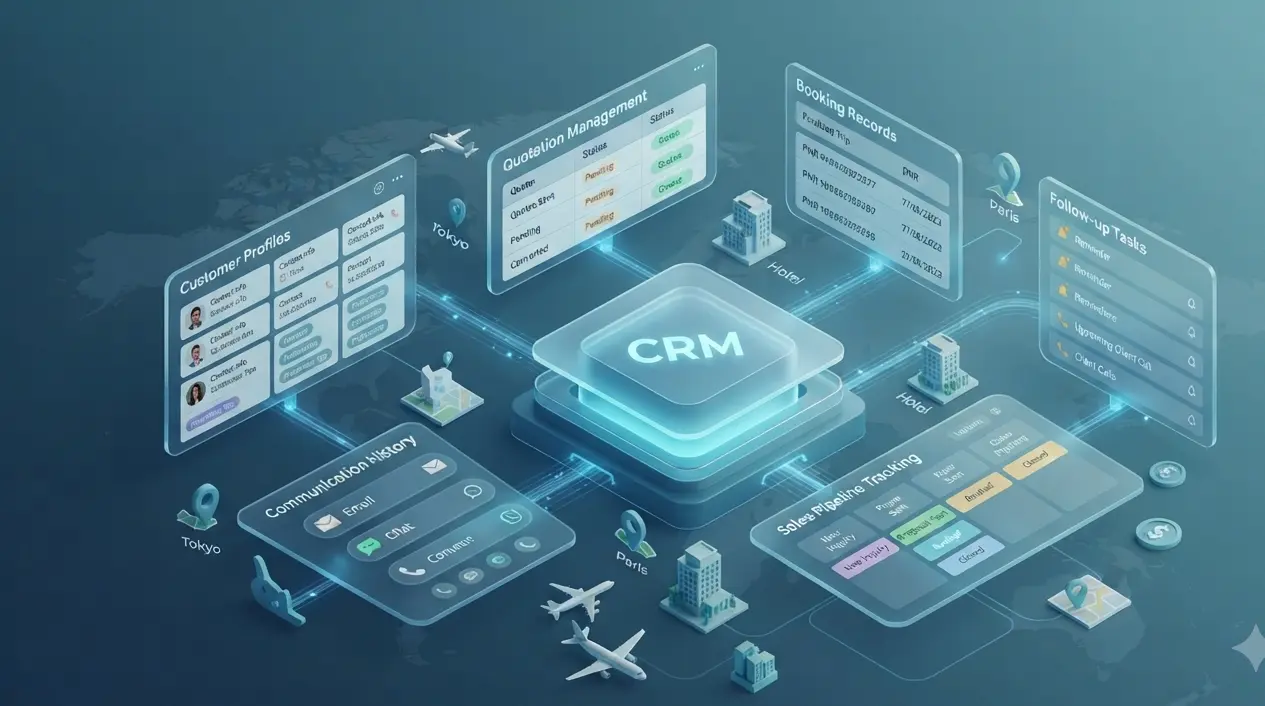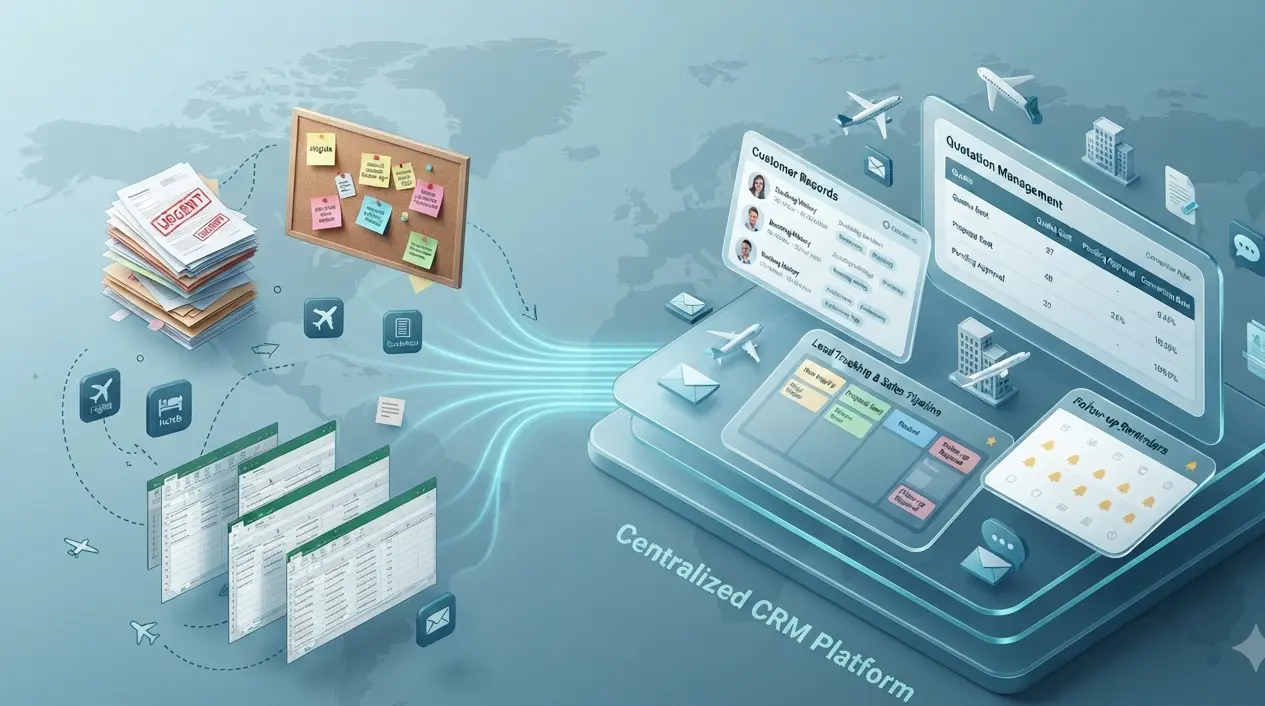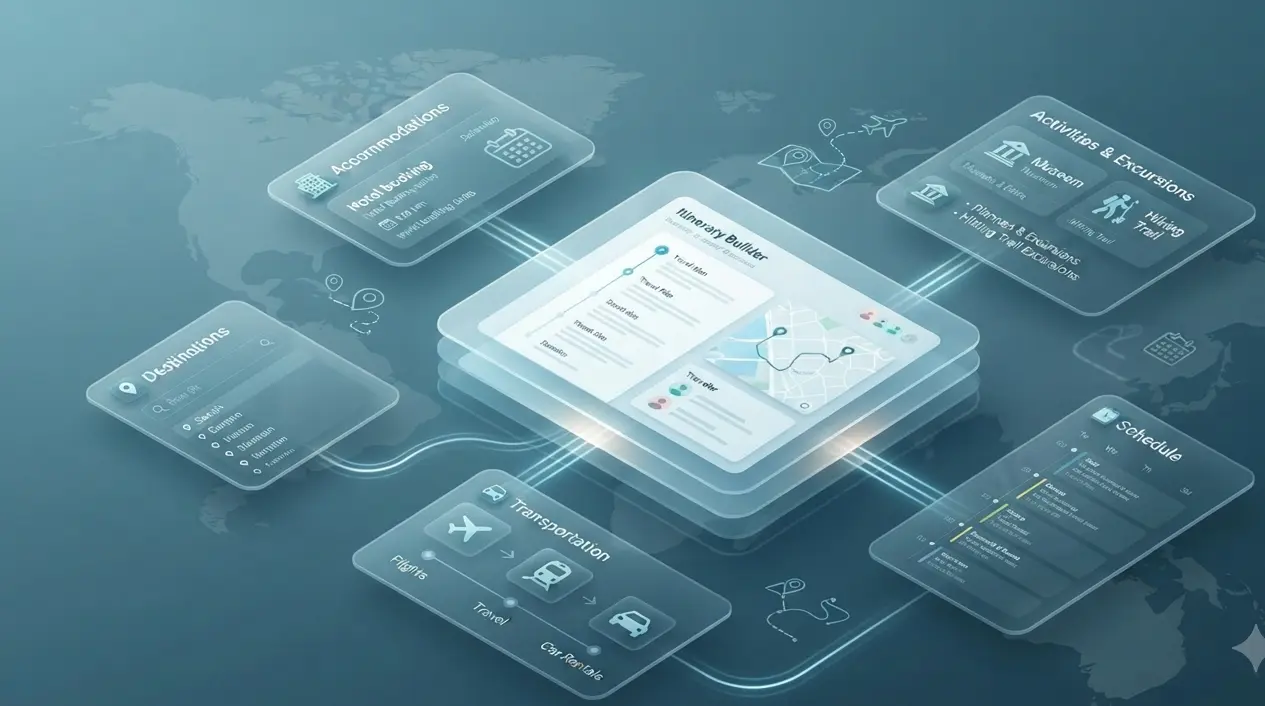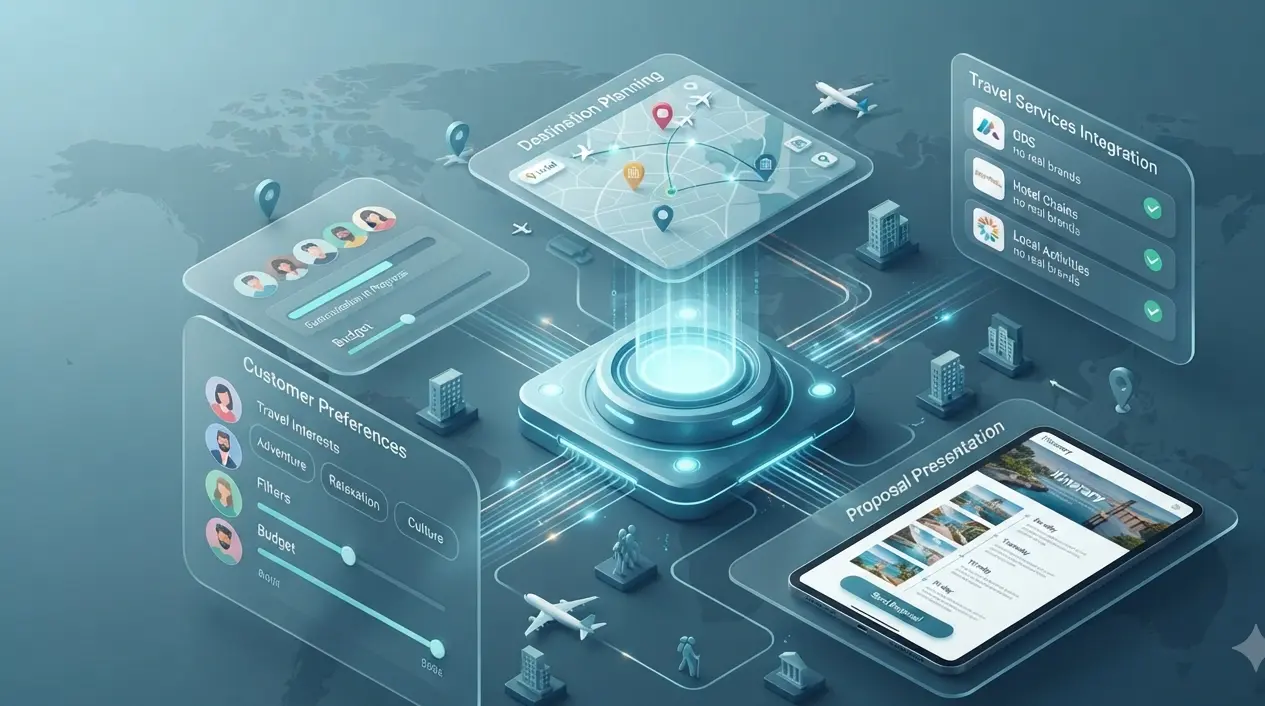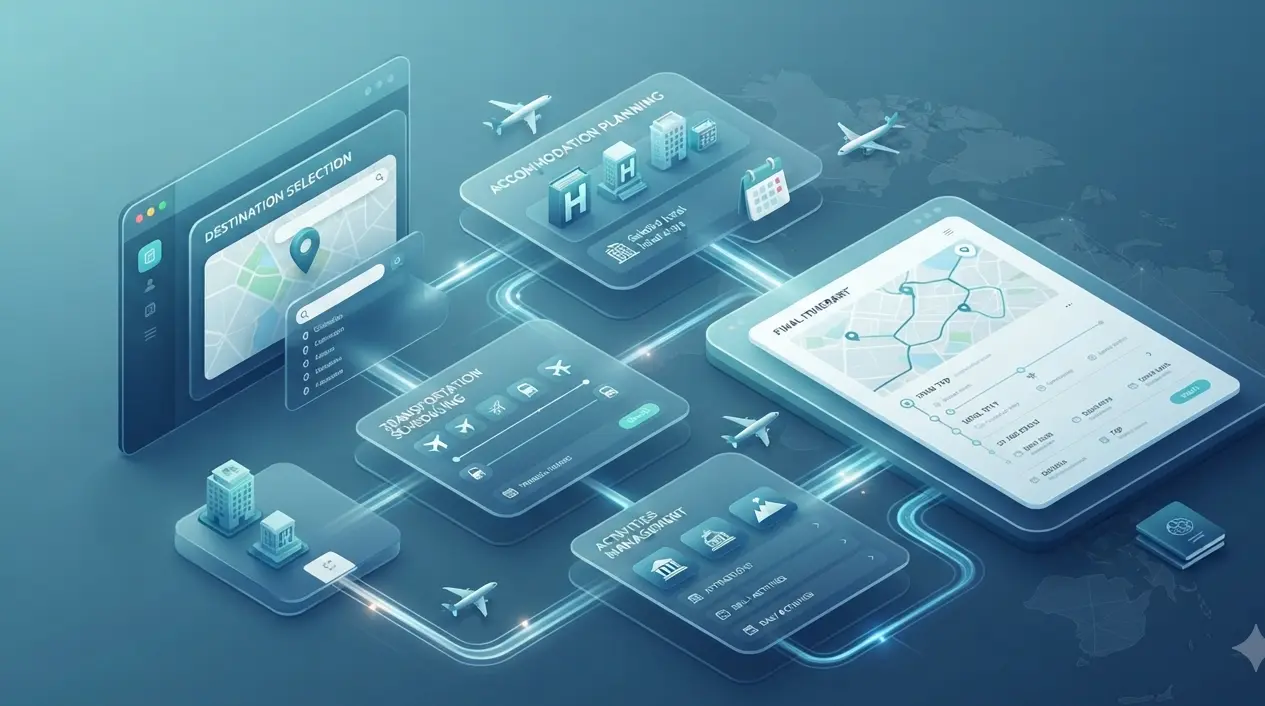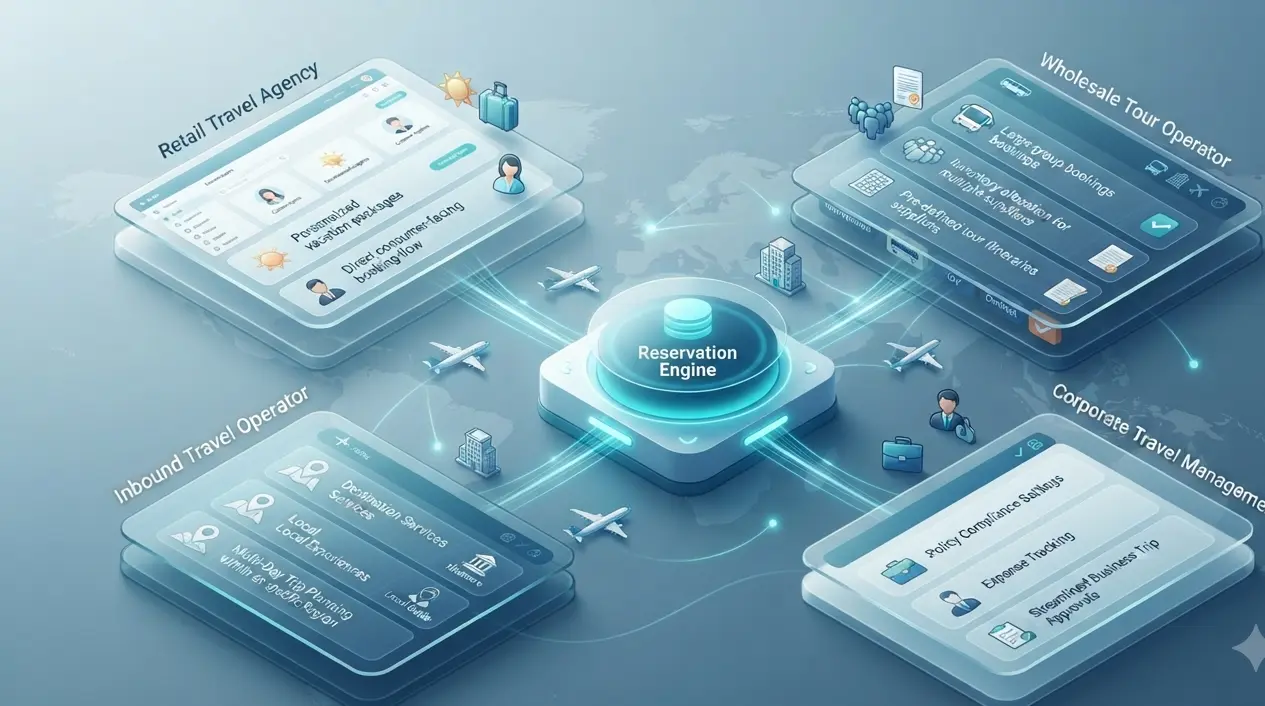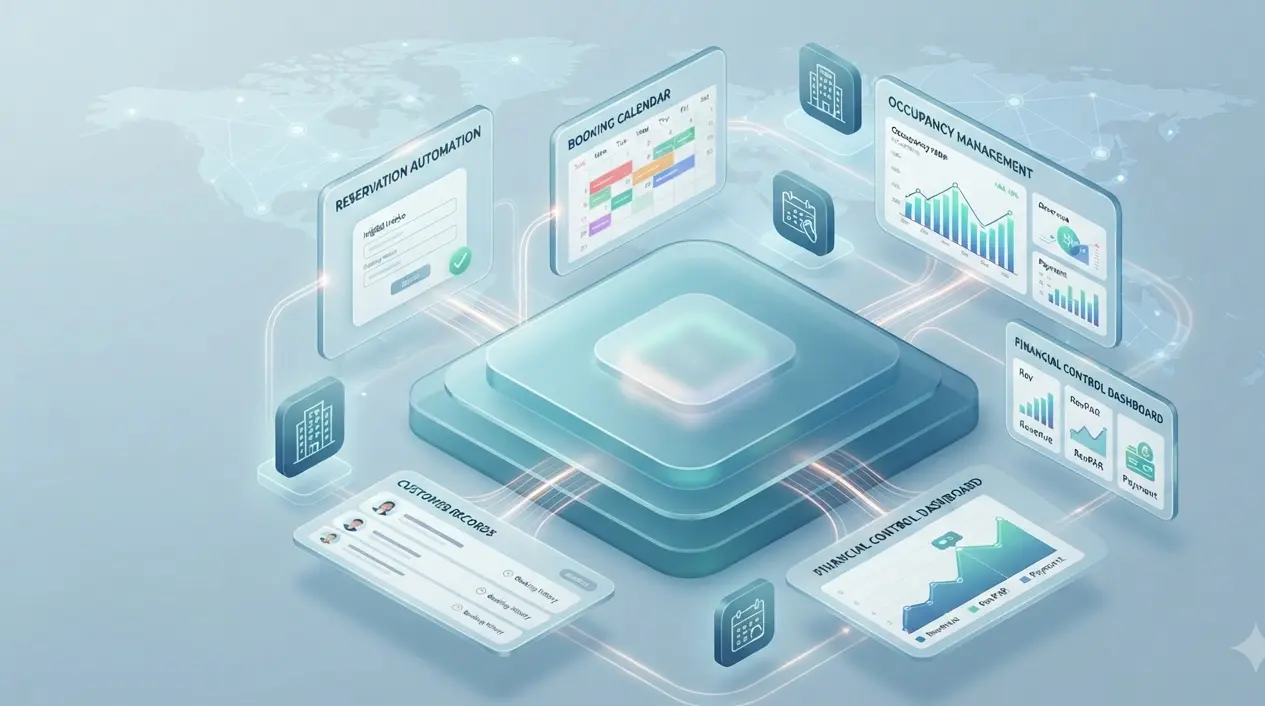
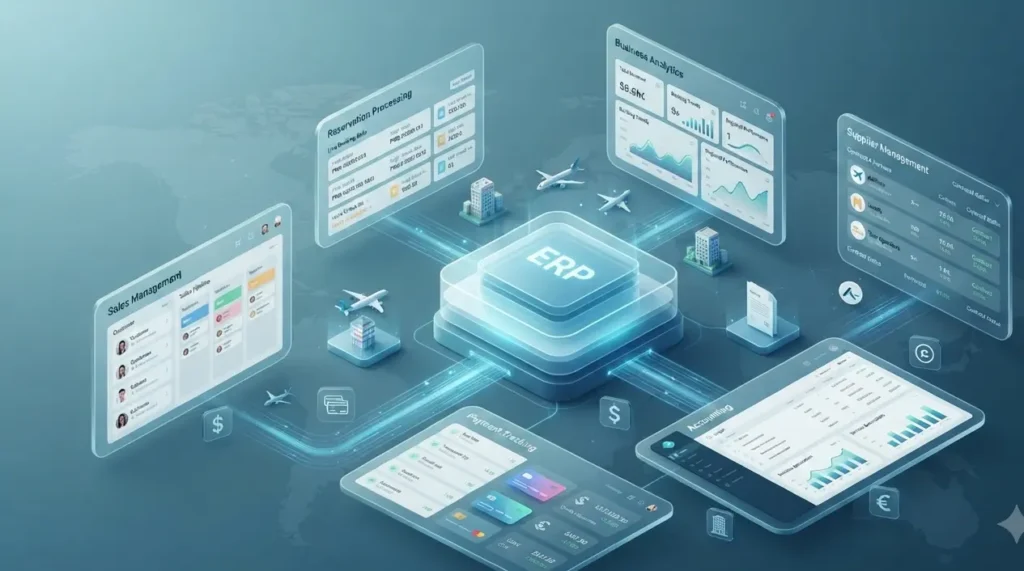
A quote is sent by email on Monday. The client’s payment arrives by transfer on Wednesday, but someone has to manually record it in another system. The supplier invoices on Friday, and that invoice sits in a PDF folder that no one reviews until the end of the month. None of these steps are done incorrectly. The problem is that they don’t communicate with each other. That’s where an ERP comes in for travel agencies: not as another separate piece, but as the system that connects what’s already being done.
The point where an agency stops operating with disconnected pieces
Every agency starts with simple tools. A spreadsheet for bookings, an email for quotes, perhaps a separate billing program. It works well for a while. But there comes a time when growth means multiplying the work, not the results. Each new booking involves entering the same data three or four times into different systems, and every time a team member is absent, a part of that information is lost with them.
That’s not a people problem. It’s a structural problem. That first symptom, when the same task is repeated in more than one place, usually coincides with the immediate benefits of a management program, just before growth becomes a problem instead of good news.
How much of that repeated work ends up taking away actual sales time?
How an ERP Connects with Daily Operations in Travel Agencies
An ERP in travel agencies doesn’t replace sales or operational work. It unites them. When a sale is confirmed, the system automatically generates the corresponding financial movement: what the client pays, what is paid to the supplier, the commission, and the actual margin of that operation, without anyone having to copy those numbers elsewhere.
This way of operating on a single information base, instead of moving files between separate programs, is the same logic behind the benefits of managing an agency with cloud software, something that is already transforming how travelers are served from the first contact.
What the Data Shows About the Digitalization of Travel Agencies
The progress is not just a perception. The report on the digitalization of tourism SMEs prepared by the Spanish Secretary of State for Tourism, through SEGITTUR, places travel agencies as the most digitized subsector in all of tourism, with a level of 52.6%.
That same figure is surprising when you look closely at which area lagged most. The same report indicates that business operations and administrative processes are, of the eight aspects analyzed, those showing the least digital development, barely above 40%. Agencies advanced quickly in marketing, sales, and customer relations. The digitalization of administrative management, however, is still lagging.
Closing that gap doesn’t depend on adding more tools, but on the existing ones starting to communicate with each other. That’s why it’s worth reviewing what a good ERP for travel agencies should have before assuming that any system solves the same problem.
What Accounting Gains When It Stops Living Isolated from Sales
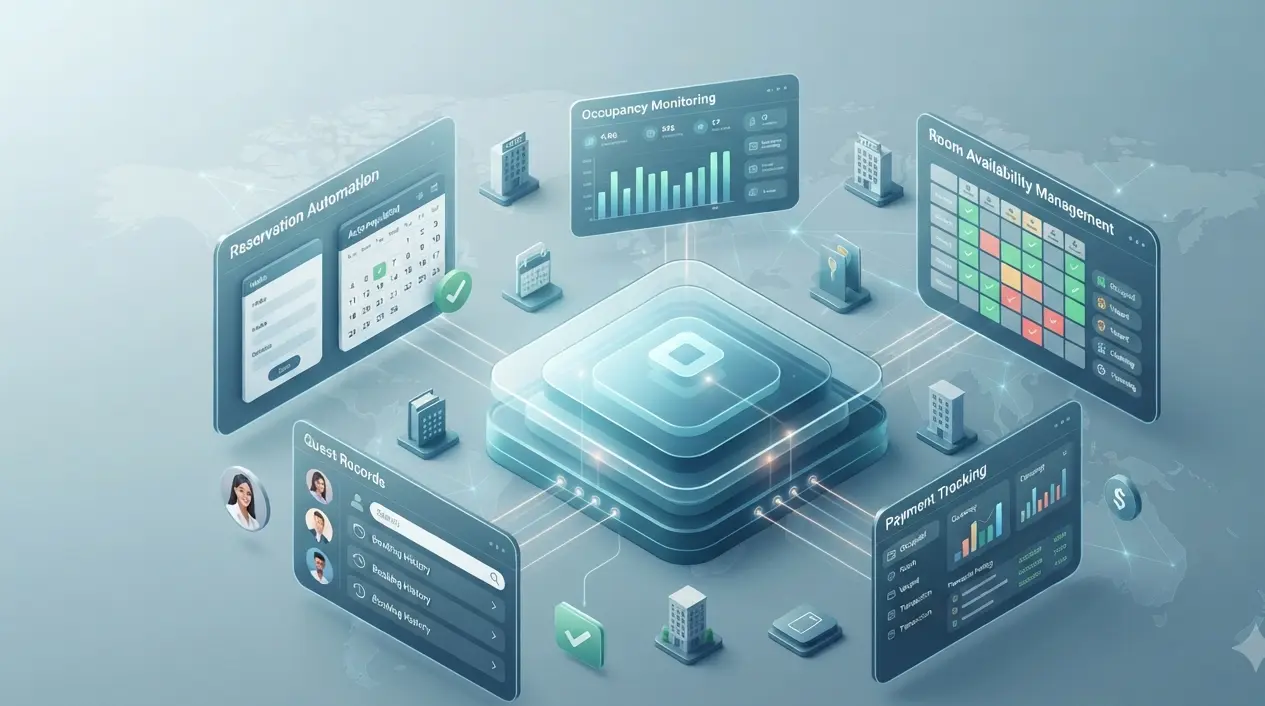
Prepayments, commissions, seasonal rates, payments in different currencies. Travel agency accounting has a logic that a generic accounting system doesn’t contemplate. When the financial module is integrated into the operation, each confirmed booking generates its own movements in accounts receivable and payable, without anyone having to reconstruct that information at month-end.
The result is not just order. It’s visibility. Knowing how much a booking truly generated, after commissions and supplier costs, no longer depends on creating a separate spreadsheet every time someone asks.
The Journey of a Booking within an ERP for Travel Agencies
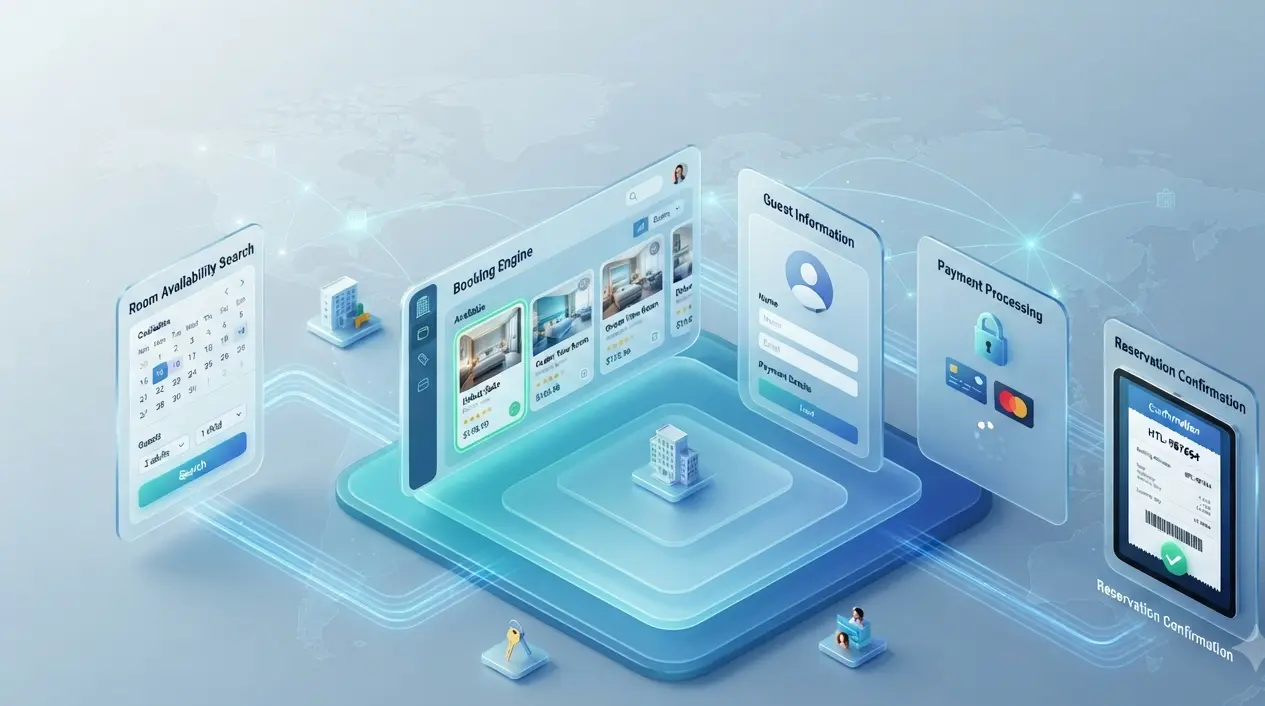
Let’s consider a specific booking. A client confirms a package with two hotel nights and a transfer. In a fragmented system, that confirmation triggers at least four manual tasks: recording the payment, notifying the supplier, generating the voucher, and updating the status in some tracking spreadsheet.
In an ERP for travel agencies, that same confirmation is a single event. The payment is recorded, the supplier payment is scheduled, the voucher is automatically generated, and the booking status is updated for the entire team simultaneously. The difference is not in what is done, but in how many times it needs to be done.
An Agency That Doesn’t Rely on Someone Remembering Everything
The advantage of connecting sales, bookings, payments, and accounting is not just operational. It’s also a way to protect business knowledge. When information lives in a system and not in a person’s memory, the agency no longer depends on who is available that day.
In this area, tourism software like Toursys understands this logic from its design: it connects quotes, bookings, operations, and accounting in a single flow, so that each confirmed sale automatically translates into organized financial information.
Modernizing agency management doesn’t mean changing tools every year. Instead, it means stopping operating with disconnected pieces and starting to work on a single information base, which supports every decision made thereafter. What would change in your operation if that information never depended on someone remembering it?