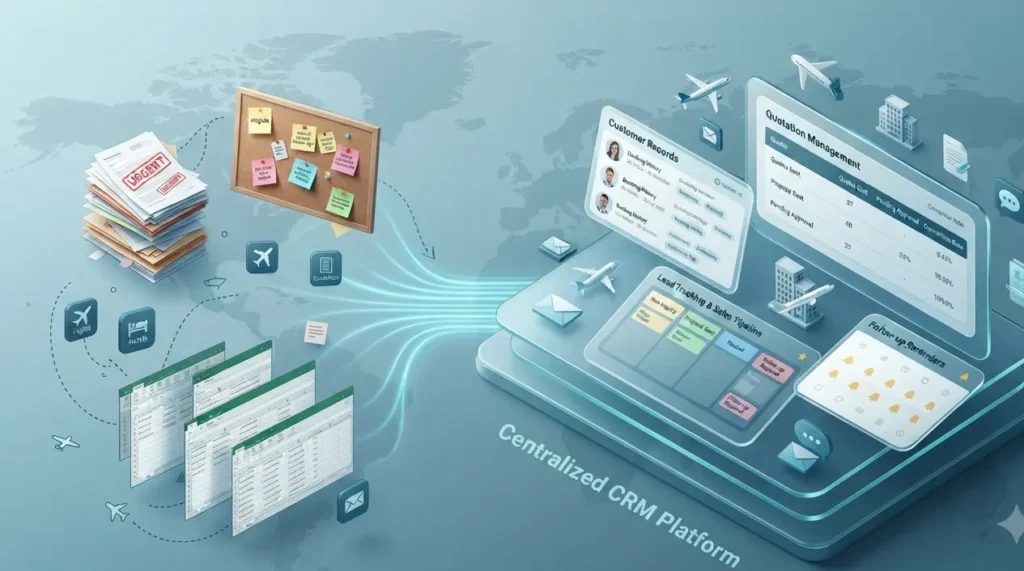
There is a moment, almost always silent, when an agency stops controlling its customers and starts chasing them. It doesn’t happen overnight. It builds up in quotes that no one follows up on, in data that lives only in an agent’s head, and in customers who call asking about something they had already resolved via WhatsApp the week before.
Recognizing whether your travel agency needs a CRM doesn’t depend on a vague intuition about “being more organized.” It depends on concrete signs that appear in daily operations and which, added together, indicate that the current system—be it a spreadsheet, email, or the team’s memory—is no longer enough to sustain the volume of clients you handle.
Disorder isn’t noticed until it costs a sale
While an agency has few active clients, any method works. A notebook, a shared spreadsheet, or even remembering who asked for what. The problem appears when that volume grows and the method doesn’t scale with it.
That is where the first symptoms become visible. An agent promises a follow-up and then forgets. Two team members write to the same client through different channels, unaware that the other has already responded. A quote sent ten days ago remains unanswered because no one marked it as pending.
None of these events, in isolation, seem serious. Together, they are: they represent sales lost not because of price or product, but because of management. This type of attrition usually coincides with agencies that still base their operations on systems that have become too small for the current business volume, unable to provide traceability to the relationship with each client.
Signs that indicate your agency already needs a CRM
Not all agencies reach this point at the same time, but the symptoms usually repeat in a similar order. The following table summarizes the most frequent signs and what they reveal about the real state of the commercial operation.
| Observable sign | What it reveals |
| Quotes where no one knows what stage they are in | Absence of a visible and shared pipeline |
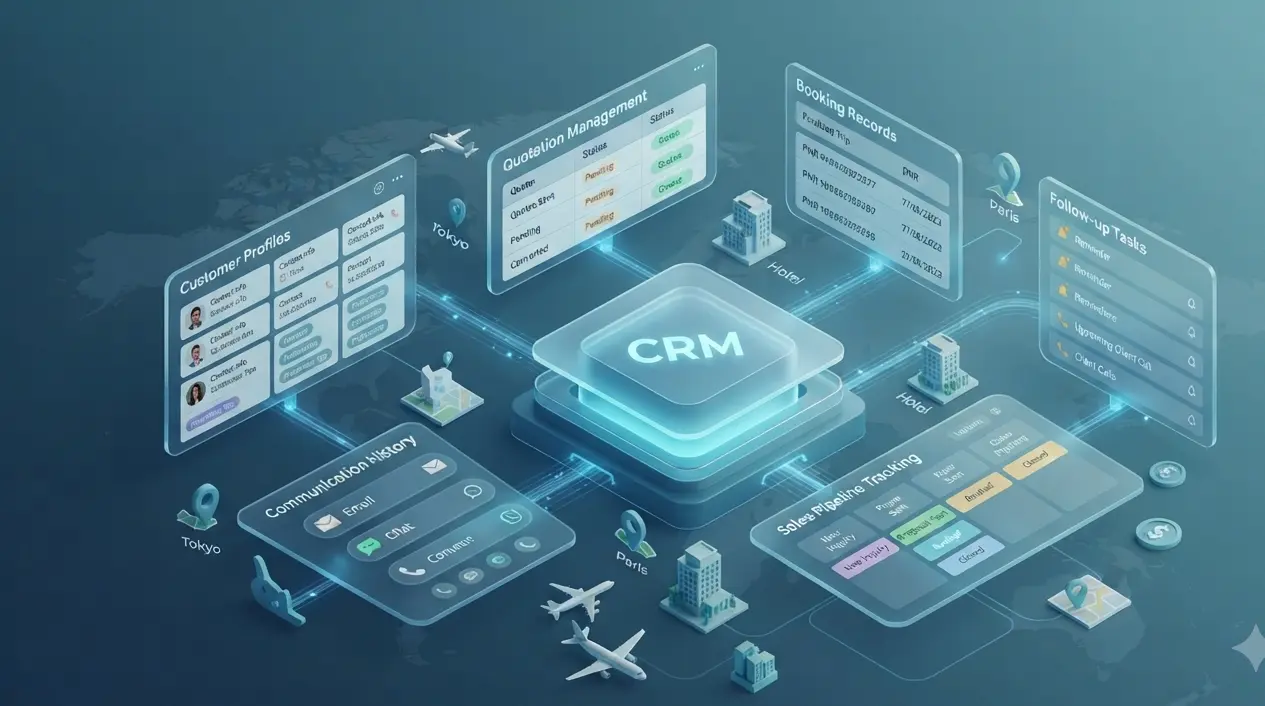
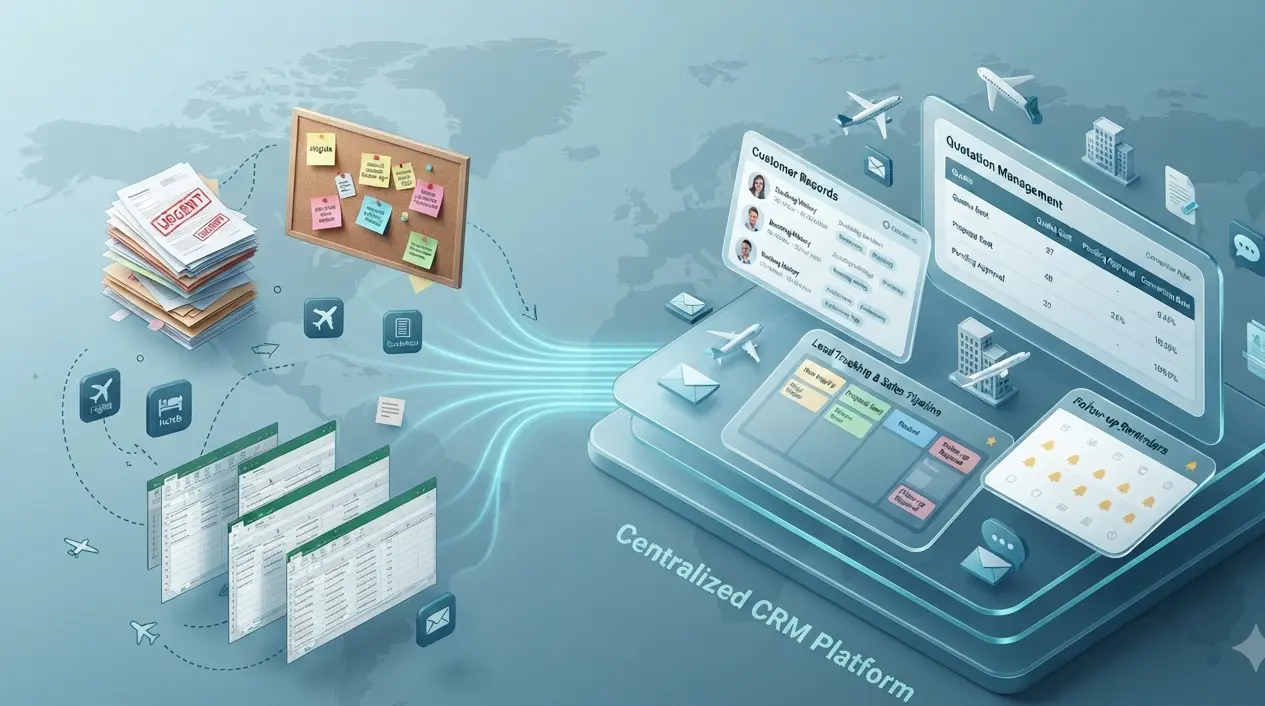
| Customer information scattered across emails, chats, and spreadsheets | Lack of a single source of truth for each customer |
| Follow-ups that depend on the memory of a specific agent | Operational risk if that person is absent or leaves |
| Duplicate or contradictory responses to the same customer | Lack of visibility among team members |
| Inability to know what percentage of quotes convert into sales | Commercial decisions made without real data |
When two or more of these signs coexist in the operation, it is no longer a problem of personal organization. It is a structural problem, and as such, it requires a structural solution. The next step, once these signs are confirmed, is usually to understand how to size a commercial management system according to the real size of the agency, instead of adopting the first tool that appears in a search.
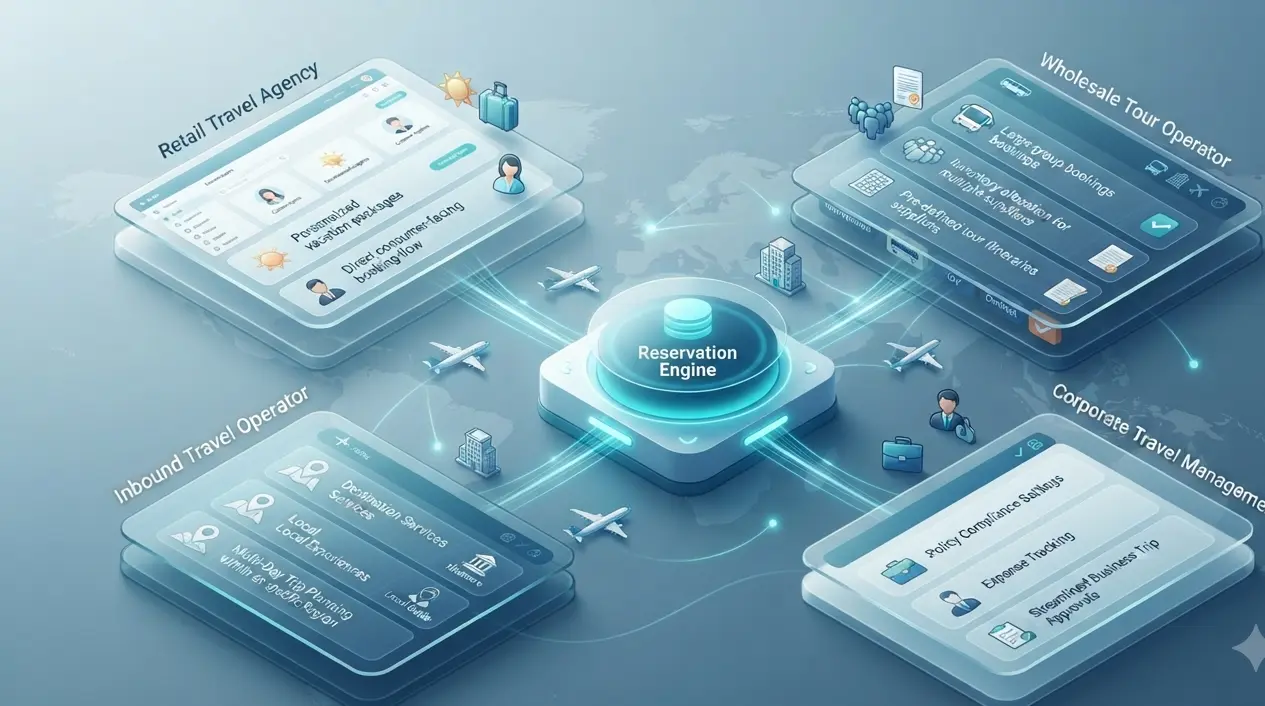
How the problem looks depending on the type of agency
Commercial disorder does not manifest the same way in all tourism operations. It changes according to the business model.
In an outbound agency, the typical symptom is the loss of follow-up between the first inquiry and the closing. The customer compares prices with other agencies while waiting for a response, and whoever answers first with a clear proposal usually gets the sale. Most lost bookings are not due to price, but to late or incomplete follow-ups.
In an inbound agency (DMC), the problem shifts to internal coordination. Different areas (sales, operations, suppliers) handle information for the same client without a meeting point, which leads to errors in service confirmation or duplication of tasks for the same group of passengers.
In a tour operator, especially one that works with wholesale agencies, the risk is losing traceability on which B2B account is at what stage of negotiation, what commercial conditions were agreed upon, and with whom. Without a system that centralizes that relationship, every agreement renewal starts almost from scratch. Understanding this difference is key before comparing tools, because not all commercial management software is designed for the particularities of tourism compared to a generic tool adapted by force.
What the data says about the gap between having a system and using it well
Adopting a commercial management tool does not solve the problem on its own if the team fails to incorporate it into their daily routine. 42% of companies point to a lack of training or experience as the biggest barrier to successful implementation, which explains why many agencies try a tool, abandon it after a few months, and wrongly conclude that “this isn’t for us.”
This matters especially in tourism, where sales processes have particularities (seasonal quotes, supplier payments, personalized itineraries) that a generic system does not contemplate and that do require specific training to be fully exploited.
The cost of continuing to operate without a system that organizes the customer relationship
Postponing this decision is not neutral. Every month an agency continues to manage customers with scattered methods is a month in which opportunities are lost without anyone formally recording it, because there is no system to show the data.
The good news is that recognizing these signs is already, in itself, a level of operational maturity that many agencies take years to reach. The next step is not yet technological: it is deciding that customer information deserves to live in a single place, accessible to the whole team and not tied to the memory of a single person.
Platforms specialized in tourism management, such as Toursys, incorporate this CRM logic as part of a broader system that connects sales, operations, and administration. But before evaluating any specific tool, what really changes an agency’s course is deciding to leave fragmentation behind.