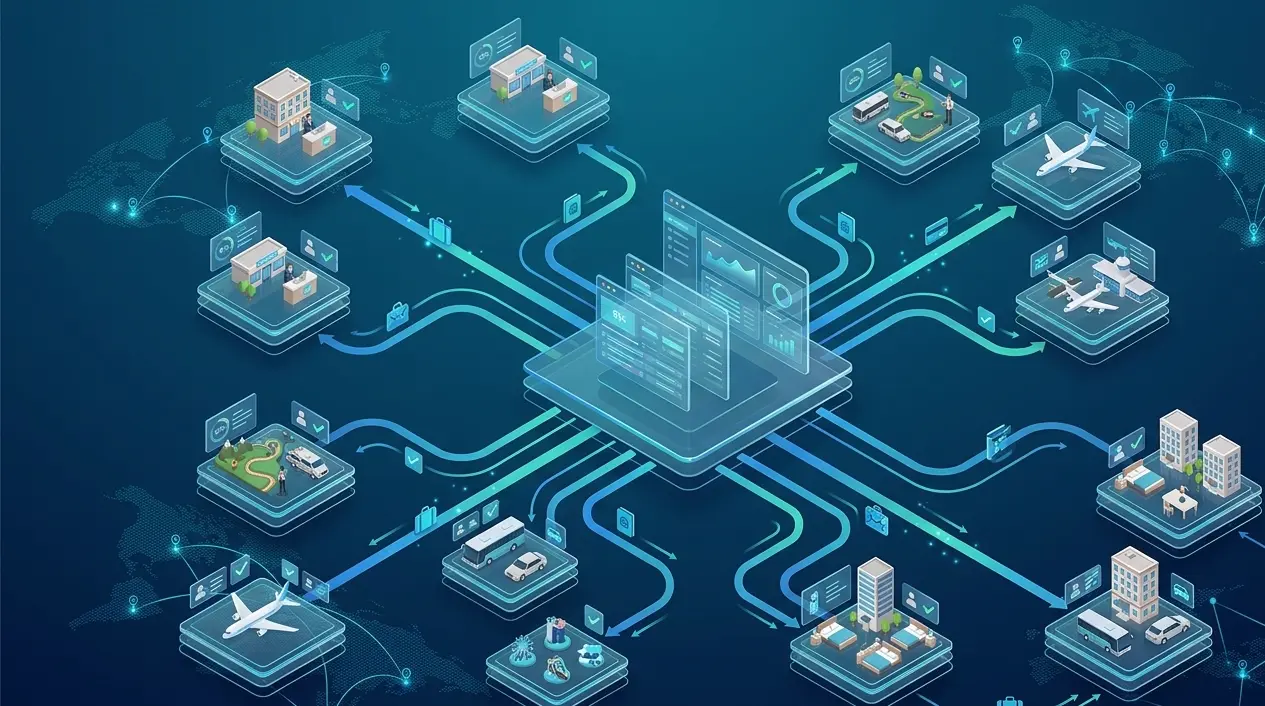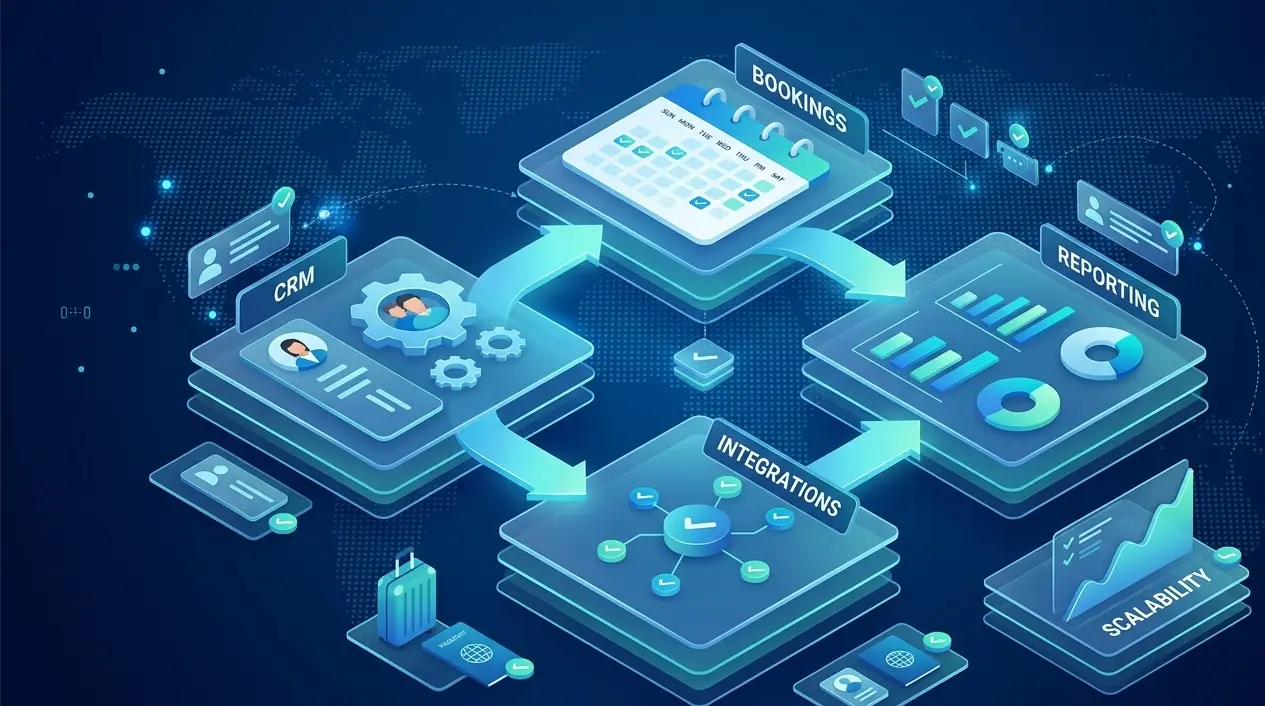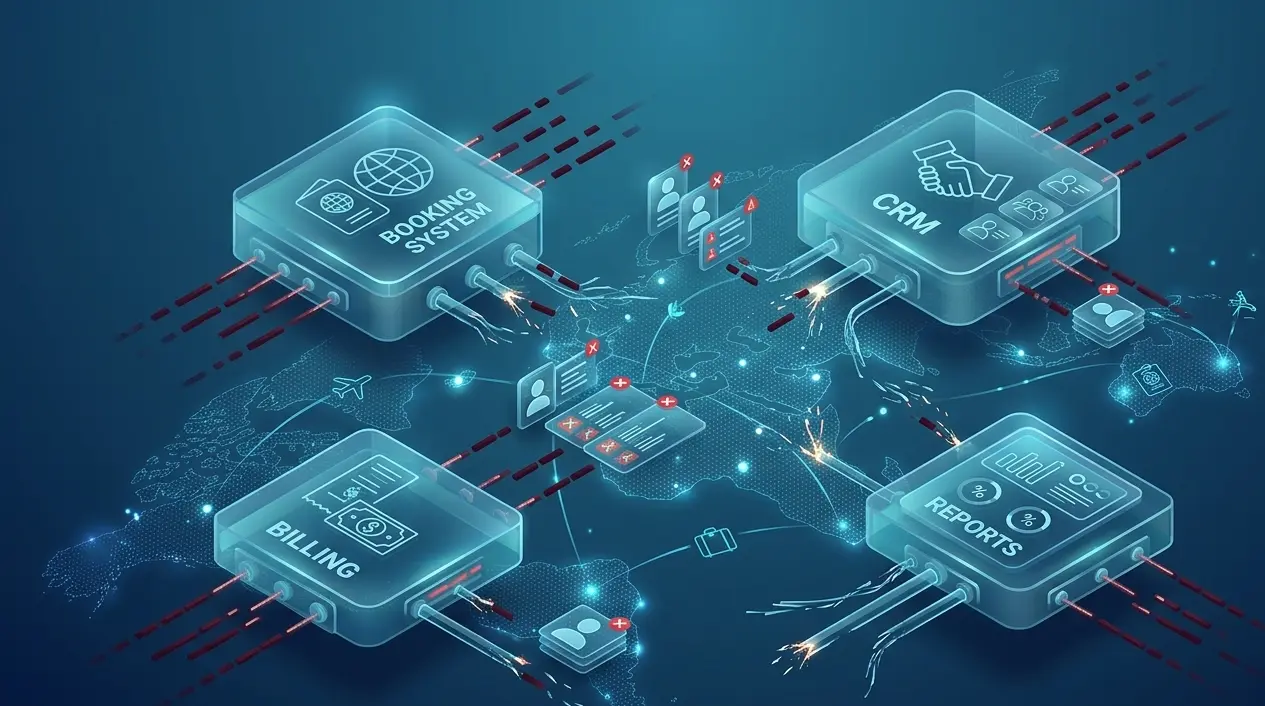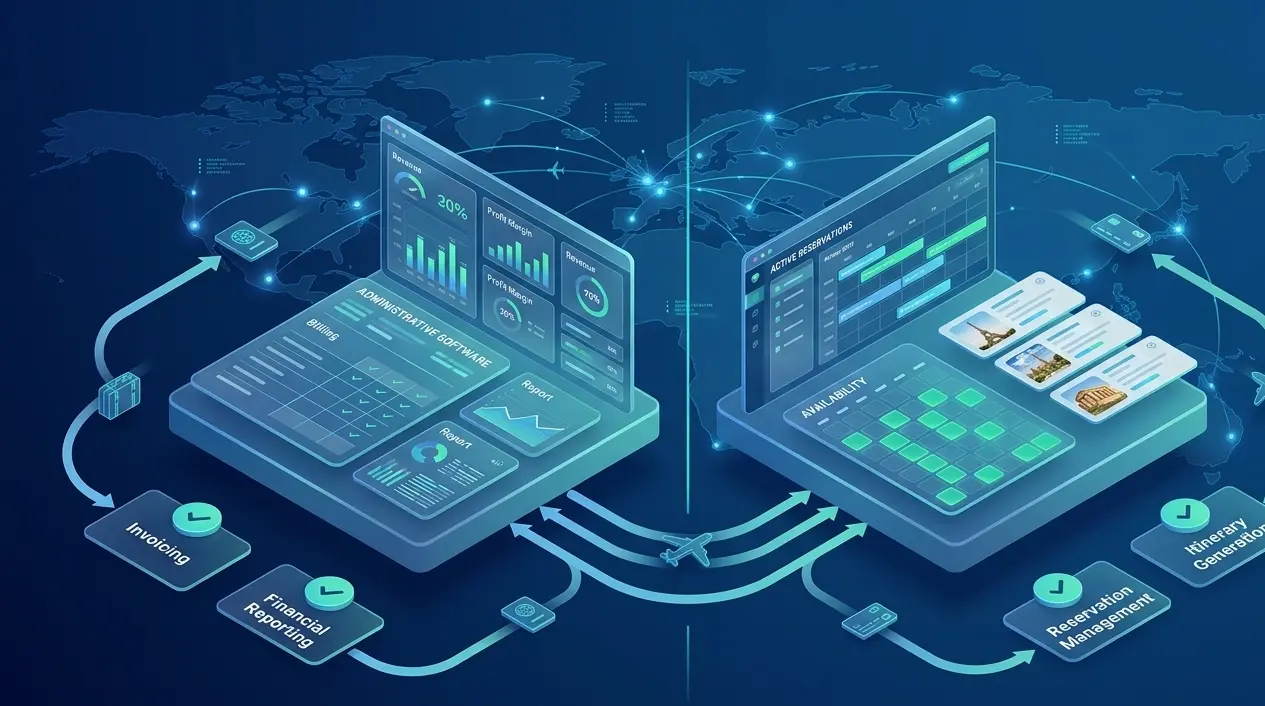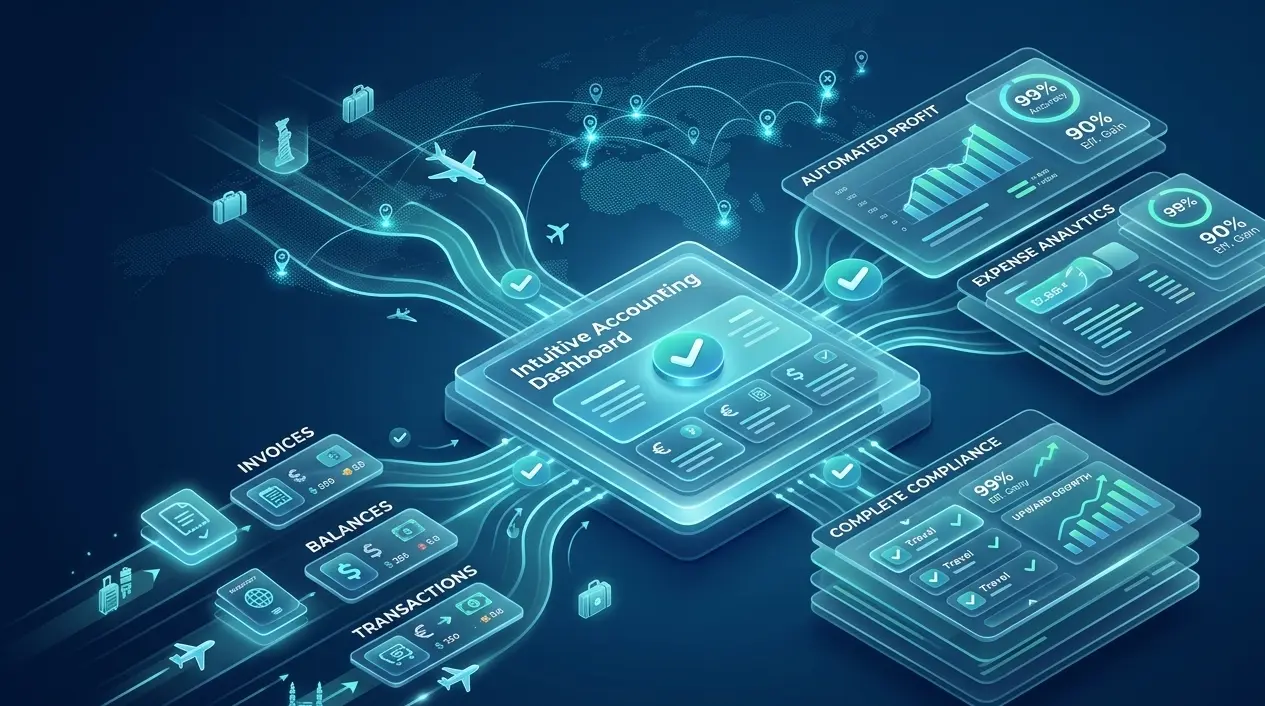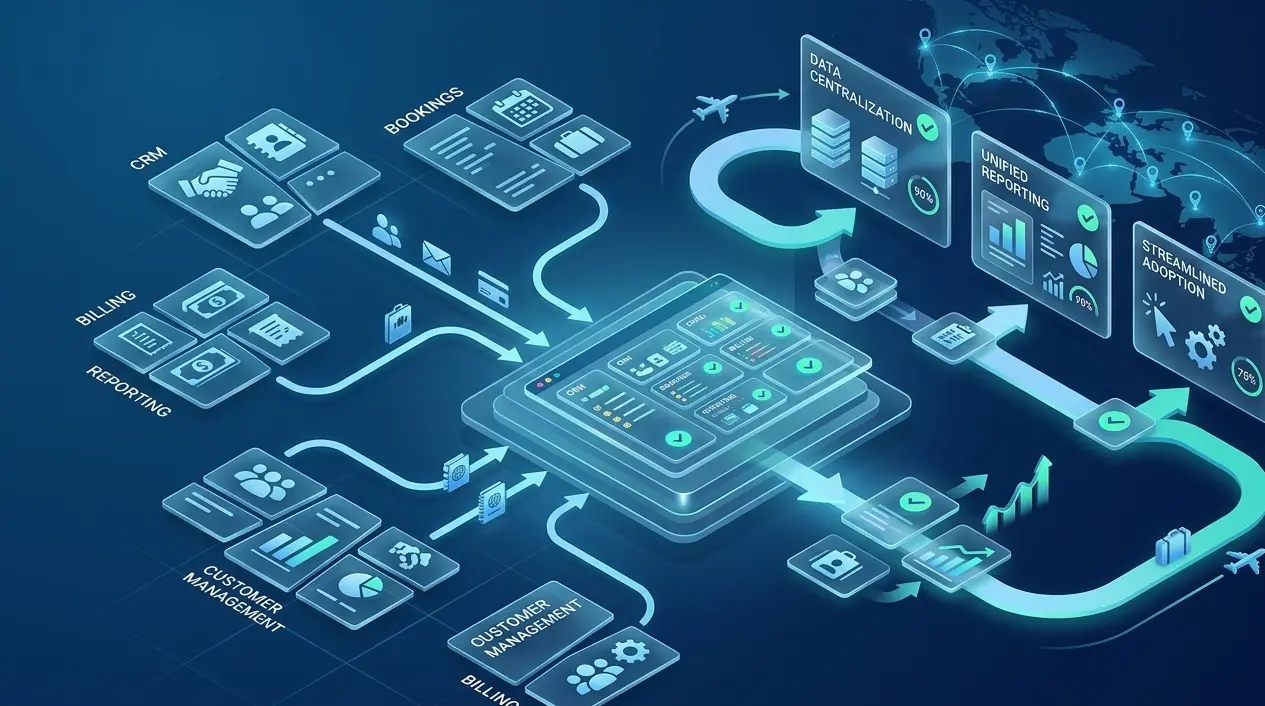
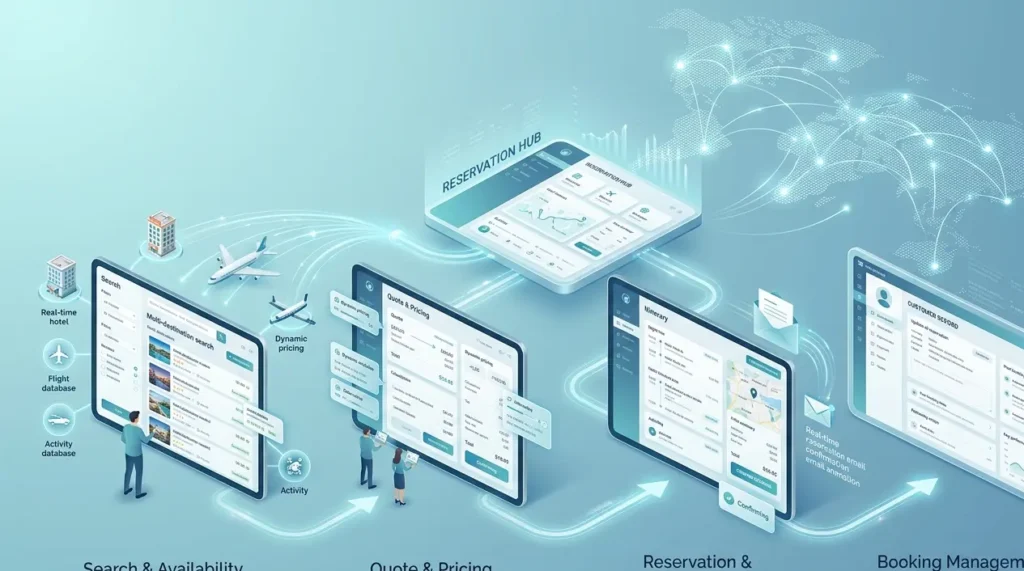
A travel booking system is not just a pretty screen for receiving orders. It is the operational backbone of an agency: the place where availability, rates, customers, suppliers, and finances converge in a single connected environment.
Understanding how it works changes the way you evaluate whether the one you use today is doing its job.
Why your agency needs a travel booking system now
Tourism is one of the largest economic sectors in the world. According to the Economic Impact Research by the World Travel Tourism Council (WTTC), in 2024 the sector contributed 10% of global GDP, exceeding pre-pandemic 2019 levels for the first time. In Latin America and the Caribbean specifically, this contribution reached $714 billion, equivalent to 10% of regional GDP, with projections to reach $945 billion by 2035.
It is not just a growing market. It is a market that is digitizing at an accelerated pace across all regions.
The Phocuswright Research Latin America Travel Market Report 2025 notes that for the first time in the region, online channels represent more than half of gross agency bookings, a milestone that highlights the technological maturity of the sector. The trend is consistent globally: in Mexico, 45% of the population already makes travel bookings online, according to INEGI data cited by Turespaña (May 2025); in Europe and North America, this digital penetration has been the majority for years.
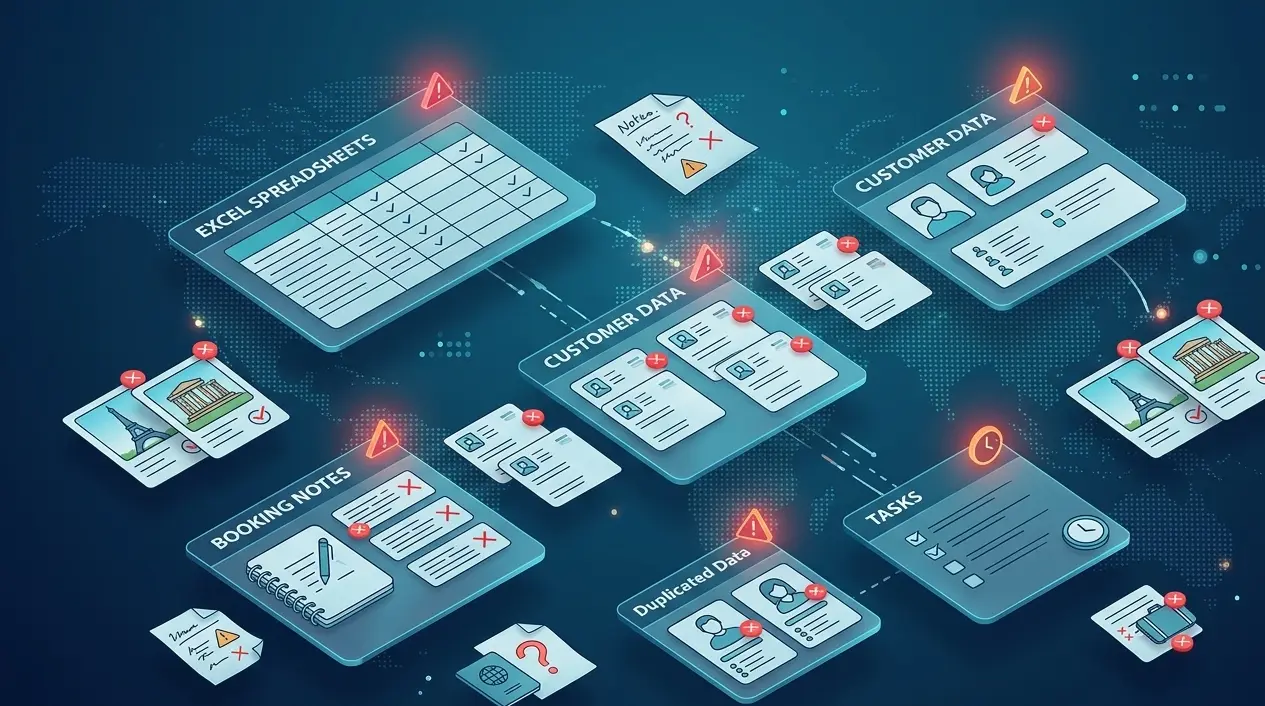
If you are still evaluating whether your operation has reached that point, the article on when it makes sense to replace Excel with a booking system offers a clear diagnosis to find out.
What happens inside a tourism booking system
Before talking about the flow, it is worth clarifying something that few explanations mention: a booking is not a document. It is a process. From the moment a client makes an inquiry until the service is operated at the destination, that booking goes through at least four distinct stages within the agency, each with its own actors, data, and decisions. A booking system specialized in tourism accompanies each of those moments. A generic one does not.
The difference is not in the colors of the interface. It is in whether the system understands that a tourism quote is not the same as a consulting estimate: it involves services conditioned by dates, ages, seasons, variable rate bases, prepayments to suppliers, and margins that are calculated differently depending on the type of agency.
How the travel booking flow works: from inquiry to operation
Stage 1: Real-time search and availability
It all starts when the agent enters the request parameters: destination, dates, group composition, and type of service. A tourism system connects these parameters with its internal databases—parameterized services with rates and availability—and, if it has active integrations, also with external providers: bedbanks, activity platforms, and car rental companies.
The result is not a generic list. It is real availability, with updated rates and business rules applied automatically: margins configured by client, rate categories, and special conditions. What the agent sees on the screen is already ready to be converted into a quote.
Without a specialized system, this step involves opening three different tabs, copying prices to a spreadsheet, and verifying availability via email with each supplier. With a well-configured one, it takes minutes.
Stage 2: Structured and personalized quoting
Confirmed availability becomes a quote. Here, one of the most important differences between a tourism system and a generic one appears: the quote is not just a number. It is a commercial document that reflects detailed services, payment terms, expiration dates, included options, and a visual presentation tailored to the client.
A well-designed travel booking system allows you to generate that quote from parameterized templates, with the itinerary included if the product requires it, in the client’s language and the corresponding currency. An outbound agency selling packages to families needs a different presentation than a tour operator quoting for a wholesale agency. The system must allow both without the agent having to rebuild the document from scratch.
Quote tracking is also part of the flow: when it was sent, if it was opened, if the client made comments, and when the blocked rate expires. This traceability does not exist outside the system.
Stage 3: Confirmation and booking generation
The client approves. Here, something happens that few explanations describe accurately: in an integrated system, confirming a sale is not just changing the document status. It triggers a chain of automatic movements throughout the platform.
The confirmed booking simultaneously activates:
- Communication with suppliers (service confirmation, voucher generation)
- Recording in the client’s accounts receivable
- Recording in accounts payable to the supplier
- Updating allotment or committed availability
- Generation of the operational file for the operations team
All of this happens at the same time, from the same screen, without the agent having to notify four different departments. The booking is not an end point. It is the starting point of the operation.
Stage 4: Operational management and control tower
With the booking active, the operations team takes control. A robust operational module allows you to visualize all active bookings in a centralized panel—the “control tower”—filtering by day, guide, vehicle, region, or office, and managing mass changes when conditions require it.
An inbound agency that operates groups from different outbound agencies at the same time needs exactly this: total visibility of what is going out each day, at what time, with which supplier, and with which assigned guide. The same applies to a tour operator coordinating ground services with multiple local suppliers.
Service changes, rate recalculation for date adjustments, bulk supplier confirmations: all from a single interface, without leaving the system.
Stage 5: Financial tracking and operation closing
The last link in the flow—and the one most frequently managed outside the system in agencies without specialized software—is the financial tracking of each booking. Has the client already paid the deposit? Has the supplier been prepaid? What was the actual margin left by that operation after applying costs, commissions, and associated expenses?
A tourism booking system does not finish its job with the confirmation. It extends it until the accounting close of the operation. The income statement per booking—how much was invoiced, how much it cost, how much was left—is strategic information for any agency manager. And it is only accessible if the booking and accounting share the same environment.
For those evaluating how to carry out this implementation step-by-step without stopping the operation, the guide to implementing a booking system in a travel agency offers a practical and honest framework.
Tourism booking system vs. generic software: key differences
Not all booking systems are equal. The difference is not in the list of features in the brochure. It is in whether the system understands the logic of tourism or if it forces the agency to bend to its logic.
| Operational Variable | Generic System | Specialized Tourism System |
| Rates by season, base, and group | Requires external customization | Parameterized from design |
| Prepayments to suppliers | Manual or additional integration | Integrated into the booking flow |
| Itinerary as part of the quote | Not included or requires another tool | Generated from the same platform |
| Mass confirmation with suppliers | Not available | Management from control tower |
| Income statement per booking | Not available | Integrated with accounting module |
| Multi-currency and multilingual | Limited or additional fee | Native and unlimited |
The distinction matters because implementing a system that does not understand how a real travel agency works generates two invisible costs: the team’s adaptation time to a foreign logic and the processes that inevitably fall outside the system and end up being managed manually again.
How each type of travel agency manages bookings
The flow described above is not identical for everyone. The way an outbound agency, an inbound agency, and a tour operator operate has structural differences that the system must absorb.
An outbound agency sells to the end traveler. Its flow is centered on the commercial quote, client follow-up, and coordination with external suppliers. The itinerary presentation and the experience in the sales phase are critical.
An inbound agency or DMC operates the traveler at the destination. It receives requests from outbound agencies or wholesalers from anywhere in the world, not from the direct traveler. Its system needs to manage multiple bookings per day in different destinations, with operational teams in the field, produce real-time information for its B2B clients, and work in the languages and currencies of its source markets—whether Europe, North America, or Asia.
A wholesale tour operator designs packages and distributes them through other agencies. Its greatest need is to manage committed availability (allotments), differential net rates per channel, and volume confirmations.
A travel booking system that serves all three is not the most complex: it is the most flexible.
When booking software transforms your agency’s operation
There is a turning point that many agency managers describe similarly. They stop thinking of their system as “the program where we enter sales” and start understanding it as the environment where the agency makes decisions.
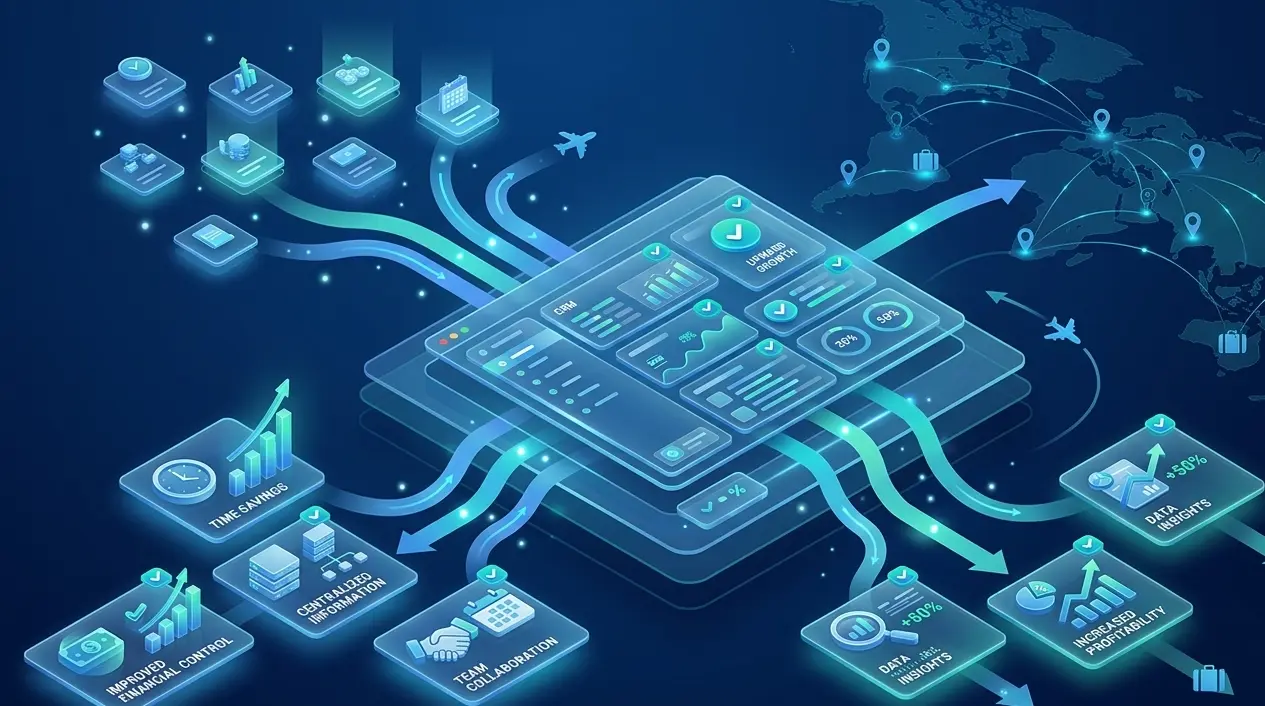
That change does not happen by having more features. It happens when the system correctly connects sales, operations, and finances in real time, and the team trusts what they see on the screen because they know it reflects the reality of the operation. The difference between a system that does that and one that doesn’t is not technical. It is strategic.
Platforms like Toursys are designed with that flow in mind: from the moment the agent performs the initial search until the financial manager closes the operation, everything happens in the same environment. The booking module for activities and packages integrates real-time availability, automatic confirmations with suppliers, operational management from a control tower, and direct connection with the accounting area, with support included in Spanish, English, and Portuguese at no additional cost.
Manage all your travel bookings from a single platform
Booking systems are not best evaluated when the operation is calm. They are evaluated when a last-minute change reveals how many manual steps there are between receiving a request and confirming a service.
Request your free demo and discover live how each stage of the flow—from quoting to accounting close—is managed from a single platform, adapted to your agency’s logic and with real support from day one. Schedule your free demo and discover how to centralize, automate, and scale your operation without switching tools.