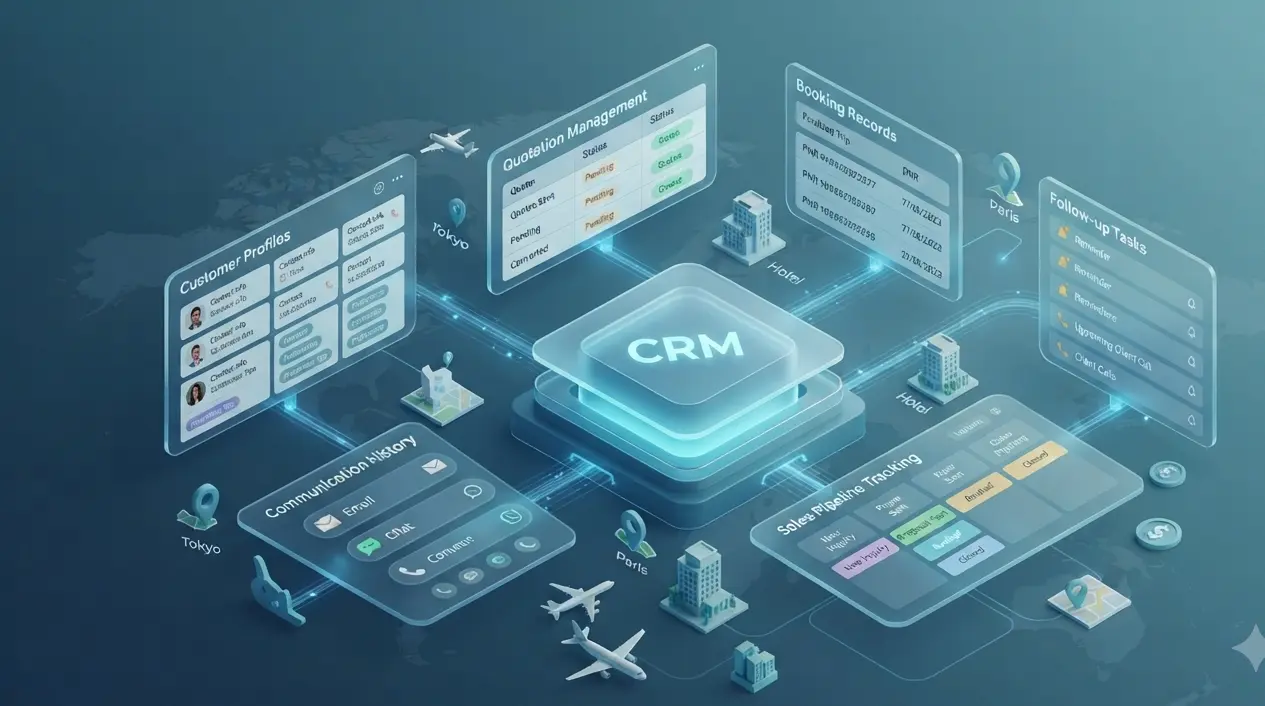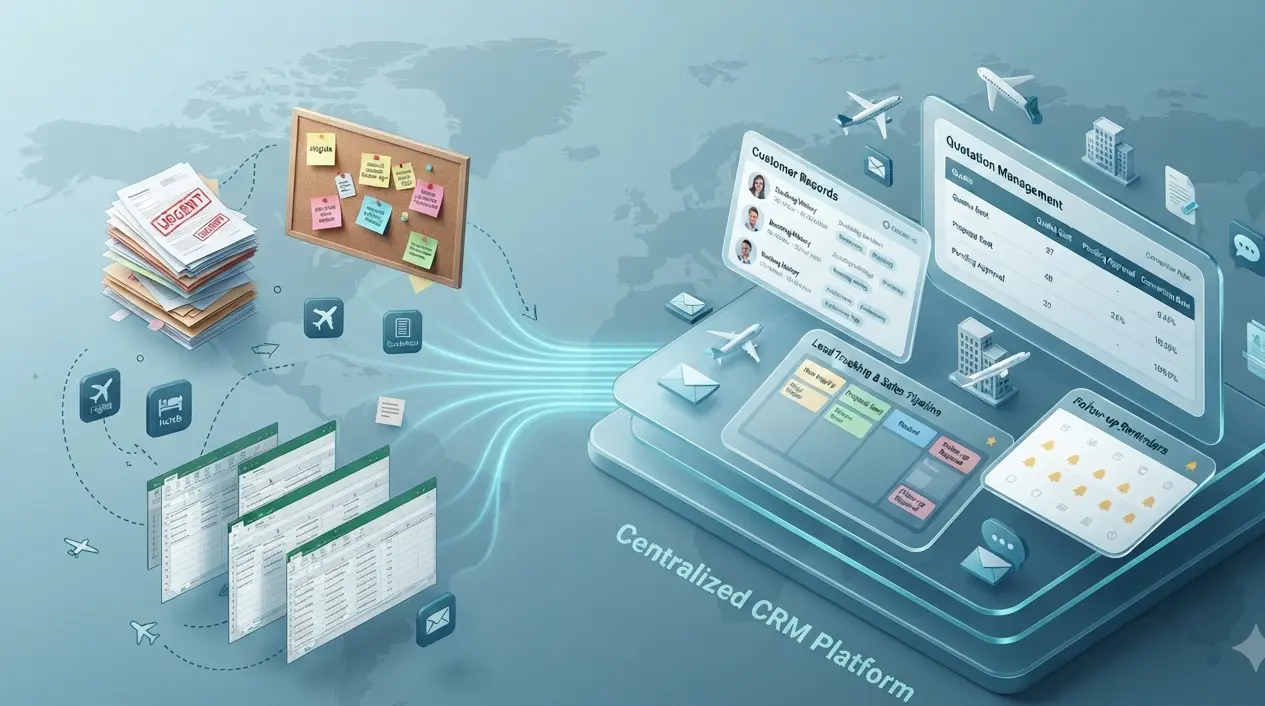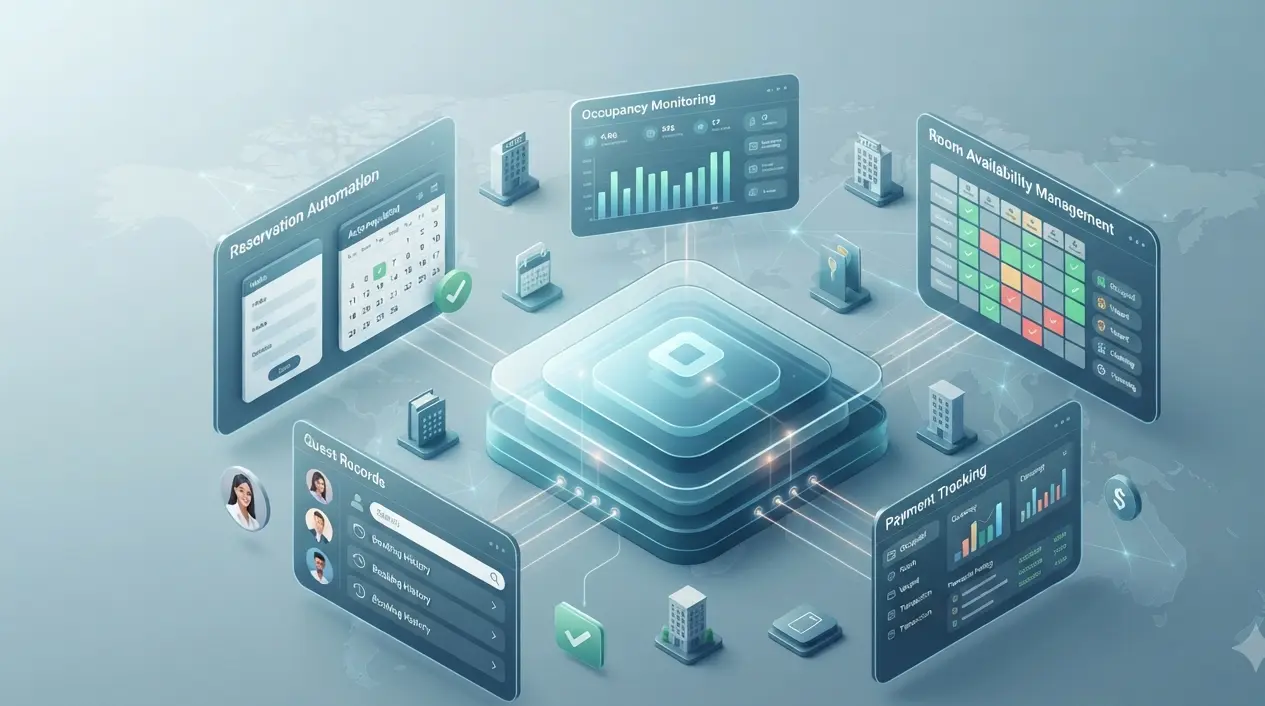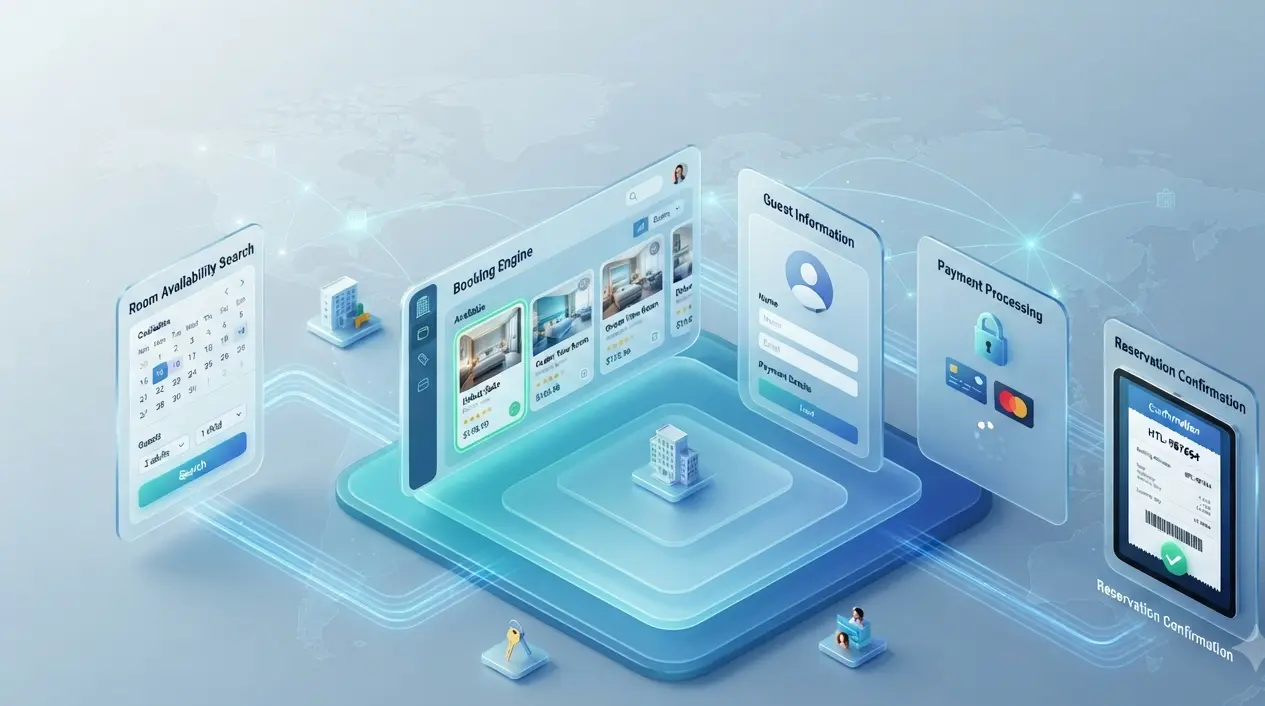
The differences between a generic system and a specialized inbound tourism platform are not only apparent in the demo. They become evident in real operations, when volume increases, last-minute changes occur, and coordination among suppliers, guides, and international clients must function precisely.
A generic system can manage clients, issue invoices, and record payments. For a company in another sector, this might be sufficient. For an inbound operator or a DMC, it’s the starting point for a series of problems that don’t appear in the first month—but rather when operations become more complex.
Understanding these differences is not a technical matter: it’s about understanding why the operational logic of inbound tourism requires an architecture that a general-purpose system cannot offer.
If you wish to delve deeper into the structural characteristics that distinguish a good inbound platform before analyzing the differences with a generic system, it may be useful to first review what an excellent platform for inbound operators should have.
What a Generic System Doesn’t Understand About Inbound Operations
A generic management system was designed for a general problem: recording information, issuing documents, managing accounts. This works well in contexts where operations are relatively predictable—same product type, same client type, same currency, same language.
Inbound tourism does not operate this way.
A DMC sells services that are rendered weeks or months after the sale. The components of each operation are distinct in each case: unique combinations of transfers, guides, activities, accommodation, and special services that vary by client, destination, season, and group size. Rates are not fixed: they change by season, volume, group type, and the conditions negotiated with each local supplier.
A generic system does not have this logic built-in. It cannot, because it was designed for a different problem.
What happens when an inbound operator tries to force these operations into a generic system is predictable: the system records what it can, and the team handles the rest externally—in spreadsheets, emails, and parallel files. Information becomes fragmented. Coordination depends on people, not processes. And when something changes, the cost of updating everything is manual and repetitive.
Concrete Differences Between a Generic System and a Specialized System for Inbound Operators
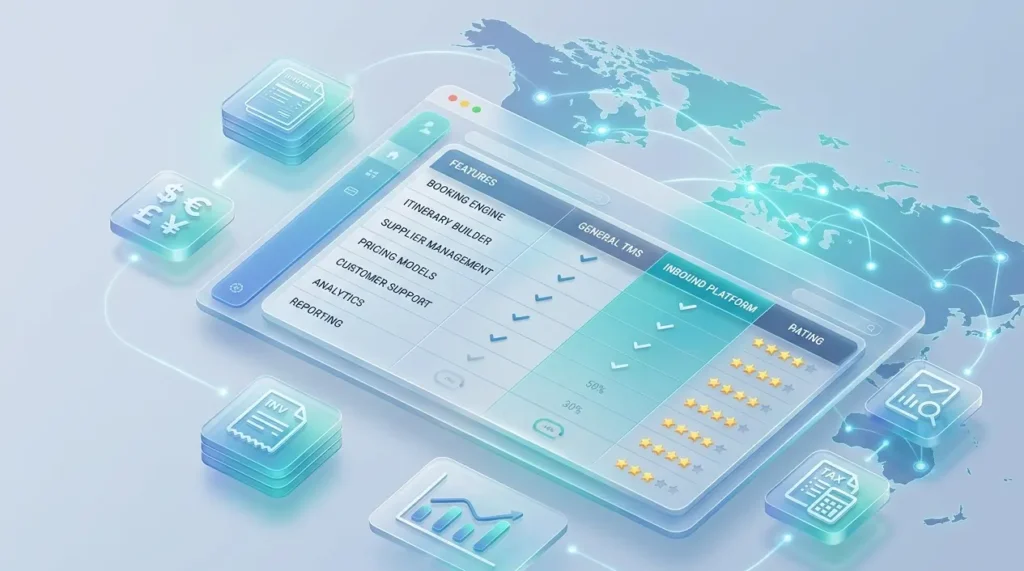
The following table organizes the differences not by functionalities but by real operational problems. The goal is to show where the limitations of a generic system appear in the daily practice of an inbound operator.
| Operational Situation | Generic System | Specialized Inbound System |
| Custom Quotation | Requires manual construction. No seasonal logic or client-specific conditions. | Configurable: rates by season, age, group type, and client-specific commercial conditions. |
| Change in an Active Booking | Manual update in each document separately. | The change is automatically replicated across all related documents. |
| Coordination of Guides and Transportation | Outside the system. Emails, calls, parallel spreadsheets. | Assignment from the platform with traceability and historical record of the operation. |
| Client in Another Language and Currency | Requires manual adaptation of documents and external conversion calculation. | Native multi-language and multi-currency: documents automatically generated in the client’s language. |
| Allotment Control | No specific module. Risk of overbooking. | Real-time visible quotas per supplier, integrated with active bookings. |
| Profitability per Operation | Only visible after manual reconciliation. | Automatically calculated from the moment the booking is confirmed. |
| Supplier Access | No dedicated portal. All communication via email. | B2B Portal: supplier updates rates, availability, and confirms services directly. |
| Integrated accounting | Separate system. Requires manual data export. | Each booking generates automatic movements in accounts receivable and payable. |
Each row in that table describes a point of friction that an inbound operator faces daily. None of these problems are catastrophic in isolation. But when they all occur simultaneously—which is exactly what happens during peak season or when volume grows—the operational cost becomes unsustainable.
Why Adapting a Generic System for Inbound Operations Doesn’t Solve the Problem
Faced with the limitations of a generic system, the usual response is to try to adapt it. Configure additional fields, create manual workflows to compensate for what the system doesn’t do, integrate external tools to fill the gaps. This strategy has a cost that is underestimated at first.
Each adaptation is a layer of complexity that the team has to maintain. When the system changes or updates, adaptations can break. When a team member who knows the workarounds leaves the company, the knowledge of how the adapted system works leaves with them. And when volume grows, the number of necessary adaptations grows proportionally.
Adapting a generic system to inbound tourism is not digitizing the operation: it’s digitizing disorder with a better interface.
The difference with a specialized platform is not in individual functionalities. It’s in the fact that the workflows already incorporate the logic of inbound operations from the base architecture. There’s no need to adapt: the system already understands that a quote has seasonal rates, that a booking has local suppliers with variable conditions, that documentation needs to be generated in the client’s language, and that each operation must connect with finances without manual steps.
The risks of operating with isolated systems are amplified when the main system is generic and the actual inbound operation lives in parallel tools: information fragmentation is not a tool problem, it’s an architectural problem.
When the Limitations of a Generic System Become Visible for an Inbound Operator
The limitations of a generic system do not always appear in the first months of use. They appear at specific moments that have something in common: these are the moments when the operation demands more than the system can provide.
The first is peak season. When volume multiplies, manual processes that worked with twenty operations a month do not scale to eighty. The team starts making mistakes they didn’t make before, not because they are less careful but because the workload exceeds what the system can handle.
The second is the incorporation of a new international market. When the inbound operator starts working with clients in another language or currency, the limitations of the generic system become immediate: documents that need manual adaptation, rates that need recalculation, communications that require intervention at every step.
The third is the incorporation of new suppliers or destinations. Each new supplier entering the inbound operator’s network adds a layer of coordination that a generic system cannot absorb without additional manual work.
In all these moments, the same question arises: is the system supporting growth or hindering it?
What Distinguishes the Architecture of a Specialized Inbound Platform
A specialized inbound tourism platform is not a generic system with more functionalities. It is a system built on a different premise: that the operation of a DMC or inbound operator has its own logic that cannot be solved with custom-configured generic modules.
This difference in premise translates into architectural differences. Workflows are not configurations on top of a generic base: they are the base. The connection between quotation, booking, operation, supplier, and accounting is not an integration between separate modules: it is the system’s structure.
For an inbound operator, this difference has a concrete practical consequence: the team works within the system, not around it. Information is not fragmented across tools. Changes propagate without manual intervention. And on-site operations have a place within the system, not in a parallel WhatsApp group.
Platforms specifically designed for inbound tourism—with architecture that integrates quotes, bookings, operations, suppliers, and finances from the ground up, multilingual support, and the ability to scale without migrations—represent this difference concretely. Toursys’ inbound tourism platform was built from this logic, designed for DMCs and operators who need the system to understand how they work, not the other way around.
The Most Important Difference Between a Generic System and a Specialized Inbound Platform
The differences between a generic system and a specialized inbound tourism platform are not reduced to a list of functionalities. They come down to one question: was the system designed for the logic of your operation, or does your operation have to adapt to the system’s logic?
For an inbound operator working with local suppliers with variable conditions, international clients in multiple languages and currencies, and on-site coordination that must function precisely, that question has a clear answer.
A generic system can sustain operations in their simplest stages. What it cannot do is accommodate the real complexity of inbound tourism without the team manually absorbing that complexity—and that cost grows exactly when the agency most needs to operate smoothly.