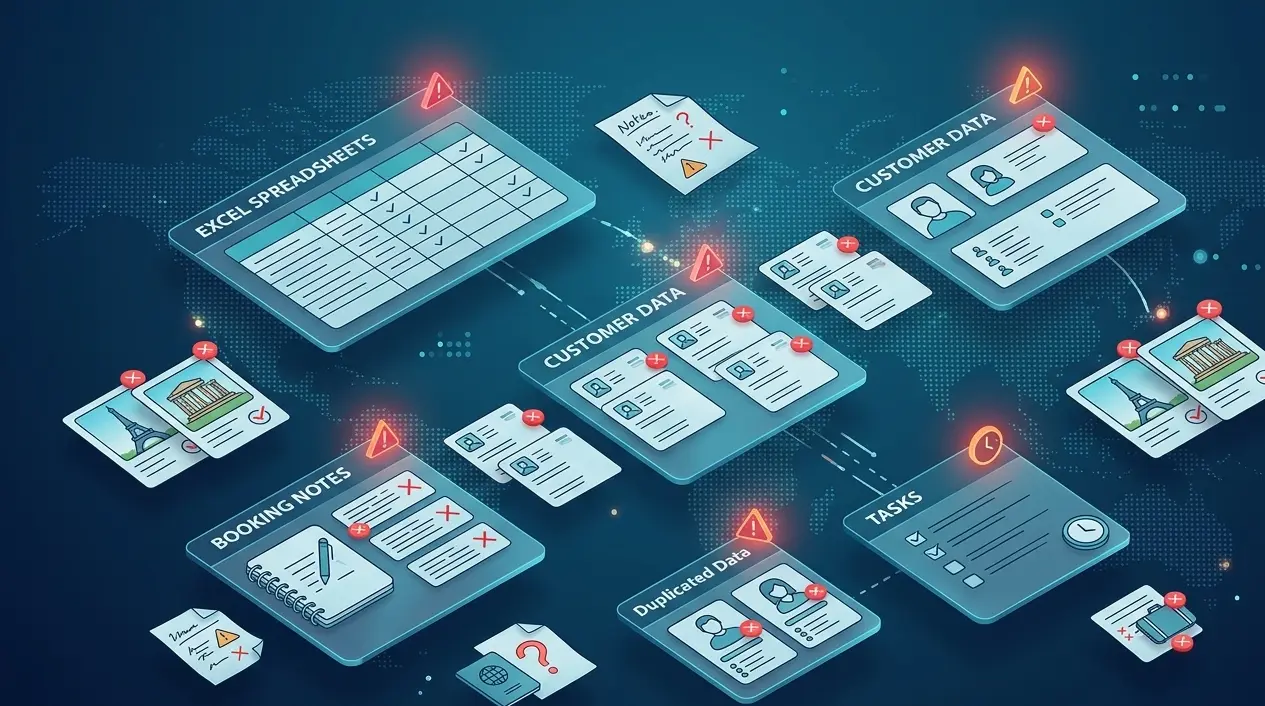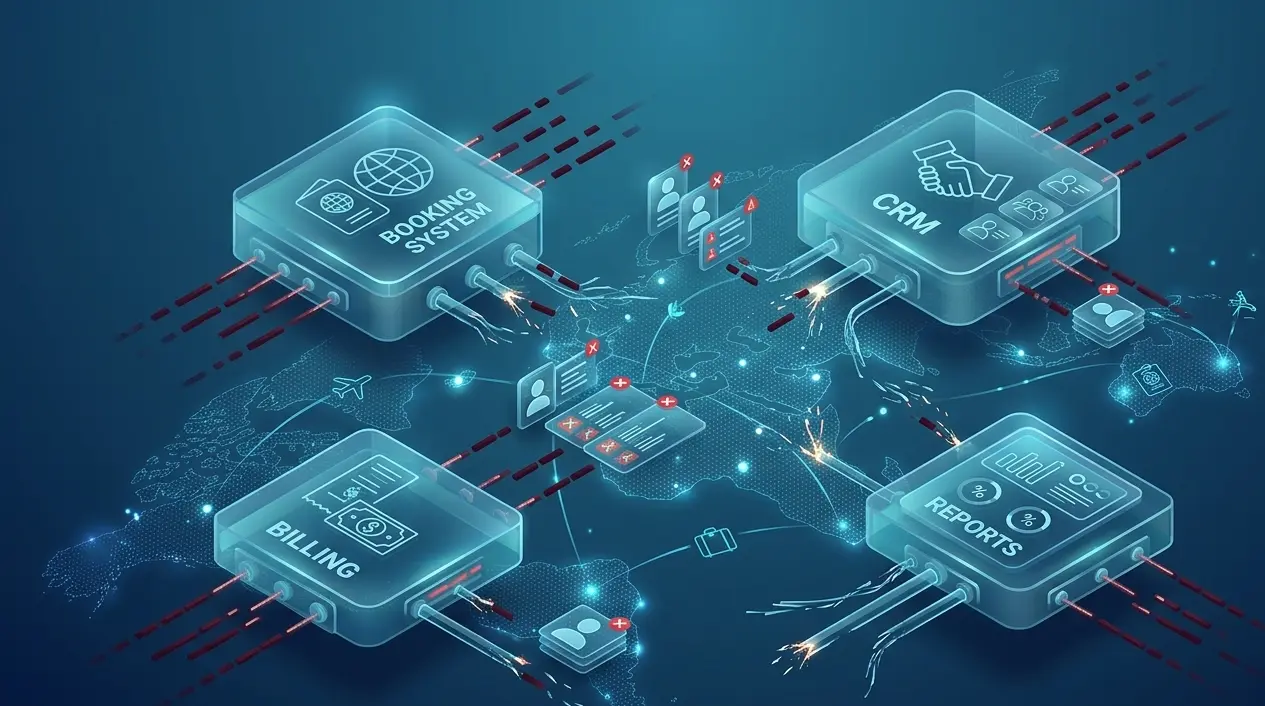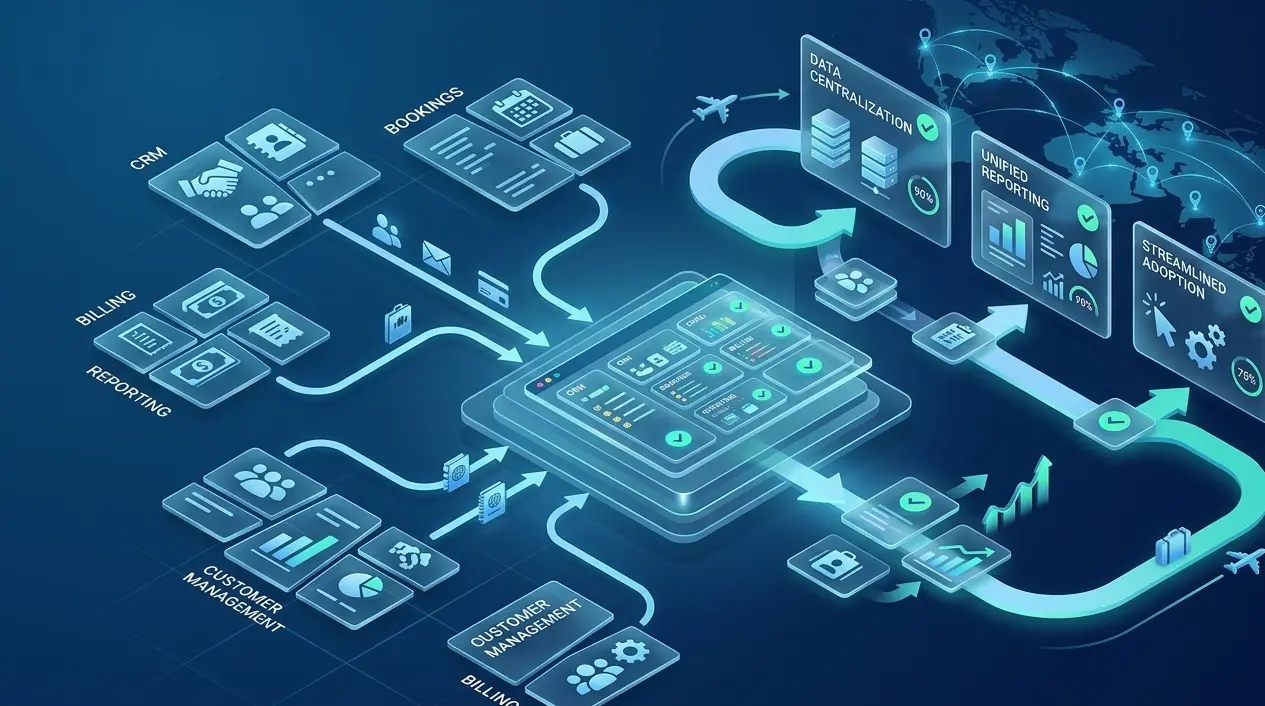
In many travel agencies, growth is not always accompanied by a clear operational structure. What was initially managed with a few spreadsheets and emails ends up fragmented among multiple documents, tools, and systems that do not connect with each other.
When information is scattered, the operation becomes fragile. Time is wasted searching for data, tasks are duplicated, and errors increase. Centralizing management is not just a technological decision: it is a way of reorganizing how your agency actually functions.
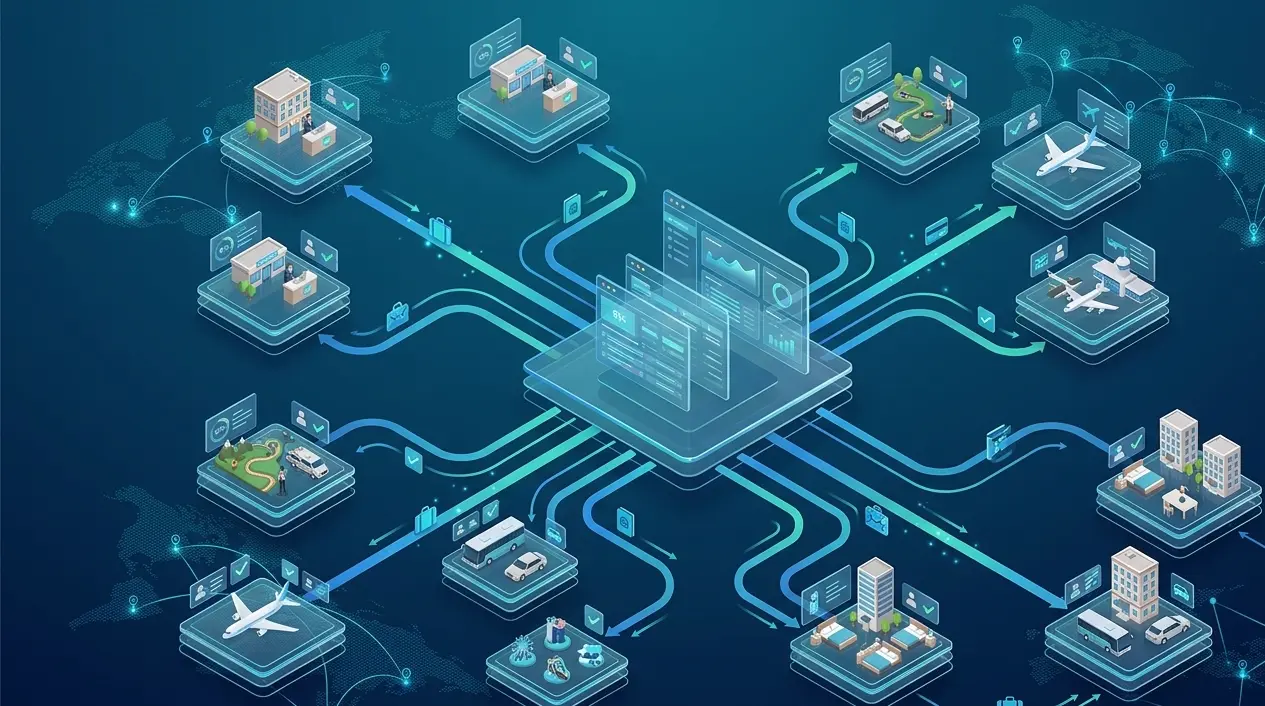
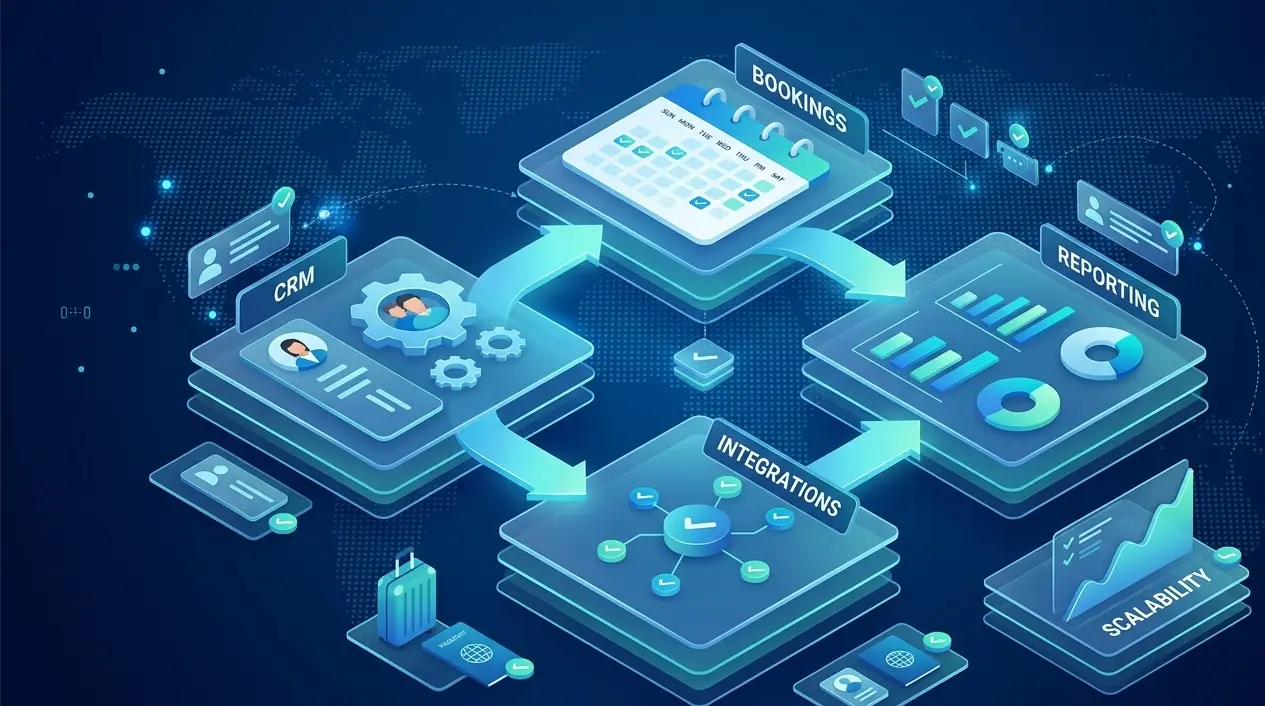
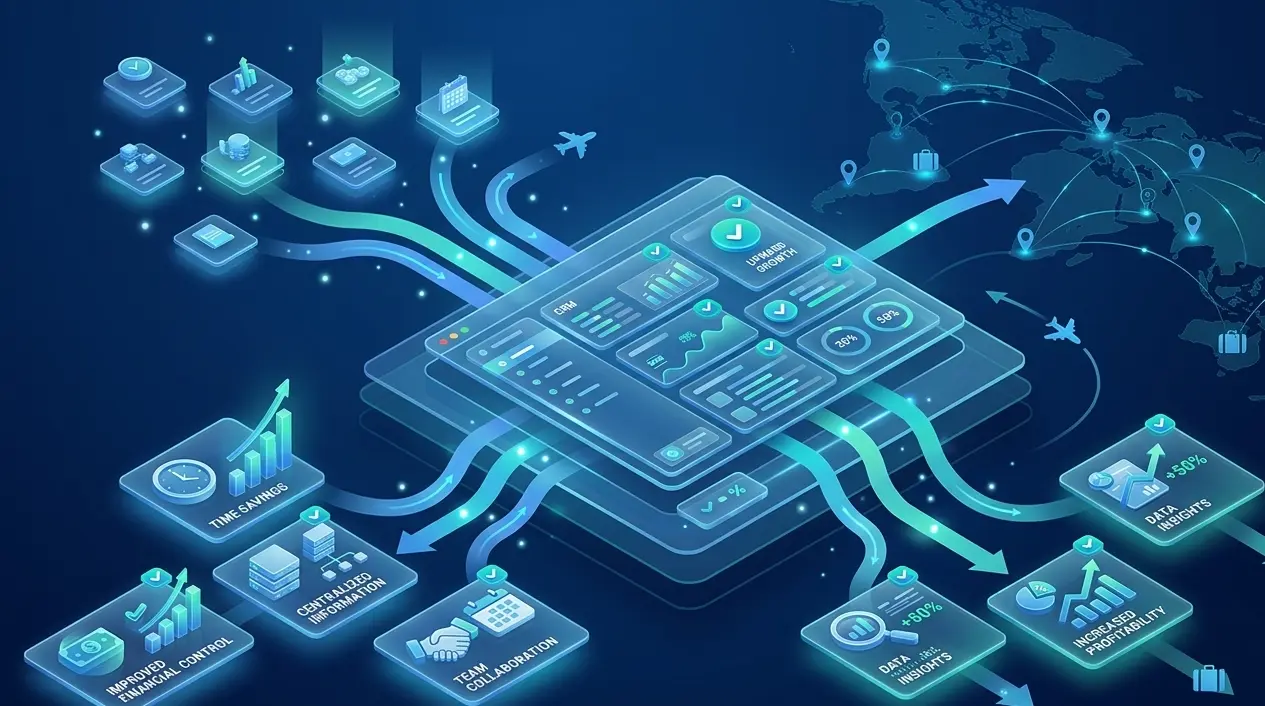
This is where the concept of operational centralization through a tourism ERP for travel agencies comes in—a system that connects sales, bookings, suppliers, operations, and finance within the same workspace.
What it means to centralize an agency’s management
Centralizing management implies that all relevant operational information is located within a single system: clients, services, quotes, bookings, suppliers, and payments.
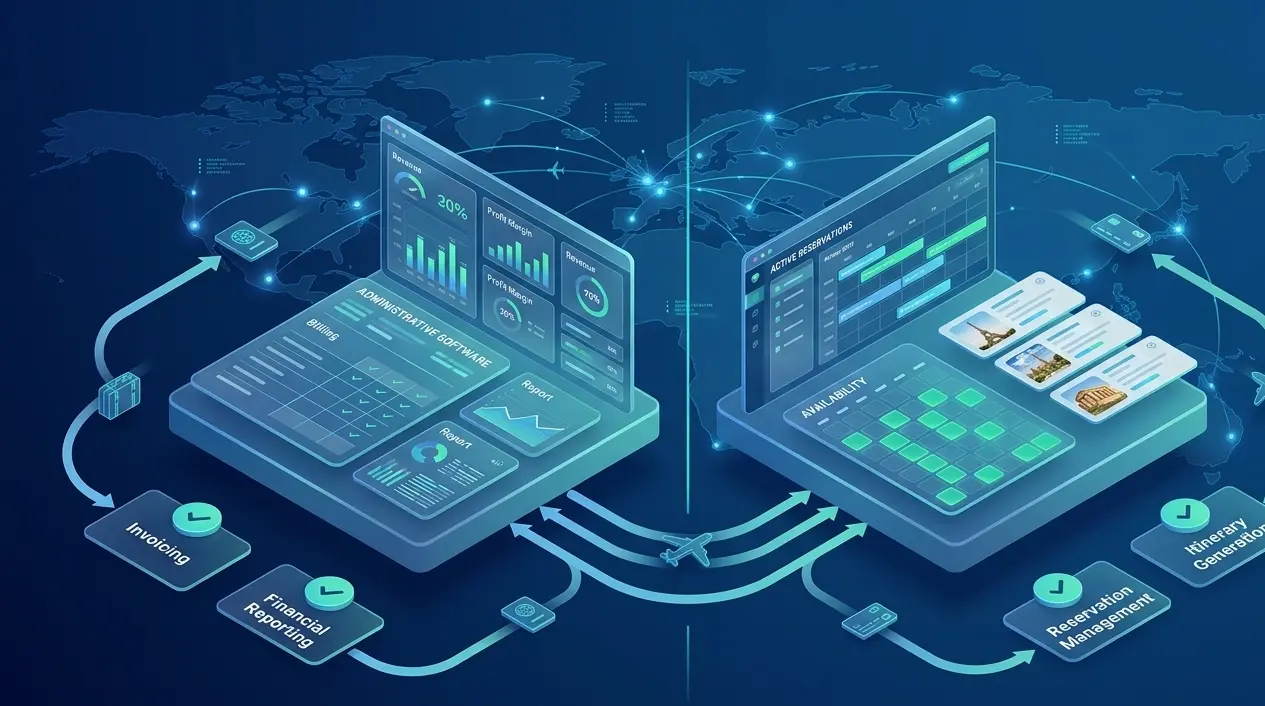
When each department works with separate tools, every team ends up handling its own version of the information. Sales has a quote in one document, operations manages suppliers via email, and administration records payments in another system.
In contrast, in a centralized operation, information is generated only once and flows through all processes. A quote can be transformed into a booking, then into operations, and finally into financial information without re-entering data.
Centralization allows for a complete understanding of the operation in real time and reduces friction between teams.
Why operational fragmentation creates chaos
In small agencies, working with disconnected tools may seem sufficient. However, when the volume of operations or the complexity of trips increases, operational problems begin to surface.
The most frequent issues are usually:
- duplicate information across different documents
- booking changes that are difficult to track
- poor visibility regarding costs and margins
- slow response times to the client
When each part of the process lives in a different system, the team ends up spending more time coordinating information than designing trips.
How operations change when centralized
To understand the real impact of an integrated system, it is useful to observe how information flows in different types of agencies.
Outbound Agency
An outbound agency selling international travel works with multiple suppliers: airlines, hotels, insurance, and local operators.
In a centralized operation, the agent creates a quote using services previously loaded into the system. When the client confirms, the quote is transformed into a booking, and the system automatically records the contracted services and their costs.
All trip information remains structured from the start, avoiding the need to reconstruct the itinerary every time the client requests a change.
Inbound Agency
Inbound agencies coordinate multiple services at the destination: transport, guides, activities, and accommodation.
With a centralized operation, the team can view daily arrivals, confirmed services, and assigned resources in a single interface.
The operation no longer depends on scattered emails or documents and is instead managed from a central operational dashboard.
This facilitates coordination between sales and operations and reduces logistical errors.
Tour Operator
Tour operators typically manage specific services such as excursions or circuits.
When the operation is centralized, the operator can manage availability, rates, and confirmations within the same system.
This allows for faster responses to the agencies selling the product and a better understanding of the actual profitability of each service.
Ideal operational flow with a tourism ERP
When an ERP is well-implemented, the tourism operation follows a very clear flow.
First, a service catalog is structured with suppliers, rates, and commercial conditions. This foundation allows for the creation of quotes without re-entering information every time. The agent builds the itinerary using those services, and the system automatically calculates the prices. When the client confirms, the quote is converted into a booking.
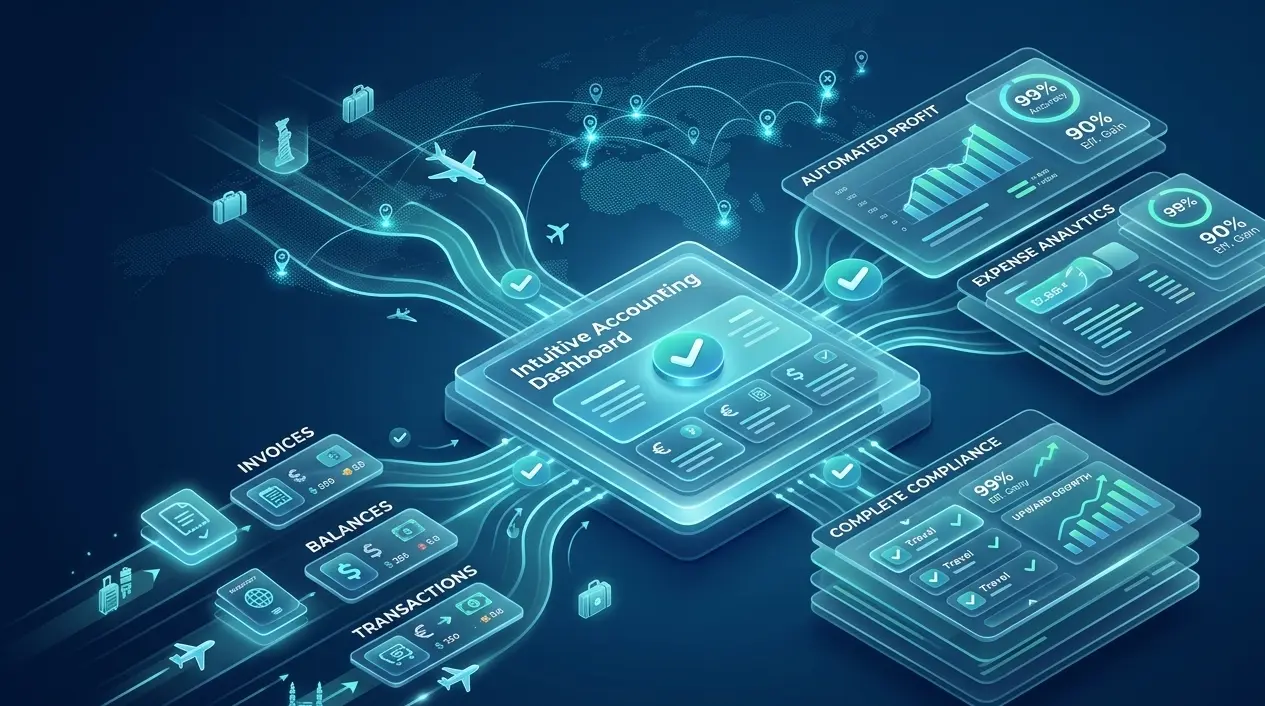
From there, the operations team coordinates suppliers and logistics, while payments and costs remain associated with the booking. This allows you to know the real margin of each trip without manually reconstructing information.
Signs that your agency needs to centralize its management
Not all agencies require an integrated system from day one. However, there are clear signs that the operation has reached a level of complexity that demands centralization.
For example, when preparing quotes takes too much time, when booking changes cause confusion between departments, or when it is difficult to know how much is earned on each trip.
At that point, digitalization stops being an operational improvement and becomes a strategic decision.
Business Trend: Connected Operations
More and more companies are adopting connected operations models, where all departments work from a single source of information. In tourism, this is especially relevant because every trip involves multiple actors: clients, agencies, operators, and suppliers.
When information flows within an integrated system, decisions become faster and operations more predictable. For agencies looking to grow, this operational architecture becomes increasingly important.
The evolution toward specialized tourism software
For years, many agencies have tried to manage their operations with generic tools such as spreadsheets or CRMs designed for other sectors. However, tourism has specificities that these systems do not usually address: future bookings, multiple services in a single trip, advance payments, or logistical coordination at the destination.
For this reason, many companies in the sector are migrating toward software designed specifically for the logic of tourism. These systems allow for the connection of sales, operations, and finance within a single workflow.
The role of tourism ERPs in this transformation
Tourism ERPs emerge precisely to solve the challenge of connecting the entire operation within a single environment. A system of this type allows for the structuring of information from the initial quote through to the trip’s operation and its financial impact.
There are platforms designed specifically for this purpose. One example is Toursys, which integrates sales, bookings, suppliers, operations, and finance within an ecosystem designed for agencies and tour operators.
Beyond the tool itself, the key factor is usually the support during implementation. Adopting an integrated system involves reorganizing the way the company works.
Centralizing operations is a business evolution decision
Adopting an integrated system does not just mean changing tools. It means moving from an operation based on scattered documents to a structure where information flows between teams.
Agencies that move in this direction often discover something important: the true benefit is not just saving time, but regaining clarity on how their business functions.
When information is organized, the team can focus on the essentials of tourism: designing better trips and offering memorable experiences to every traveler.