The benefits of implementing a system for tour operators don’t show up on day one. They show up when a booking changes at the last minute and the team doesn’t need to notify anyone—because the system has already distributed the update. They show up when a customer asks about the status of their trip and anyone on the team can answer in seconds. They show up when the month closes and the numbers are already there, without hours of manual reconciliation.
That’s what really changes when a tour operation stops relying on fragmented tools and starts working with a platform designed around its business logic.
Before evaluating vendors or comparing prices, it’s worth understanding the concrete impact this change has on day-to-day operations. If you’re still building the core concept, it may help to first review what tour operator software is and how it works. This article starts from the next step.
The benefit that impacts sales the most: response speed
Losing a sale because you replied too late doesn’t show up in any report. There’s no line in the accounts that says “quote sent too late: customer lost.” But it happens—and more often than any operator will openly admit.
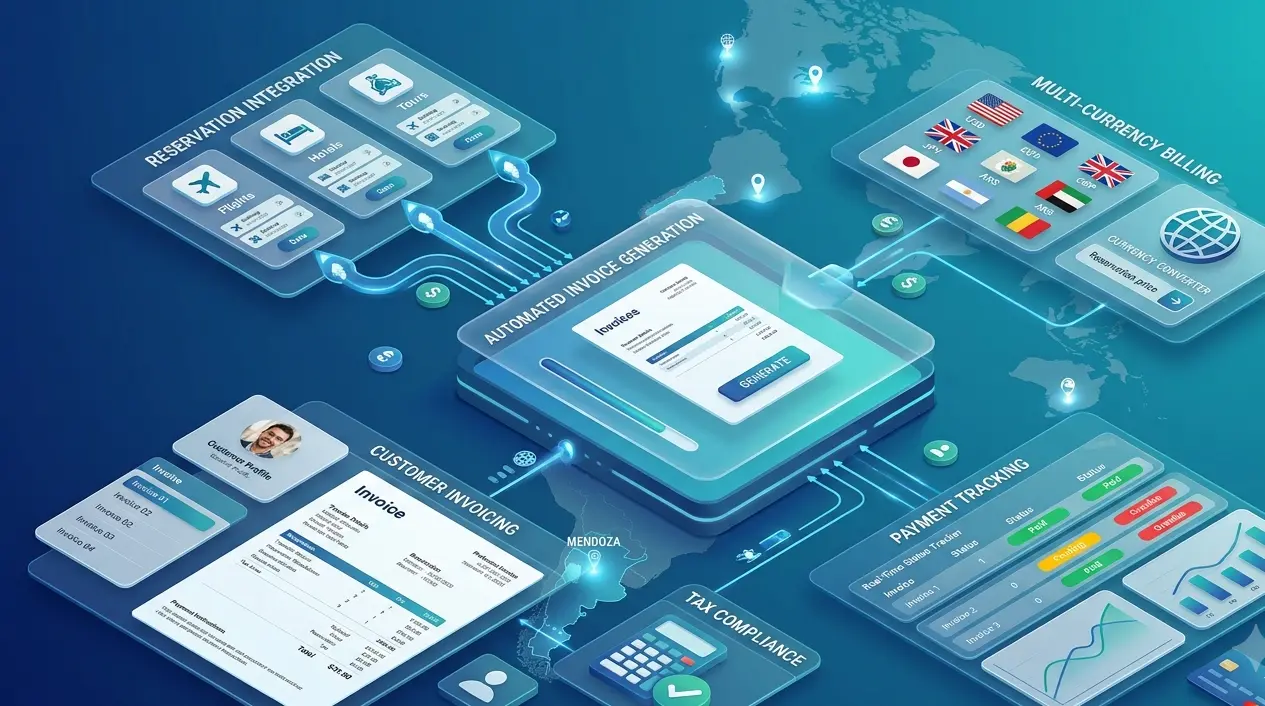
In tourism, response speed isn’t a customer service detail. It’s a direct conversion driver. A well-implemented system for tour operators lets you build proposals from a preloaded base of services, rates, and terms. What used to take time—digging up rates in emails, recalculating margins in a spreadsheet, formatting the document in another program—shrinks to minutes. The proposal goes out sooner, arrives while the customer is still evaluating, and with a professional presentation that builds trust from the first touchpoint.
For an inbound operator receiving requests from international agencies across different time zones, that speed makes the difference between winning or losing the group. For a wholesaler, it means handling more volume without expanding the team.
Fewer operational errors thanks to tourism operations automation
When booking information lives in three different places—the email where the request arrived, the spreadsheet where the price was calculated, and the chat where it was confirmed with the supplier—errors are almost inevitable. Not because of carelessness, but because of the setup.
A date change. A last-minute add-on service. A rate update. In a fragmented environment, every change requires manually updating each of those records. One of them always ends up out of date. And when service day arrives, the information the guide has doesn’t match what the supplier has.
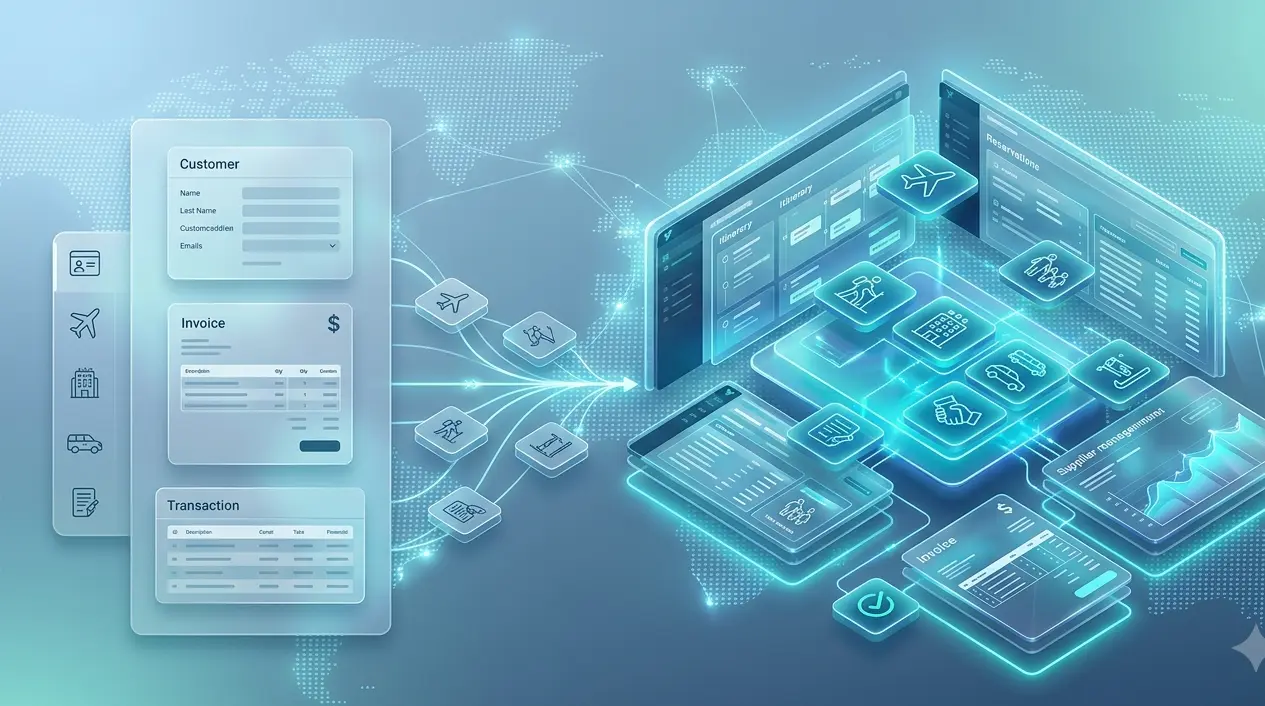
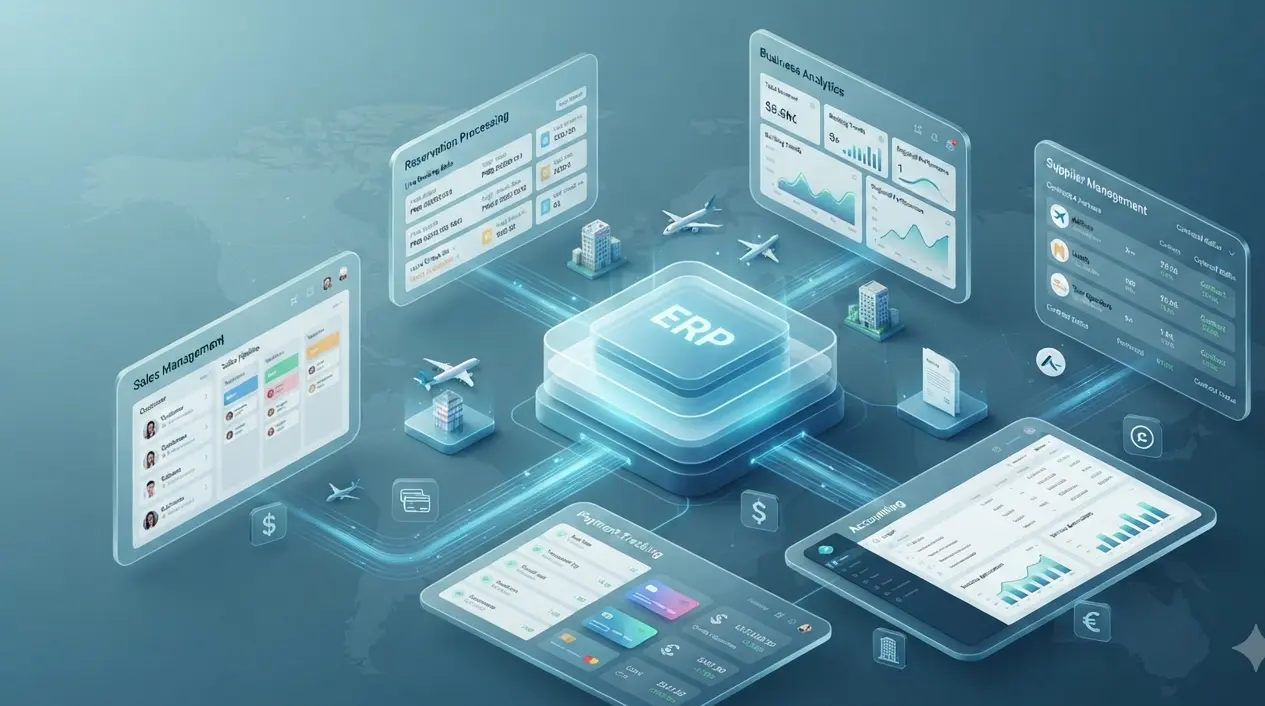
Tourism operations automation fixes this at the root. Every change to a booking automatically propagates to connected modules: operations, suppliers, finance. There aren’t different versions of the same data. There’s no need to “remember to notify” each department.
The impact isn’t only operational. Errors in tourism have real costs—refunds, compensation, damaged reputation. Systematically reducing them protects the margin on every operation. The immediate benefits of implementing a specialized platform become visible at exactly this point: first in the errors that stop happening, then in the time the team gets back.
How the system’s benefits vary by type of tour operator
The benefits aren’t the same for everyone. They show up differently depending on the business model—and that difference matters when evaluating what type of platform for tour operators actually fits your operation.
| Operator type | Most immediate benefit | Mid-term impact |
| Inbound operator (DMC) | Error-free coordination of guides and transportation | Ability to scale volume without doubling the team |
| Wholesale operator | Centralized management of allotments across multiple suppliers | Real-time visibility into margins by product |
| Outbound Operator | Faster, better-presented quotes | Higher conversion rate and proactive customer follow-up |
An inbound operator that implements a platform designed for outbound operators ends up working around the system—and the benefits fade before they materialize. The software’s logic matters as much as its features.
Reports for travel agencies and operators: decisions based on real data
A useful report answers specific questions: which destinations generate the most margin? Which supplier racks up the most incidents? What’s the average ticket size by customer type this quarter?
Most operators working without an integrated system don’t have immediate access to that information. They can reconstruct it with effort—exporting data from different sources, cross-checking spreadsheets, consolidating manually. But by the time they have it, the moment to decide has already passed.
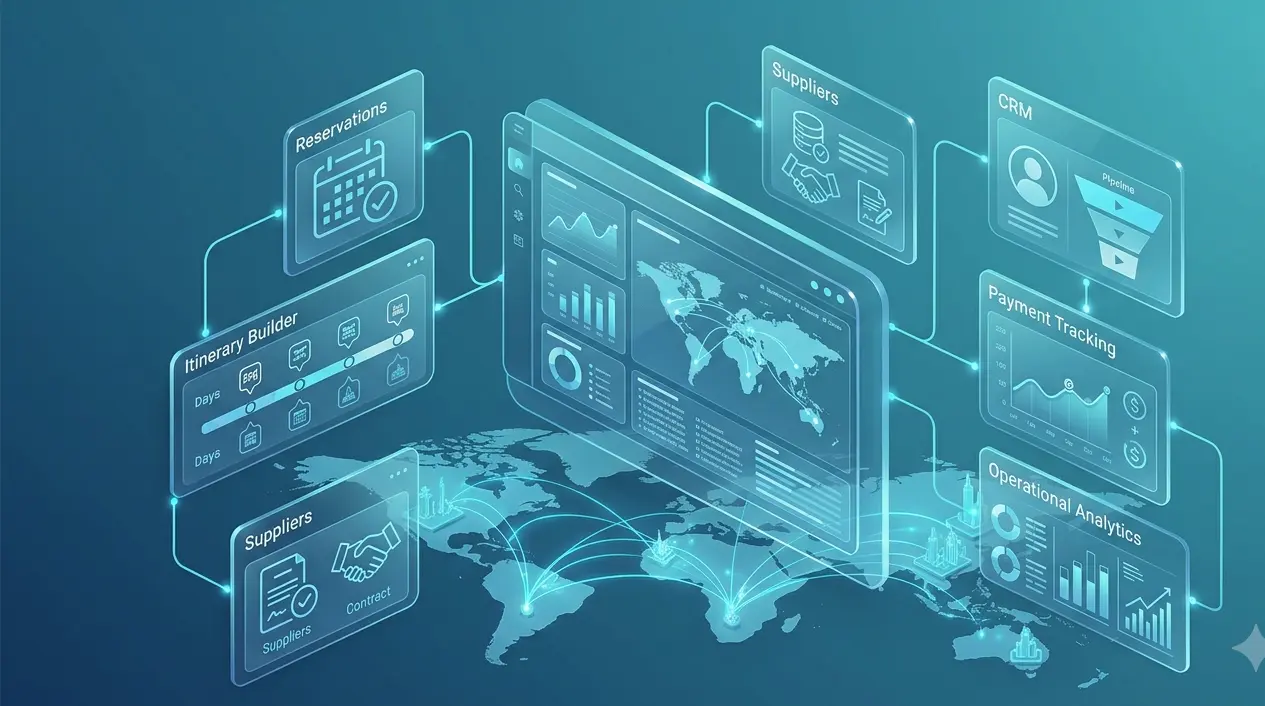
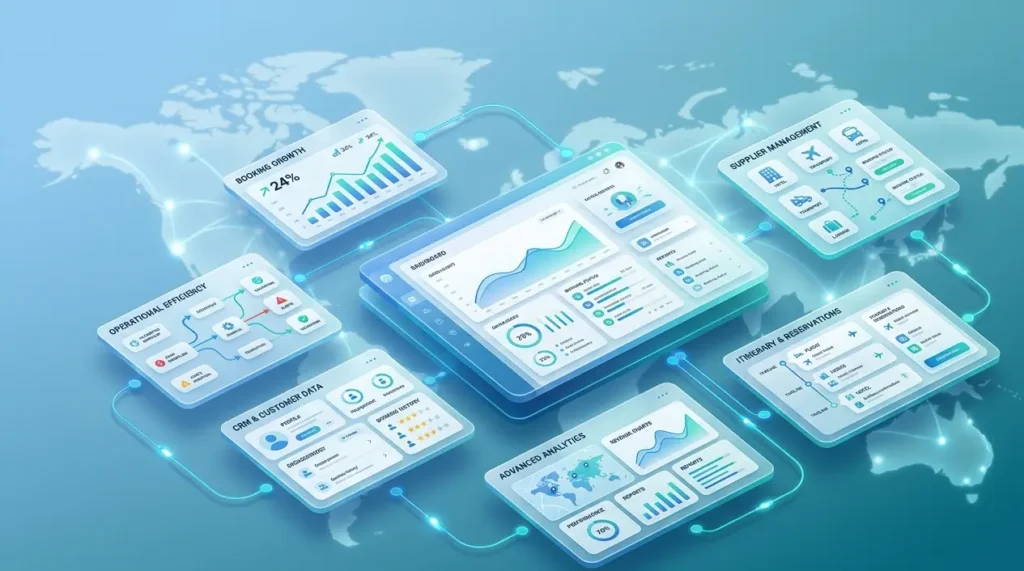
The reports for travel agencies and operators generated by a specialized system are a natural result of recorded operations. There’s no extra work: the information is there because every quote, every booking, and every payment has already been logged in the system. The result isn’t just administrative efficiency—it’s business intelligence you can access without relying on an external analyst or overtime at month-end.
Booking management for tour operators as the foundation for growth
There’s one benefit that takes longer to notice but is the most strategic: the ability to grow without growth creating chaos.
An operator running manual processes has an implicit volume ceiling. They can manage a certain number of active bookings with the team they have—but when volume rises, the system collapses before the business does. More bookings mean more emails, more spreadsheets, more manual coordination, and more room for error.
Well-structured booking management for tour operators within an integrated system breaks that ceiling. Processes are documented in the platform, not in people’s memory. Adding a new destination, bringing on a supplier, or launching a new product line doesn’t require reinventing the workflow—it fits into the structure that already exists.
For an operator with growth ambitions, that scalability isn’t a future advantage. It’s a present-day requirement: either you build the structure now, or growth overwhelms you before you can benefit from it. If you’re thinking about how to make that transition without interrupting what already works, the article on how to start using software without stopping your operations covers the process in detail.
What disappears when the system is well aligned with your operation
When the system isn’t aligned with the operator’s logic, workarounds appear—parallel solutions the team builds to compensate for what the platform doesn’t cover. Extra spreadsheets, emails that serve as a record, informal conventions for naming files and finding information.
Those workarounds are symptoms, not habits. They indicate the system wasn’t designed for the operation it needs to support.
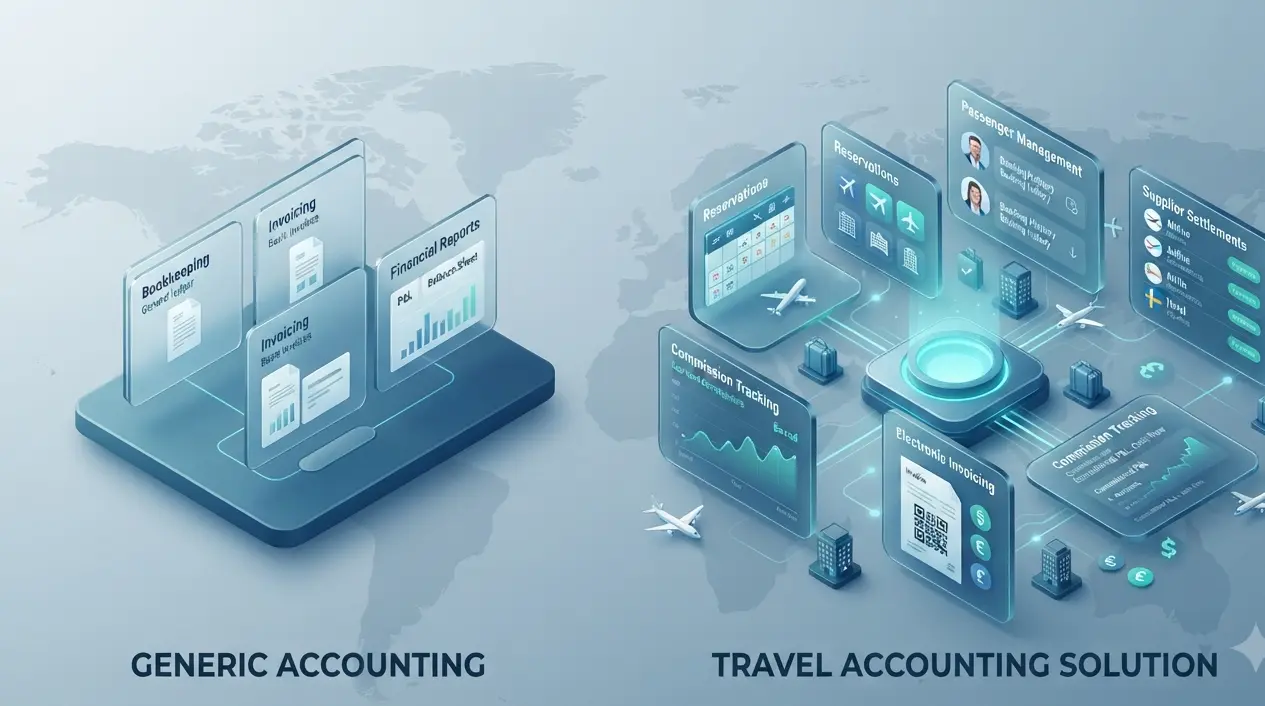
When the software is well aligned, those workarounds disappear. Not because the team is more disciplined, but because the system already covers what previously had to be solved outside it. Specialized tourism platforms—with an architecture that connects quotes, bookings, operations, and finance through the logic of the travel business—are built on that premise from the start. The difference from a generic tool isn’t the module list; it’s whether those modules communicate with each other with industry logic built in from the ground up.
An operation with a solid foundation grows differently
The benefits of a system for tour operators aren’t limited to doing faster what you already did. They change how you operate: with more control, clearer financial visibility, and less dependence on each team member knowing exactly what to do in every situation.
The question isn’t whether your operation can keep running without a specialized system. The question is how far it can grow that way—and at what cost.