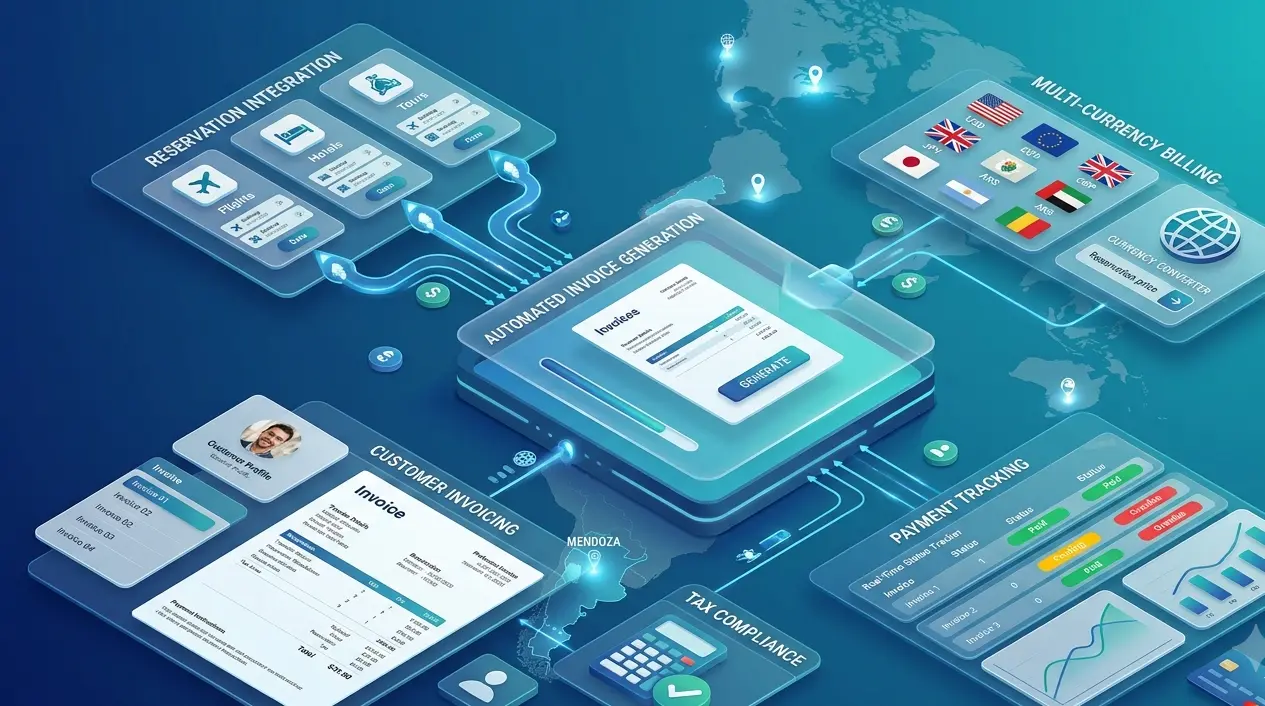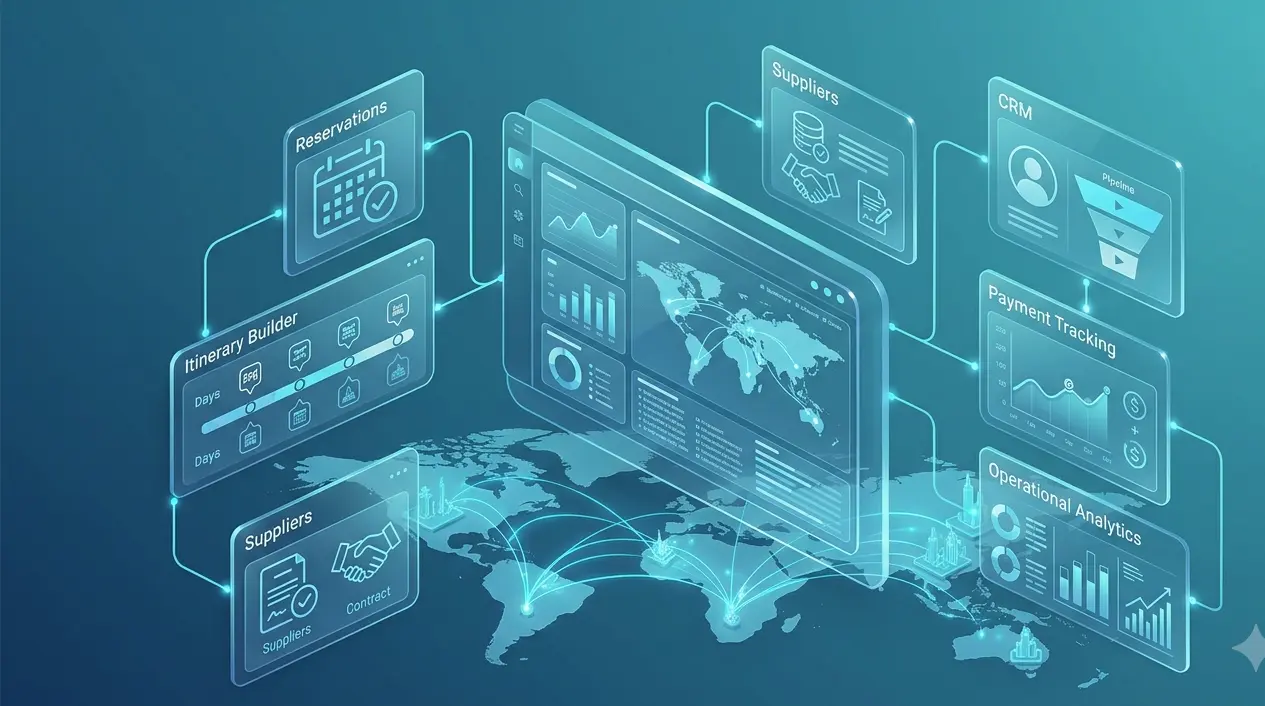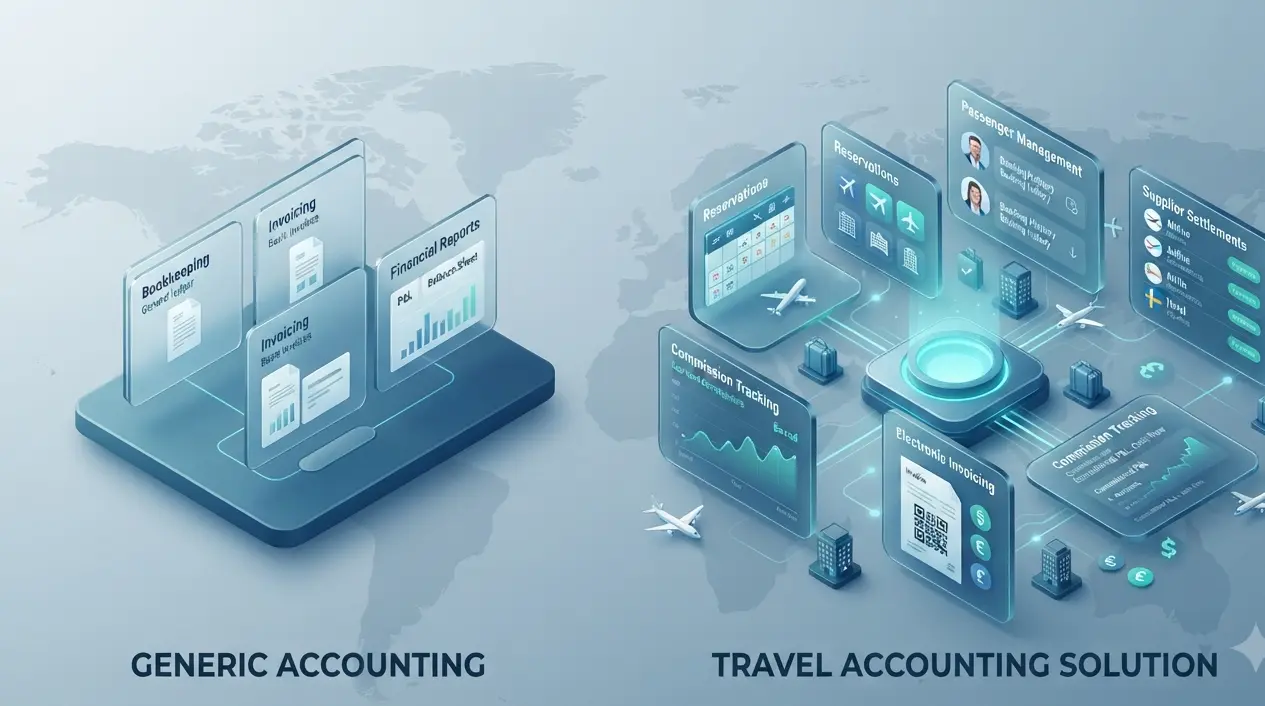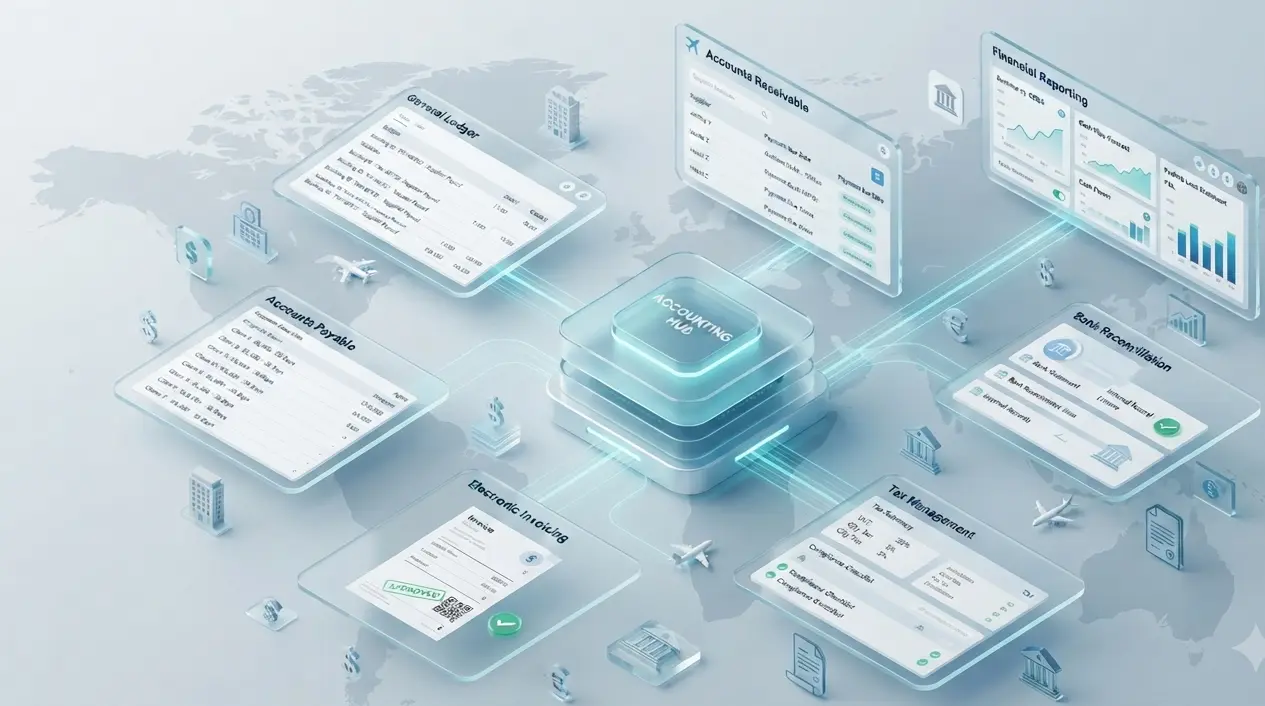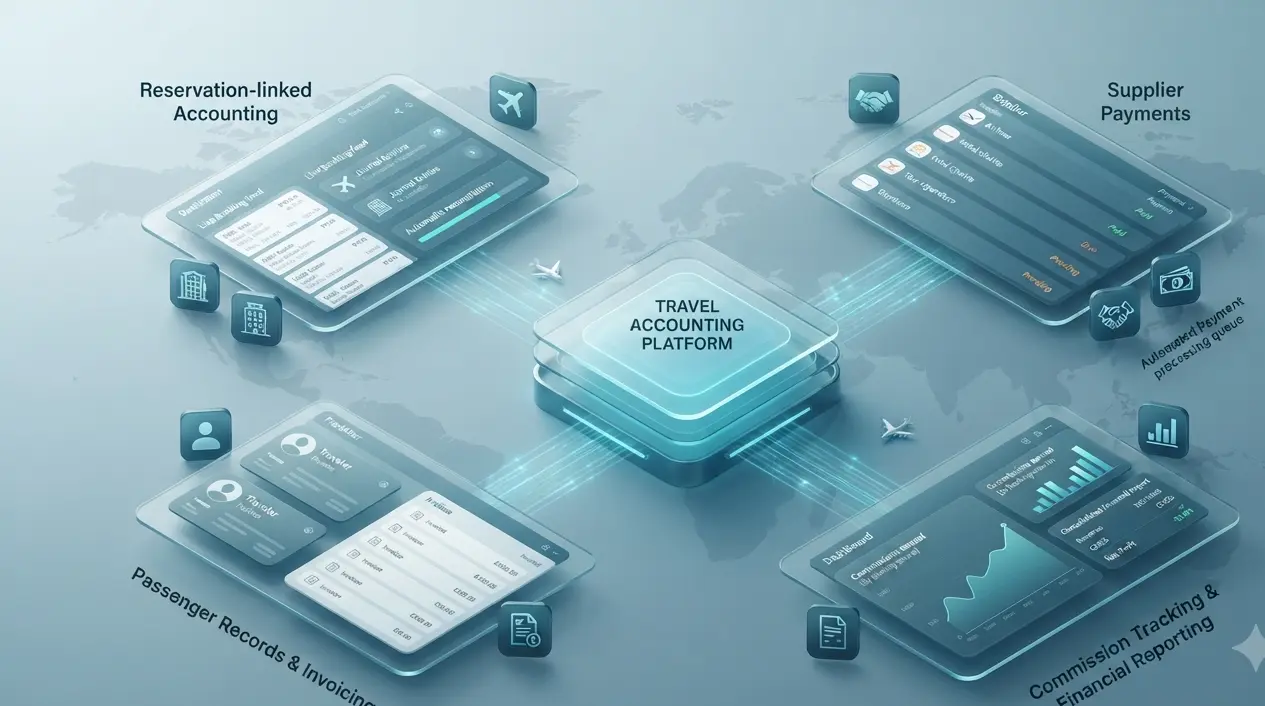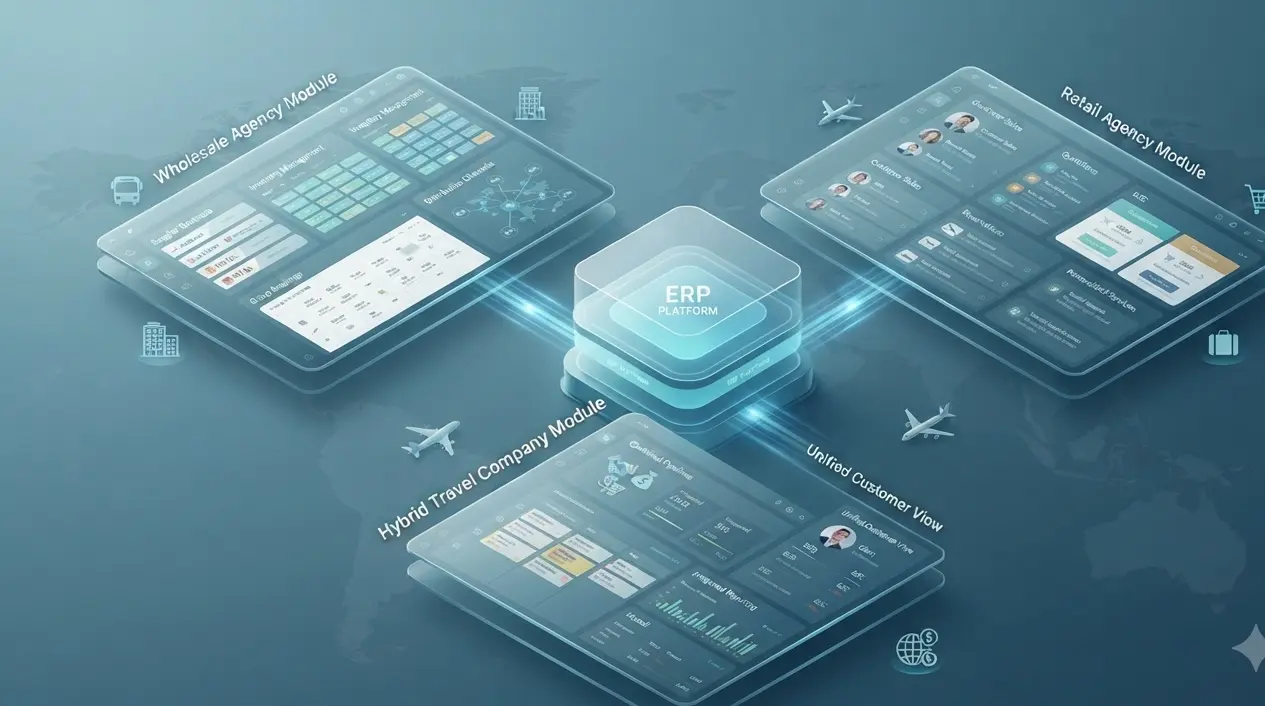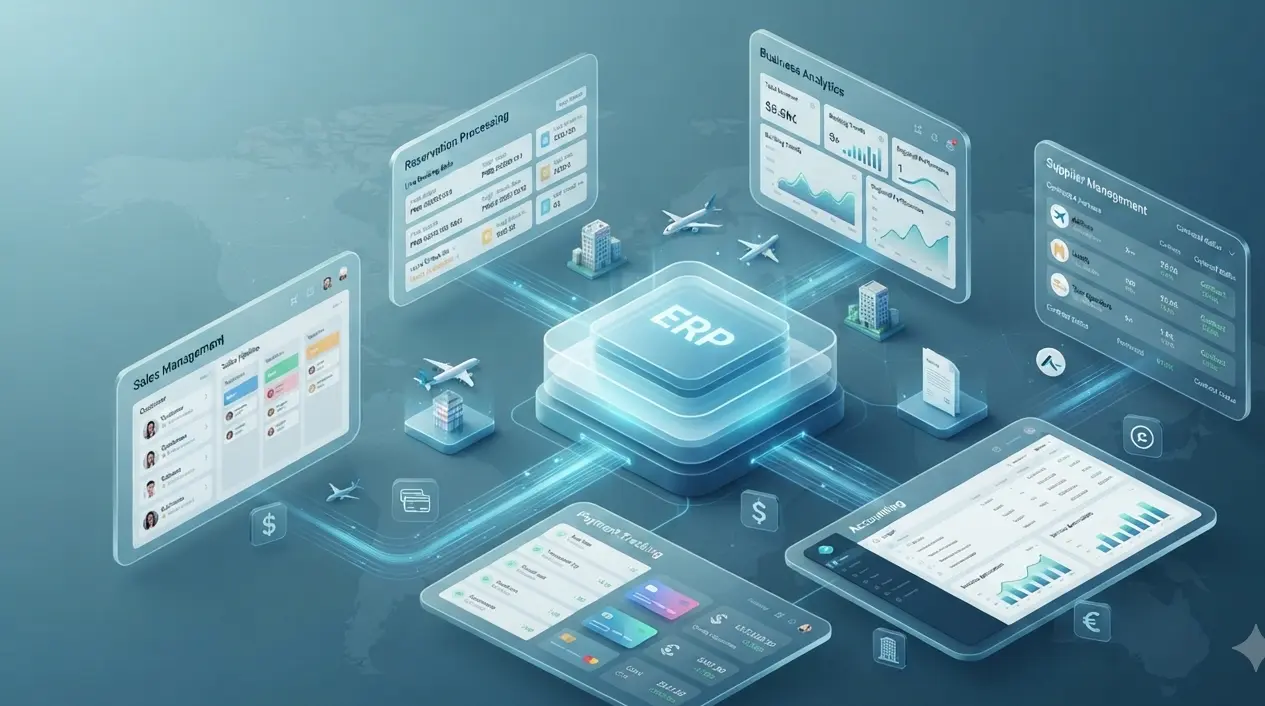
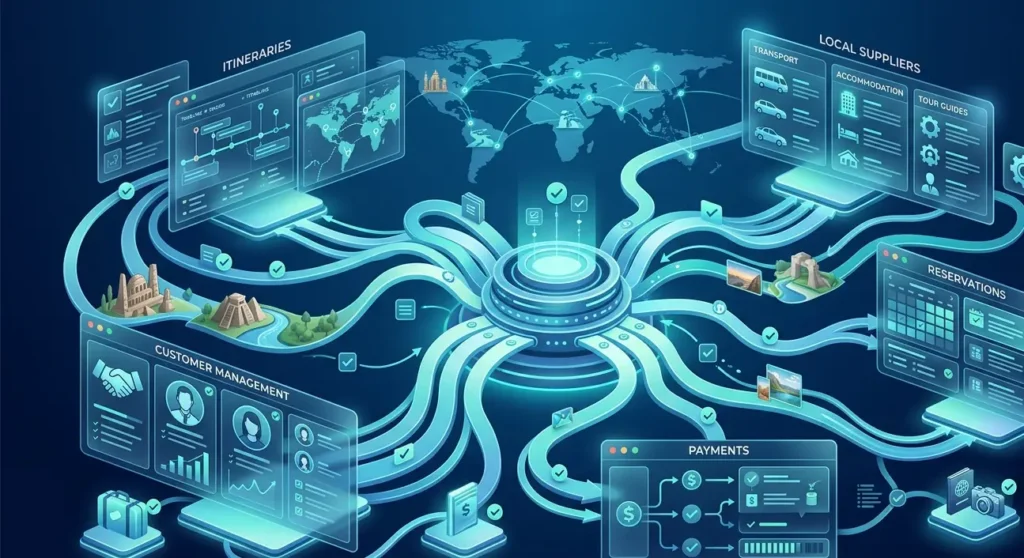
An inbound tourism platform does not just do one thing. It performs many connected tasks—and that connectivity is exactly what sets it apart from any isolated tool.
Inbound tourism has a specific operational logic. The client is not the traveler: it is the outbound agency or the tour operator that hires the services. The traveler arrives at the destination without knowing who organized the experience they are living. All coordination occurs on an invisible plane: local providers, guides, transporters, accommodation services, activities, and payments that are linked together before the passenger even lands.
When that chain is managed with generic tools—emails, spreadsheets, scattered files—every link becomes a potential point of failure. A specialized inbound tourism platform exists so that this chain functions as a system, rather than a sum of manual efforts.
If your agency or DMC is at the point of determining whether its current operation can sustain projected growth, it may be useful to first review the signs that indicate your agency needs a management system.
What an inbound tourism platform resolves in daily operations
Before discussing functionalities, it is worth understanding the structural operational problems an inbound agency or DMC faces when working without a centralized platform.
The first is information fragmentation. Data for the same operation lives in different places: the quote sent to the client in one email, the provider’s confirmation in another, the payment status in a spreadsheet, and the instructions for the guide in a separate document. When something changes—a date, a service, a rate—the update must be made in each of those places separately. If any of them remain outdated, the error appears at the least opportune moment: at the destination, in front of the passenger.
The second is the dependence on individual knowledge. When processes are not recorded in a system, they depend on the people who know them. If the agent handling an account is unavailable, reconstructing the context of that operation consumes time the agency does not have.
The third is the lack of real-time financial visibility. An inbound agency may have many active operations simultaneously and not know precisely how much it is earning on each one until the period is closed.
An inbound tourism platform resolves these three problems through its architecture: it centralizes information, standardizes processes, and connects operations with finances without intermediate manual steps.
Quoting in an inbound tourism platform: speed without losing precision
Quoting is the first commercial point of contact for an inbound agency with its client. It is also where the most time is lost when there is no platform to support it.
Building a proposal for an international tour operator involves combining services from multiple providers, calculating rates in different currencies, applying differentiated margins by client type, and generating a document that represents the agency well. Without a centralized system, this process can take hours. With a specialized platform, it takes minutes.
The difference is not just speed; it is precision. An inbound tourism platform has provider rates, each client’s commercial rules, and seasonal parameters pre-loaded. When the agent builds the quote, they are not calculating manually: they are configuring a proposal based on an updated database.
The result is a proposal that arrives before the competition’s—and with a smaller margin of error.
The following flowchart shows how a quote flows within a specialized platform vs. without one:
Without a platform
Client request
→ Search for rates in scattered files
→ Calculate margins in Excel
→ Build document in Word/PDF
→ Send by email
→ Adjust manually if there are changes
⚠ Time: hours · Risk of error: high
With an inbound tourism platform
Client request
→ Configure services from a centralized database
→ Margins and rates calculated automatically
→ Document generated in the client’s language
→ Sent from the platform itself
→ Changes updated across all connected modules
✓ Time: minutes · Traceability: complete
CRM in inbound tourism: client management beyond the booking
The CRM of an inbound tourism platform is not just a contact registry. It is the operational memory of the relationship with each client.
A tour operator that sends groups regularly has its own commercial conditions: negotiated rates, agreed payment methods, specific cancellation policies, and service preferences. If this information is not centralized, every interaction starts from scratch or depends on someone remembering previous agreements.
A CRM integrated into the inbound operation connects the client’s commercial history with their active bookings, pending payments, and ongoing operations. This is not information separated into different modules: it is a unified view that allows for precise service and the anticipation of needs before the client even raises them.
This has a direct impact on service quality. When the team knows what that client bought last time, what problems they had, and what conditions were agreed upon, they can respond consistently—regardless of who handles the contact.
The benefits of implementing a platform in inbound tourism go beyond operational efficiency: they translate into stronger commercial relationships with the partners that generate the most volume.
Provider management in inbound tourism: the core of destination operations
The provider network is an inbound agency’s most valuable asset. The guides, transporters, hotels, restaurants, and activity operators that make up this network are the ones who make what the client buys possible.
Managing this network without a centralized system creates friction that accumulates: email confirmations that get lost, availability that is verified manually, rates that are updated in one file but not in active quotes, and payments made without a clear record of each provider’s status.
An inbound tourism platform centralizes this management. Each provider has its own profile with services, seasonal rates, payment conditions, and operational history. Confirmations are sent and received within the same system. Allotments—the quotas committed to each provider—are visible in real time, eliminating the risk of overselling availability.
| Aspect | Without a platform | With an inbound tourism platform |
| Service confirmation | By email, manual, no traceability | From the platform, with automatic recording |
| Rate control | Separate files, risk of obsolescence | Centralized database, immediate update |
| Availability / allotments | Manual verification, risk of overbooking | Real-time control from the system |
| Provider payments | No integration with operations | Linked to each booking, visible in accounts payable |
| Relationship history | Scattered in emails and files | Centralized in the provider profile |
Payment management in an inbound tourism platform: real financial control
Inbound tourism has a complex financial structure. Services are sold today, provided weeks later, and paid for at different times: prepayments to the provider, collections from the client, commissions, and adjustments for last-minute changes.
Without a system that connects operations with finances, this flow is managed with manual reconciliations at the end of the period. These reconciliations consume time and generate errors: paid services that are not recorded, collections received that were not matched with the corresponding operation, and margins that seem positive but include costs that were not loaded.
An inbound tourism platform connects each booking with its financial movements from the moment it is confirmed. Client payments are recorded against the operation. Prepayments to the provider remain associated with the corresponding service. The real margin of each file is visible without the need to reconstruct it manually.
This visibility is not just an administrative convenience. It is the information that allows for decision-making: which destinations are more profitable, which providers have the best cost-quality ratio, and which types of groups generate the highest margin.
How an inbound tourism platform impacts growth capacity
A DMC or inbound agency grows when it can handle more volume without proportionally multiplying the operational workload. This is not achieved by hiring more people: it is achieved when processes are clear and automated enough for the existing team to handle more operations without losing control.
An inbound tourism platform is the infrastructure that makes this growth possible. Not because it automates everything, but because it frees the team from tasks that do not require human judgment—confirming availability, updating rates, generating documents, recording payments—so they can focus on what does: client relationships, new product development, and negotiation with strategic providers.
Specialized inbound platforms—such as those designed specifically for DMCs and operators with multi-destination operations, multilingual support, and an architecture that connects sales, operations, and finance in a single environment—are built with this logic from the design stage. The Toursys inbound tourism platform is built for this type of operation: from the quote to the financial close, with no manual steps between modules.
What distinguishes an inbound tourism platform from a generic tool
Not just any management system works for an inbound agency. Generic tools can manage clients and issue invoices, but they do not understand the specific logic of inbound tourism: services sold months in advance, providers with variable seasonal conditions, operations in multiple currencies, and operational documentation that must reach the guide waiting for the passenger at the airport with precision.
A platform designed for inbound tourism is not an adaptation of something generic: it is an architecture built from an understanding of how a DMC actually operates.
This difference is felt from the implementation stage. Workflows correspond to the actual processes of the inbound agency. Parameterizations—seasonal rates, client rules, allotment control—respond to the business logic without the need for workarounds. And the team learns to use it in weeks, not months, because the system speaks the same language as the operation.