Choosing a reservation system is a strategic decision that has a direct impact on the way a tourism company sells, operates, controls its profitability and grows over time. For agencies, DMCs, operators and marketplaces that have already passed the exploratory stage, this technical checklist allows them to evaluate real solutions with clear criteria, avoiding common mistakes that usually appear after implementation.
This content is designed for companies that already know they need a reservation system, but are now looking to make the right choice.
Why a reservation system defines the efficiency of a tourism business
In companies with certain operational complexity, the reservation system ceases to be an isolated commercial tool and becomes the core of management. From there, sales, suppliers, operations, collections, payments and reports are coordinated.
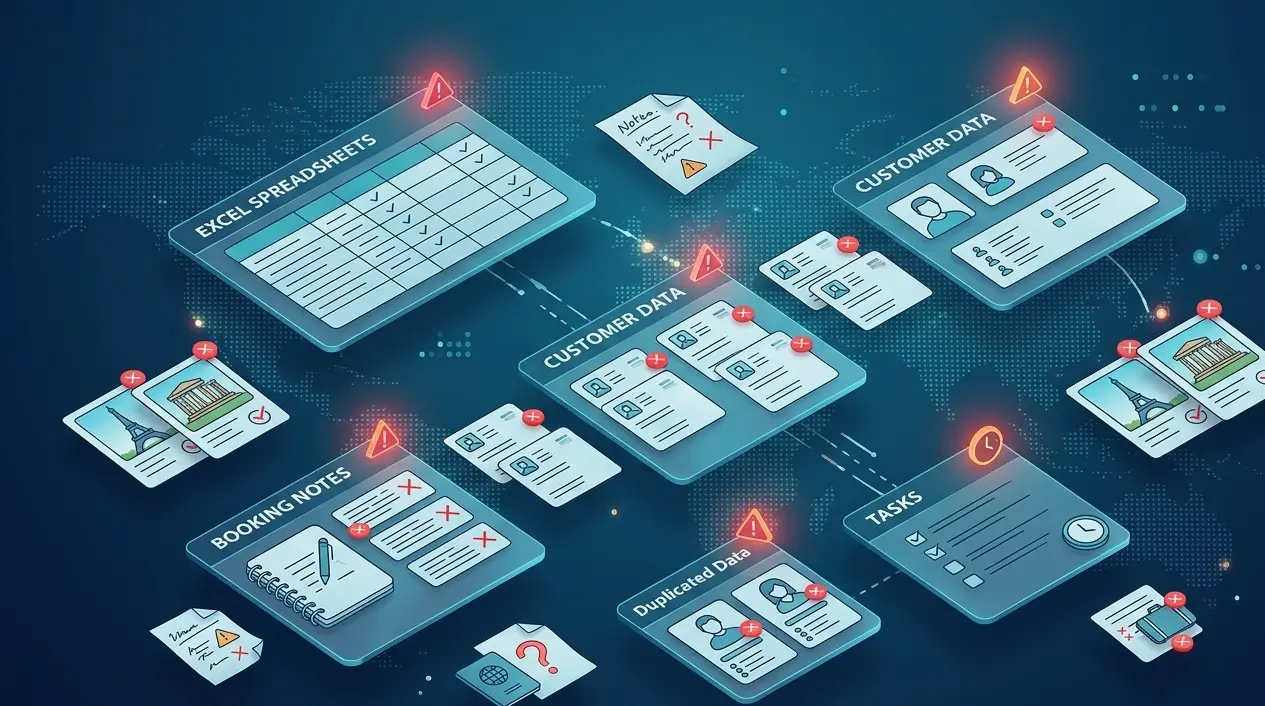
When the system does not keep up with growth, parallel processes, tariff errors, operational reprocesses and loss of control begin to appear. Choosing the right system does not mean adding technology, but rather organizing the operation and reducing risks.
Technical principles of a modern reservation system
A well-designed reservation system must be able to be managed by non-technical teams, offer high levels of configurability without relying on custom developments and adapt to the company’s business model. The technology must accompany the actual operational logic, not force it to be modified.
In B2B structures or with business partners, it is also key that the system allows white label schemes or shared environments, maintaining control and operational consistency.
Key technical features to evaluate in a reservation system
Real connectivity with suppliers and own inventory
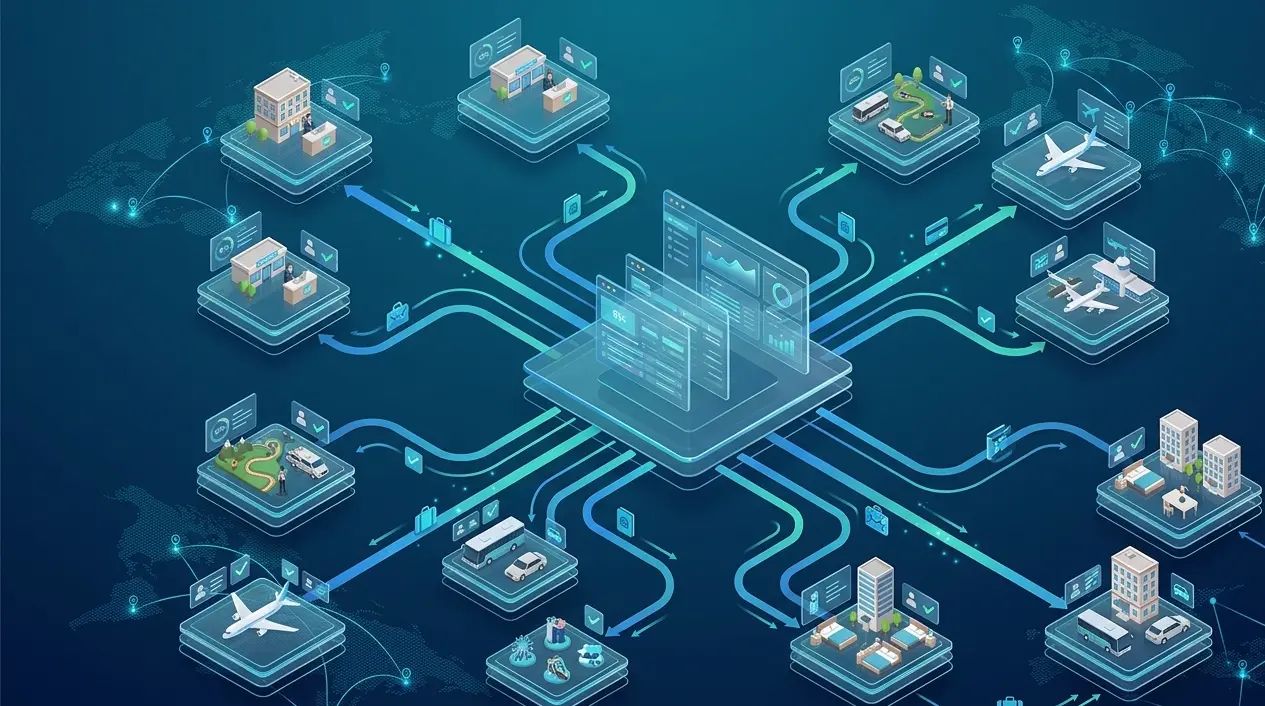
The reservation system for travel agencies must centralize multiple inventory sources, such as bed banks, car rental companies, activities and proprietary products (hotels, tours, transfers or packages).
The difference is not only in connecting, but in keeping rates and availability synchronized in real time. When this does not occur, the operational burden and risk of error falls on the equipment.
Native multi-currency and multi-language
To operate in international markets, these capabilities must be part of the core of the system.
The system must be able to display prices in different currencies, apply trading rules by market and present the platform in the language of the end customer or B2B partner. This improves conversion and reduces financial inconsistencies.
Rate flexibility and margin control
Profitability in tourism is defined in rate management. An advanced system must allow working with seasons, net and commissionable rates, markups by channel or type of customer and differentiated policies for B2B and B2C. When rate management is rigid, margins are diluted without clear visibility for the company.
Online sales according to business model
Each tourism company sells differently. Some prioritize direct sales to the end customer, others operate mainly in B2B and many combine both schemes. In more advanced models, there is a need to operate as a marketplace.
The system must adapt to these scenarios without additional development or structural changes each time the business evolves.
Scalability without complex migrations
A reservation system must support growth in users, markets and booking volume without compromising performance or requiring costly migrations.
Scaling up should not mean redoing processes, losing historical information or retraining the team from scratch.
Clear information and reliable reporting
The system must provide clear reports on sales by channel, bookings, profitability, commissions and team productivity.
Information must be available in real time and reflect the actual operation. Without reliable data, strategic decisions are based on assumptions.
Automation to reduce operational errors
Processes such as mailings, voucher generation, notifications to operations and synchronization with suppliers should be automated. Each repetitive manual task increases the risk of error and operational cost.
Support, security and system evolution
The evaluation does not end with the current functionalities. The speed of support response, the frequency of updates, the clarity of the enhancement roadmap and security protocols are key indicators of whether the system will keep up with business growth or become obsolete.
Adequacy of the system to the type of tourism enterprise
There is no one-size-fits-all reservation system. There is the right system for each model and stage of growth.
An inbound tour operator or DMC needs complete itineraries and a solid internal operation. An outbound agency requires connectivity, sales engines and multi-channel management. A multi-country chain needs multi-company, multi-currency and multi-language management. A marketplace requires massive connectivity and real-time availability control.
The evaluation should consider both the current state of the company and its vision for future growth.
All technical performance on a single platform
The criteria developed in this checklist respond to the real needs of tourism companies that operate with volume, multiple suppliers and different business models. Connectivity, multicurrency, automation, rate control, scalability and operational visibility are not aspirations, but necessary conditions to grow in an orderly manner and sustain service quality.
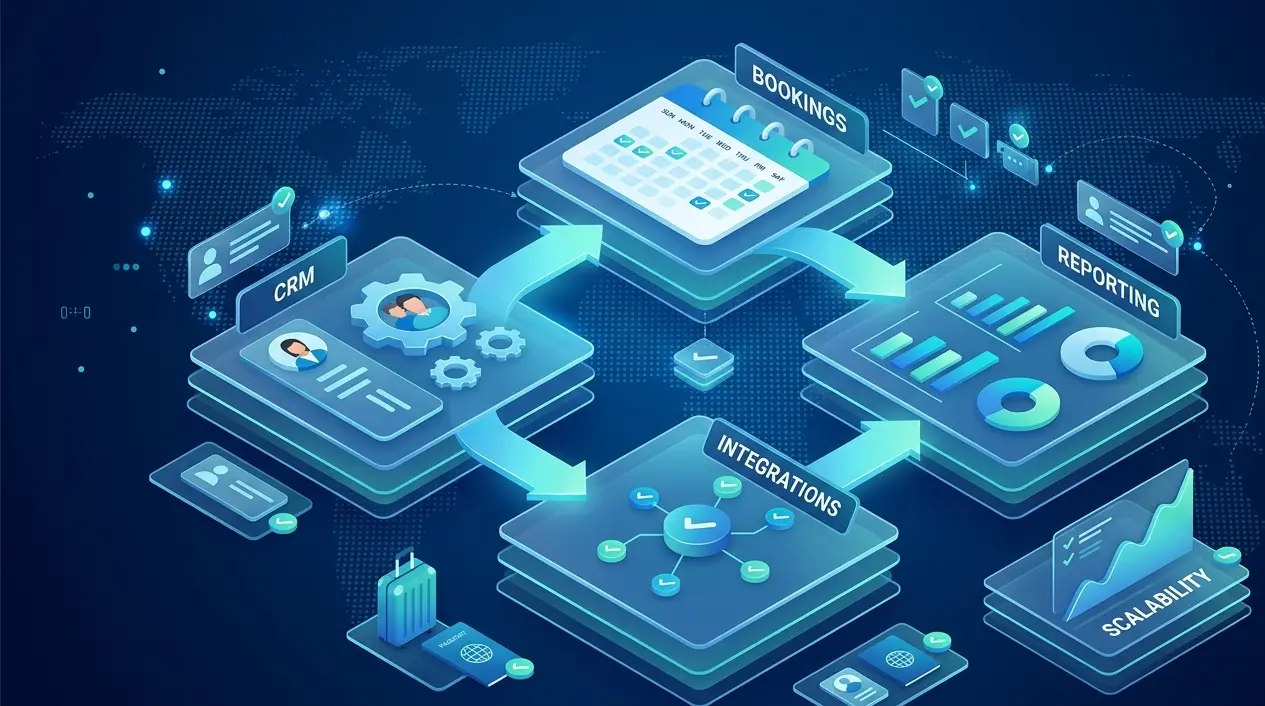
All these features are integrated into a single platform in specialized solutions such as Toursys, designed for outbound agencies, inbound travel companies (DMCs), multi-country structures and marketplace-type models, unifying sales, reservations and daily operations in a single environment.
From technical evaluation to an informed decision
When a reserve system meets these criteria, it becomes a solid foundation for controlled growth. The operation becomes orderly, risks are reduced and the company gains predictability.
At this stage, it is key to validate these capabilities in demonstrations based on real scenarios of daily operation, testing how the system responds to changes, volume and sustained growth. Requesting a demo oriented to real operation is the logical step to move towards an informed decision.