There is something that starts to happen when an agency grows – albeit gradually – and it is not always obvious at first. It’s not a one-off mistake or a specific problem that you can easily isolate. Nor does it necessarily respond to a lack of sales or a weakness in the team. It’s more subtle than that.
The operation continues to function, clients continue to arrive and trips continue to be arranged. However, there is a feeling that is difficult to explain: everything is moving forward, but with friction. Each process takes a little more effort than it should, each task seems to take more time, and although the business keeps moving, control over what happens begins to blur. Most uncomfortable of all, there is no clear point at which to pinpoint the problem.
When the problem is not the volume, but the way of working
In an outbound agency, selling is still possible. In an inbound agency, passengers continue to arrive and services are operated. In a tour operator, products are assembled and marketed. At a glance, everything is in motion.
But there is a profound – and often invisible – difference between operating and scaling. That difference appears when each quote involves reworking information that already exists in another format, when a booking is confirmed through multiple channels without a single source of truth, or when any change generates a chain of manual adjustments that cross different areas.
The problem is not that the operation fails, but that it starts to become more and more demanding to sustain. It works, yes, but it does so at the cost of more time, more validations and more reliance on people.
The first sign: you work harder, but you don’t advance faster
At this point, there is often a very clear feeling within the team: everyone is busy all the time, but the business is not moving at the same pace. The effort is growing, but the results don’t necessarily follow.
In an outbound agency, this is reflected in processes that seem simple but, in practice, require multiple steps: checking emails, searching for files, validating fares in different sources before being able to send a proposal. In an inbound agency, a passenger’s information may be distributed among itineraries, messages and spreadsheets, which means that the context has to be reconstructed every time there is a change. In an operator, the control of availability, fares and reservations may not be completely synchronized, which generates uncertainty about the real status of each operation.
This is not a big visible inefficiency, but a constant accumulation of small decisions and checks that together consume time and energy.
The second signal: the information exists, but is unreliable
In most cases, the problem is not a lack of information. In fact, the opposite is usually true: there is data everywhere. The drawback is that this information is not always consistent or reliable.
A file indicates one thing, a system shows another, and the financial records do not seem to coincide at all. Faced with this, a dynamic appears that ends up naturalizing: everything is verified more than once.
This constant need for validation completely changes the work logic. The operation ceases to be fluid and becomes defensive. Instead of moving forward with confidence, the team works trying to avoid mistakes that should not happen in the first place.
The third sign: the areas are not really connected.
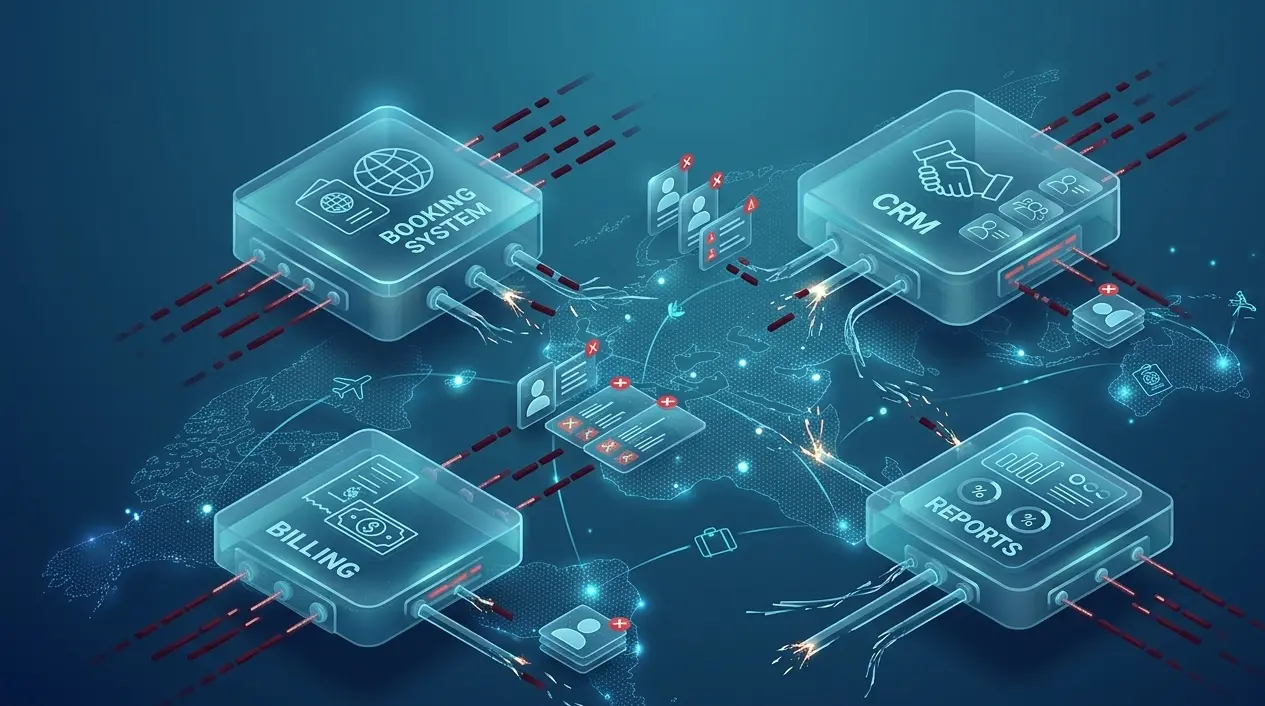
On the surface, each area fulfills its function. Sales sells, operations executes, administration manages payments. However, this apparent coordination often masks a deeper disconnect. Each area works with its own logic, its own timing and its own tools. This does not always create an immediate problem, but it does have a structural consequence: loss of traceability.
A trip can be sold and operated correctly, but when it comes to analyzing the final result, differences appear that are not easy to explain. Costs do not match exactly what was budgeted, margins are not entirely clear and there is no direct way to understand where the deviation occurred.
When that happens, you not only lose control. You also lose the chance to learn and improve.
What’s really going on (even if you don’t see it that way)
It is common to interpret these situations as independent problems: lack of order, excessive volume, the need to add more people to the team. However, when viewed as a whole, they reveal something different.
It is not a matter of isolated failures, but of a way of operating that is not thought of as a system. Each part works, but not necessarily in relation to the others.
What a fragmented operation looks like vs. a connected operation
When the operation is fragmented, information is distributed across multiple tools and processes rely heavily on manual interventions. Coordination between areas is sustained through constant communication, and errors, when they appear, are not always easy to track.
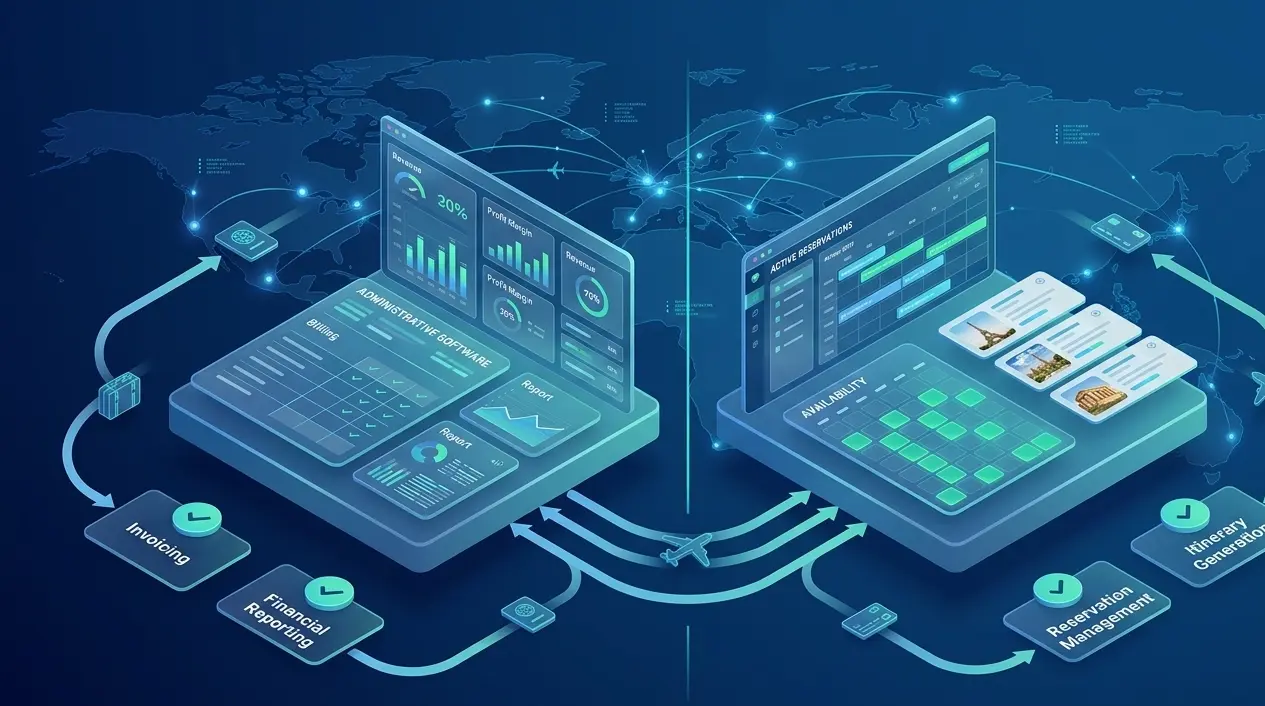
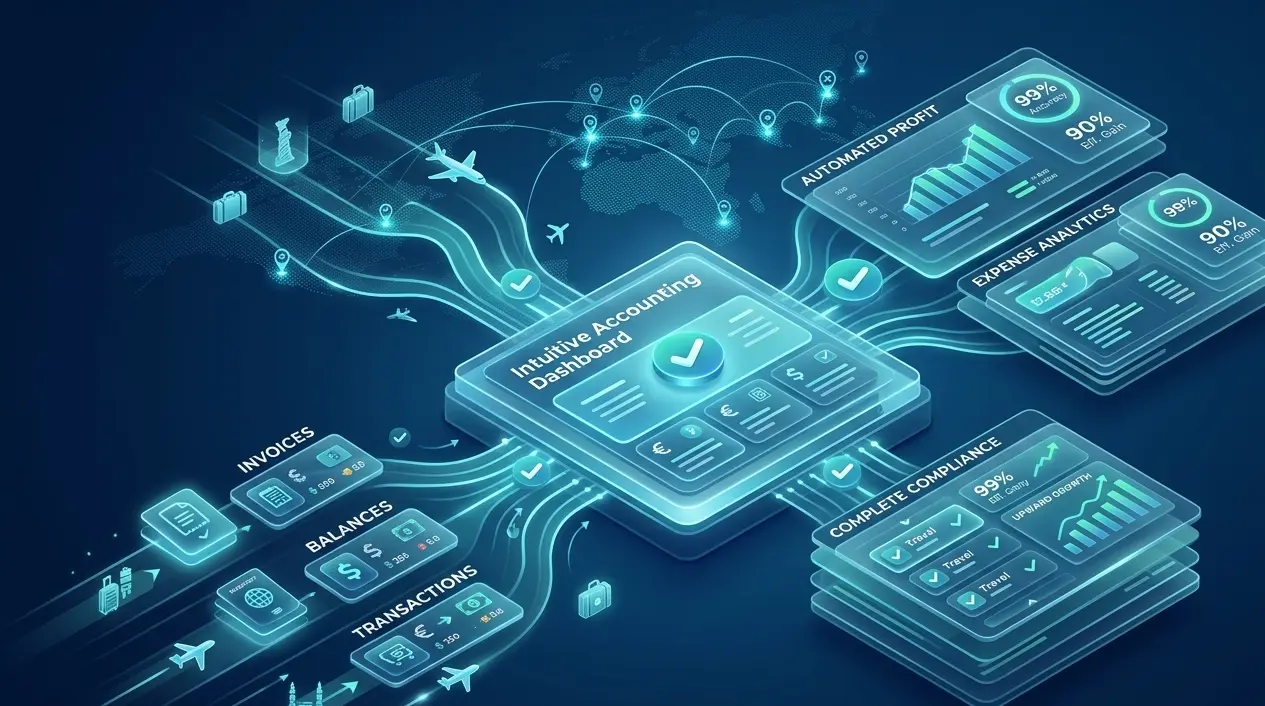
In contrast, in a connected operation, information flows within the same environment, processes follow a common logic and decisions can be supported by consistent data. It’s not just about working faster, it’s about working with greater clarity.
The tipping point: when business as usual is no longer viable
There comes a time – which is not always precisely identified – when this way of operating ceases to scale. Not because there is a lack of business opportunities, but because the structure no longer keeps up with growth.
At this stage, more visible signs begin to appear: opportunities that are lost due to response times, operational errors that become more frequent, difficulties in understanding the real financial situation of the business. Growth ceases to be a natural objective and starts to feel like an uncomfortable challenge.
Understanding this changes the way you think about your agency.
When these signals are no longer analyzed as isolated problems but are understood as part of a single system, the focus changes completely. It is no longer a question of optimizing individual tasks, but of rethinking how the operation as a whole should function.
This change of perspective marks a point of maturity. It is the moment when the agency stops reacting to problems and starts questioning its structure.
One last nuance
From there, many agencies begin to explore new ways of organizing their operation, not from isolated tools, but from models that connect sales, reservations, operation and finance within the same flow.
In this context, solutions specialized in tourism, such as Toursys and its travel agency management software, have appeared in response to this integrated logic. However, what is really relevant is not the tool itself, but the previous change: understanding that the problem was not specific, but structural, and that the way of operating needs to evolve in order to sustain growth.