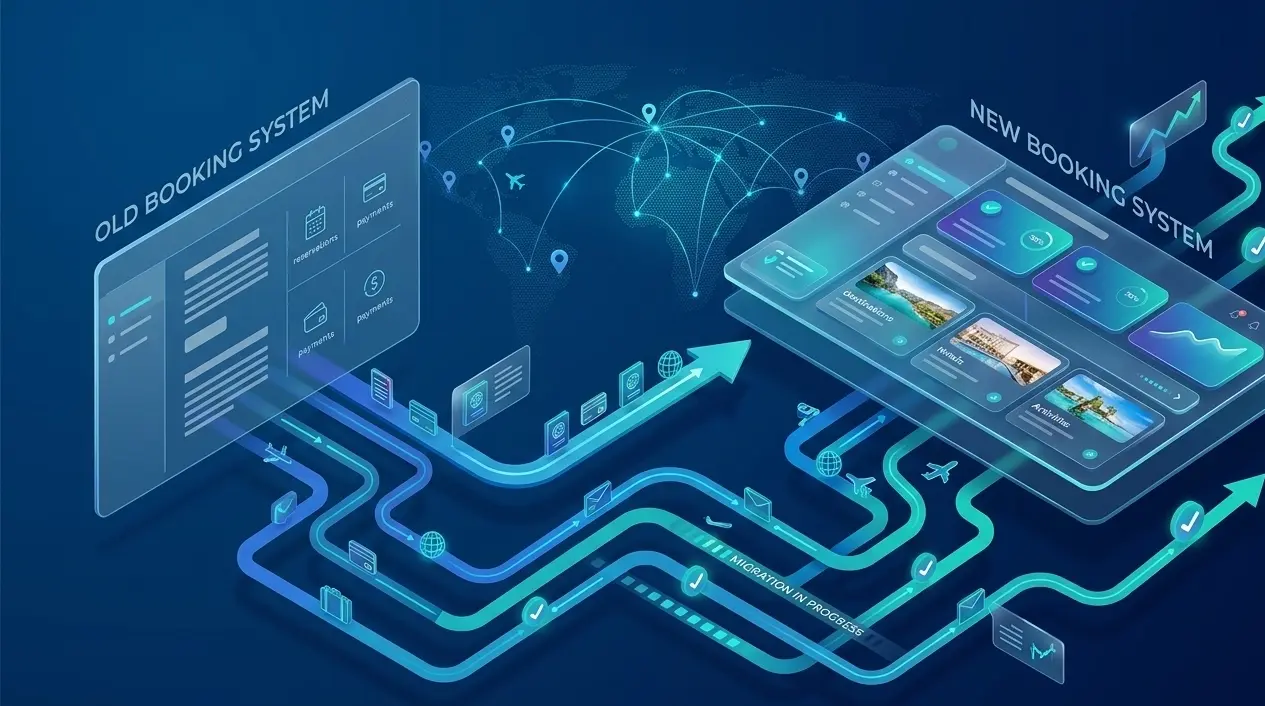
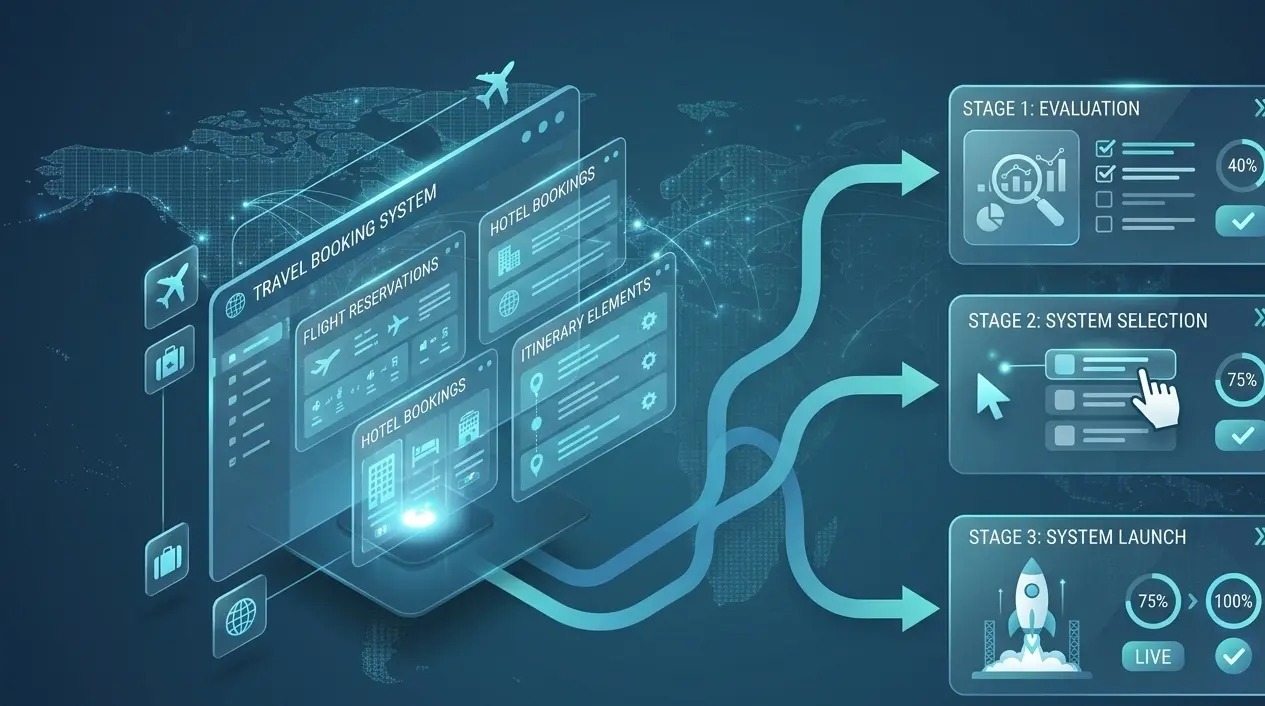
When you look at an itinerary builder vs. free templates, the comparison seems straightforward. Many agencies, tour operators and DMCs wonder if it is really worth paying for a professional itinerary builder or if using free templates can solve the initial need. Both options make it possible to present a clear and attractive travel program. However, behind that similarity there are structural differences that directly impact the operation, professionalism and growth capacity of travel agencies, tour operators, DMCs and inbound companies.
The question is not just about designing the right document. The key question is what happens next: how do you manage change, how do you control margins, how do you maintain consistency between sales and operations, and how do you project a strong image to the customer.
Understanding this difference is essential before choosing between free templates and a professional itinerary builder.
Itinerary builder vs. free templates: what are you really comparing?
A free template is an editable format. It can be a file in Excel, Google Docs or a design in Canva. Its main function is to organize information and present it in an orderly fashion.
A professional travel itinerary builder is different: it is connected to pre-configured services, rates, seasons and business rules. The itinerary is not built from scratch each time, but is generated from structured information.
This difference defines the level of control. With free templates, the knowledge depends on who edits the file. With a system, the logic is parameterized and available to the whole team.
Common limitations of free templates
Free options remove the initial barrier, but their limits become visible as the operation grows.
Brand identity and professionalism
Many free templates keep the vendor’s branding or do not allow full customization. The link does not use your domain or corporate ID, and the visual identity is limited.
In tourism, visual coherence conveys structure and confidence. When the itinerary appears to be generated from a generic tool, the professional perception is reduced.
Manual changes and risk of errors
Templates work as static files. If you change dates, rates or bases, you must edit each data manually. There is no automatic recalculation. This increases work time and the risk of inconsistencies, especially when you manage multiple suppliers or currencies.
Disconnection of the operation
A free template is not linked to your loaded services, seasons or defined margins. Each itinerary involves rebuilding the logic from scratch, even if you have sold the same product before. The document is isolated from bookings, reports and internal processes. That disconnect limits the ability to scale with order.
What does a professional itinerary creator bring to the table?
A professional itinerary creator not only designs proposals; it organizes parameterized information under a coherent logic. It can work with seasonal rates, markup rules, multiple currencies and languages and automatically recalculate in case of changes. In addition, it can operate under its own brand identity, without external references.
When integrated with other modules, the itinerary is part of a seamless flow that connects sales, operations and administration at agencies, operators and DMCs.
Comparison table: paid itinerary builder vs free templates
| Appearance | Free templates | Paid itinerary creator |
| Brand customization | Limited | White label and own domain |
| Automatic recalculation | No | Yes |
| Seasonal management | Manual | Parameterized |
| Multi-language and multi-currency | Limited | Integrated |
| Operational integration | No | Yes |
| Scalability | Download | High |
The difference is not only functional. It is operational and strategic.
When a free template is no longer sufficient
Not all tourism companies need the same level of digitization from the start. However, the tipping point comes when the volume grows and manual management generates friction.
When the team spends more time correcting documents than designing experiences, when changes require entire itineraries to be reworked, or when the image with the customer depends too much on manual processes, the challenge becomes structural.
An agency, operator or inbound company seeking to consolidate its positioning needs consistency and standardization. In this context, comparing free templates with a professional itinerary creator becomes a strategic decision.
Thinking about itinerary creation as part of growth
Evaluating whether it is worth paying for a schedule builder or using free templates should not focus on cost alone. The decision is linked to operational maturity and the intention to integrate processes.
A professional route creator centralizes information, reduces reliance on manual tasks and prepares the operation to scale without multiplying errors.
There are solutions designed specifically for tourism, such as Toursys, that integrate the itinerary generator with reservations and administration. The difference compared to generic tools is not only visual, but structural: they include seasons, deferred services, commissions and multi-currency.
In addition, human support during implementation is key when digitization involves reorganizing internal processes.
A decision linked to your company’s stage of development
If the volume is low, using free templates may be sufficient at an initial stage. However, when the company starts to grow and professionalize its operation, the decision between a professional itinerary builder vs. free templates is no longer a question of format and becomes a strategic decision about control, scalability and positioning.
At that point, the tool ceases to be a design resource and becomes a strategic component of the operation. Understanding this transition makes it possible to move towards consistent and sustainable digitization.