Adopting a new management software may seem challenging, especially in an industry where every minute counts and traveler service cannot stop. However, a well-planned system implementation can run very smoothly, without affecting the passenger experience, ensuring continuity of service and visible improvements from the first contact.
With the right support, technological change becomes an opportunity: your team works more efficiently and passengers see only benefits, from faster service to better-presented itineraries and confirmations without delays.
System implementation: an internal and strategic transition
The success of any system implementation in tourism depends on advance planning. Before the new software reaches the passenger, the work begins within the agency: configuring, training and testing.
Toursys accompanies each company with a progressive methodology that guarantees operational continuity and visible results from day one. While the technology is being integrated internally, the agency continues to manage reservations and sales as usual. Thus, the change occurs in an orderly manner and with no impact on the services received by the traveler.
Stage 1: internal preparation and team building
Every system implementation starts with an internal configuration phase. At this point the business rules are parameterized – payment methods, tariff policies, discounts, service categories – and customer, supplier and product databases are imported.
During this stage, the Toursys support team works together with the agency so that the system reflects its real operating structure. In parallel, training sessions and personalized support are provided so that each area learns to use the tool at its own pace.
The result is a more confident and motivated team that understands the value of change and can convey it to the customer without altering their experience.
Stage 2: actual tests and operational adjustments
Once the environment is configured, the team starts using the new tourism management system with real use cases. Quotes, reservations and operations are tested in parallel to the usual management, ensuring that all processes work correctly before the full launch.
During these tests, details are fine-tuned, itinerary templates are customized, automatic reminders are set up and financial or CRM modules are linked. This stage allows testing the system’s performance under real conditions and optimizing it before making it visible to the passenger.
Stage 3: smooth transition and seamless experience
In the last stage, the agency begins to operate fully in the new digital environment. Travelers continue to receive quotes, vouchers and confirmations without noticing any changes in their experience, but they do perceive a more agile and consistent service, the result of optimized internal management.
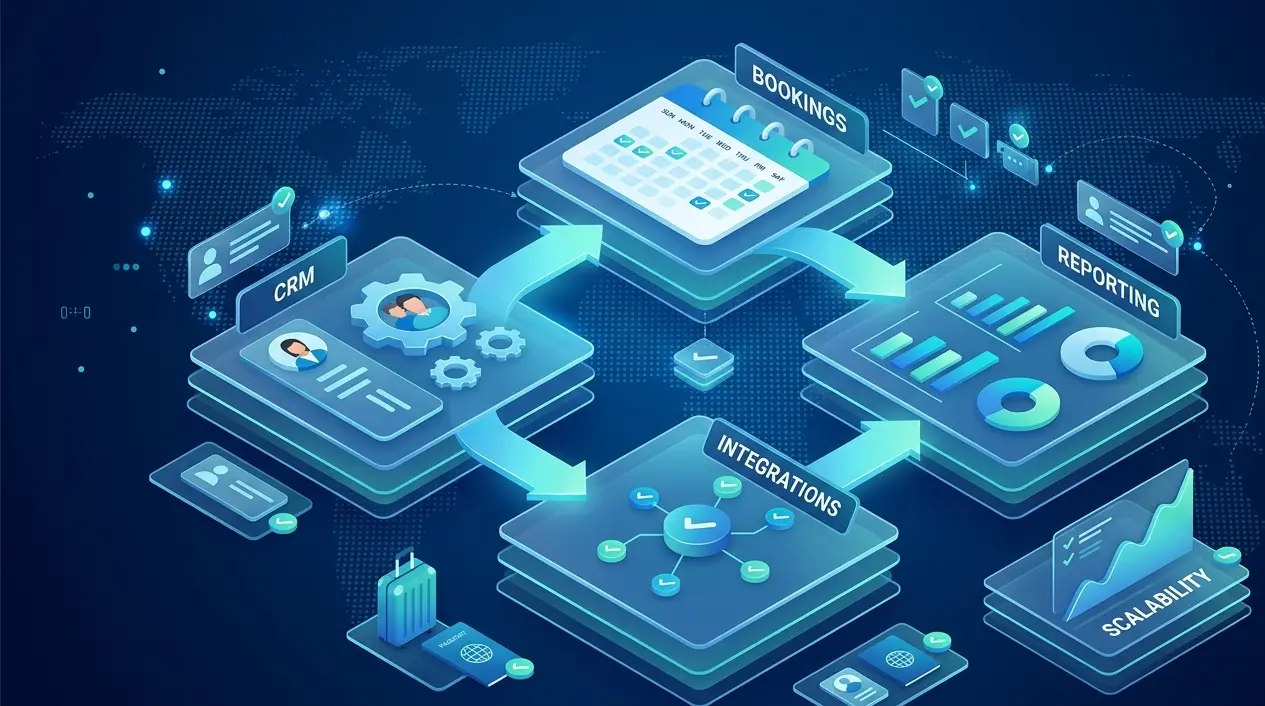
Thanks to Toursys‘ modular architecture, system implementation can be developed gradually: starting with a single module – for example, Reservations or Itineraries – and incorporating others over time. This model ensures stability and allows each department to adopt the technology at its own pace, while maintaining a consistent and professional service to the passenger.
How technology enhances the traveler experience
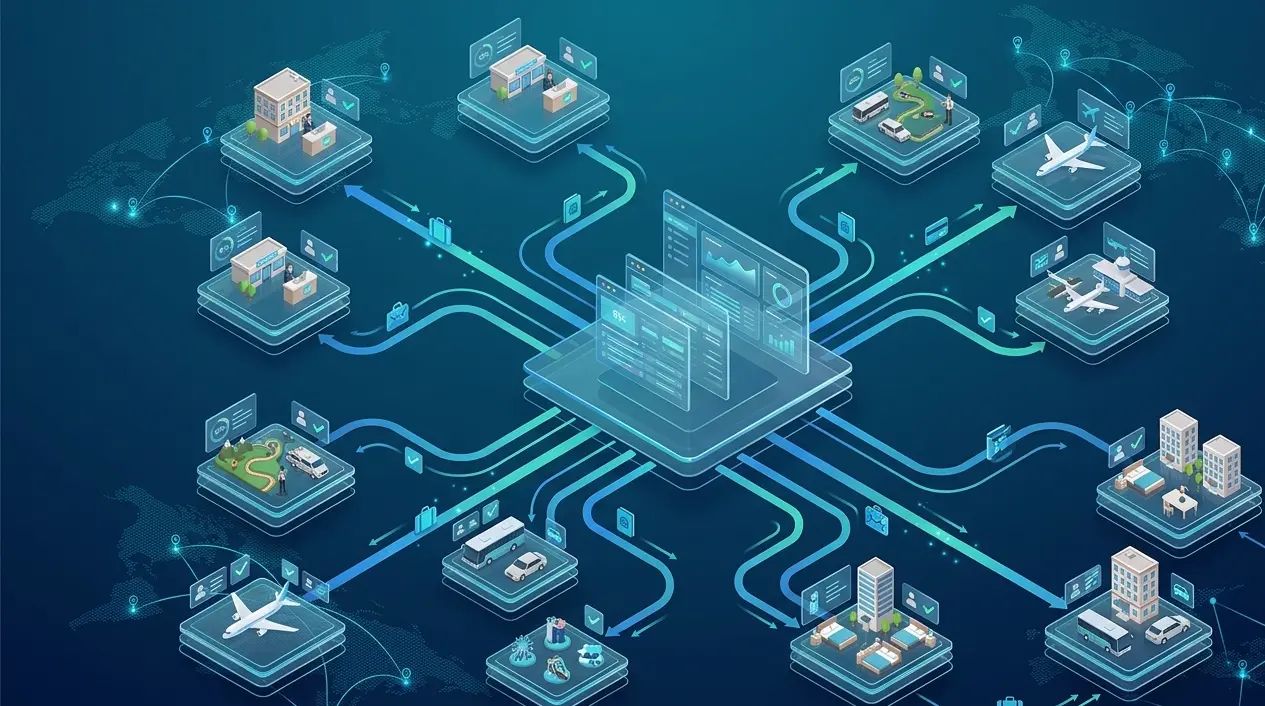
Implementing a system not only facilitates internal operations: it directly improves the customer experience. With an integrated platform, all travel information – services, payments, suppliers, itineraries – is managed in real time and in a centralized manner.
The passenger perceives:
- Immediate responses: agents consult availability or prices instantly.
- Clear communication: each digital itinerary reflects automatic updates.
- Security and confidence: confirmations arrive without errors or delays.
Thus, the implementation of the system becomes a tangible improvement in service, even if the customer is not aware of the internal change.
Best practices for successful system implementation
An effective technological transition requires planning and a partner who understands the tourism sector. At Toursys, we accompany each agency in all stages of the implementation of the system, ensuring an agile and orderly process with no impact on the passenger’s experience.
Define the purpose of the change
Identify your agency’s objectives: optimize time, centralize information or improve customer service. Our team translates them into customized configurations and workflows.
Involve each area
Adoption is stronger when all departments participate. Toursys provides training and support so that each user can apply the system safely from the beginning.
Implement in phases
We recommend moving gradually, starting with key modules -such as Quotations or Reservations- and adding others later. Our consultants monitor the process and adjust details in real time.
Standardize processes and measure results
While your team incorporates the tools, we help create manuals and templates. Then we analyze timing, performance and customer satisfaction to drive continuous improvement.
With this approach, your agency moves forward together with the Toursys team, combining technology and human support to achieve a seamless adoption that keeps the passenger experience intact and reinforces operational efficiency.
Smooth adoption cases: technology at the service of order
Agencies in different countries have already demonstrated that a gradual system implementation can be developed without interrupting traveler service. In Costa Rica, Brazil and Mexico, inbound operators have adopted Toursys, starting with itinerary management and then expanding to reservations and operations, with permanent support and visible results in just a few weeks.
The secret is in the methodology of accompaniment and human support: each client advances at their own pace, with guided sessions, ready-to-use templates and personalized attention throughout the process. We invite you to get to know our booking system for travel agencies.
Modernizing your agency without altering the passenger experience
A well-executed system implementation is not perceived: it is felt. The passenger receives more professional communication, streamlined processes and personalized attention at every stage of the journey.
Meanwhile, your team works with more control, fewer repetitive tasks and centralized data. Technology becomes an invisible ally that raises the standard of service and boosts your company’s productivity, without affecting the passenger experience.