Implementing an ERP usually generates an immediate concern for travel agencies, tour operators or inbound companies: how to implement an ERP without slowing down business operations.
Active reservations, customer payments, supplier confirmations, itineraries in process and pending quotations are all part of the day-to-day business. Changing the system that organizes all that information may seem risky if you don’t understand how the implementation actually works.
However, when the implementation of an ERP is properly planned, the transition can be carried out progressively, allowing to organize information, reduce operational errors and strengthen the structure of the business without stopping the daily activity.
Understanding how to implement an ERP without slowing down operations is key for any tourism company starting to evaluate its digitalization process.
Why implementing an ERP generates fear in the tourism operation
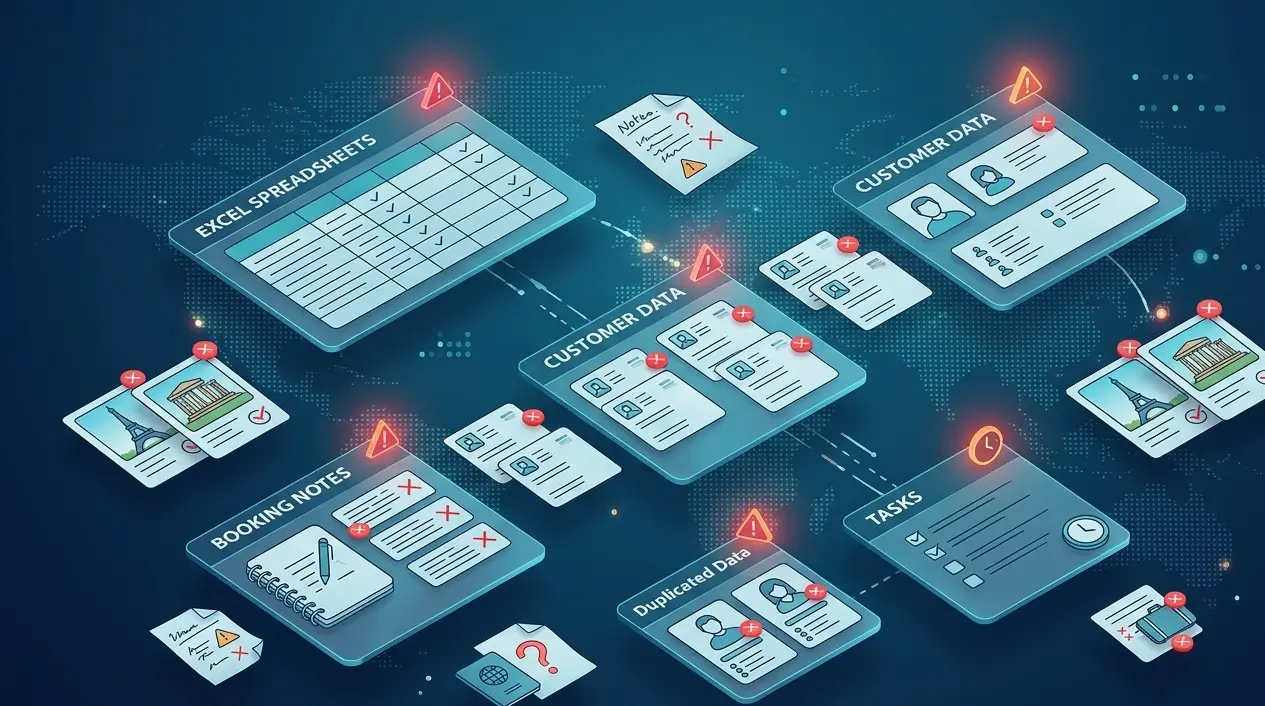
In many travel agencies or tour operators, management relies on multiple tools that are not connected to each other. It is common to find operations organized through spreadsheets, shared documents, independent accounting systems or external tools for quotations and reservations.
This model may work for a while, but it relies heavily on manual processes and the individual knowledge of each team member.
When a company begins to evaluate an ERP implementation
The doubts tend to focus on four areas: the viability of the new system, the continuity of the operation, the migration of historical data and the learning curve of the equipment.
The most frequent fear is that the technological transition may affect reservations, payments or confirmations with suppliers. However, ERP implementation does not occur abruptly. In most cases, it is done in progressive stages that allow the ERP to be implemented without slowing down business operations.
What is involved in implementing an ERP in a tourism company?
Implementing an ERP is not simply a matter of acquiring new software. In practice, it means moving the company’s operational structure to a system that centralizes information and organizes business processes.
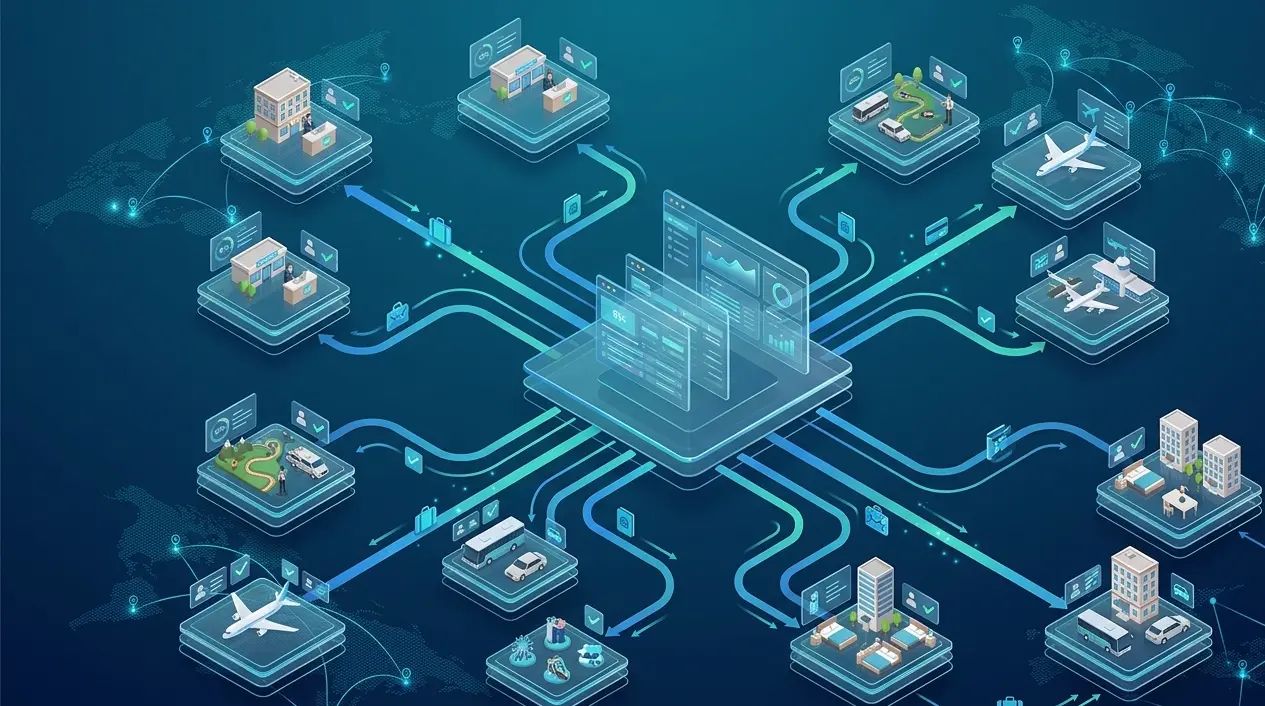
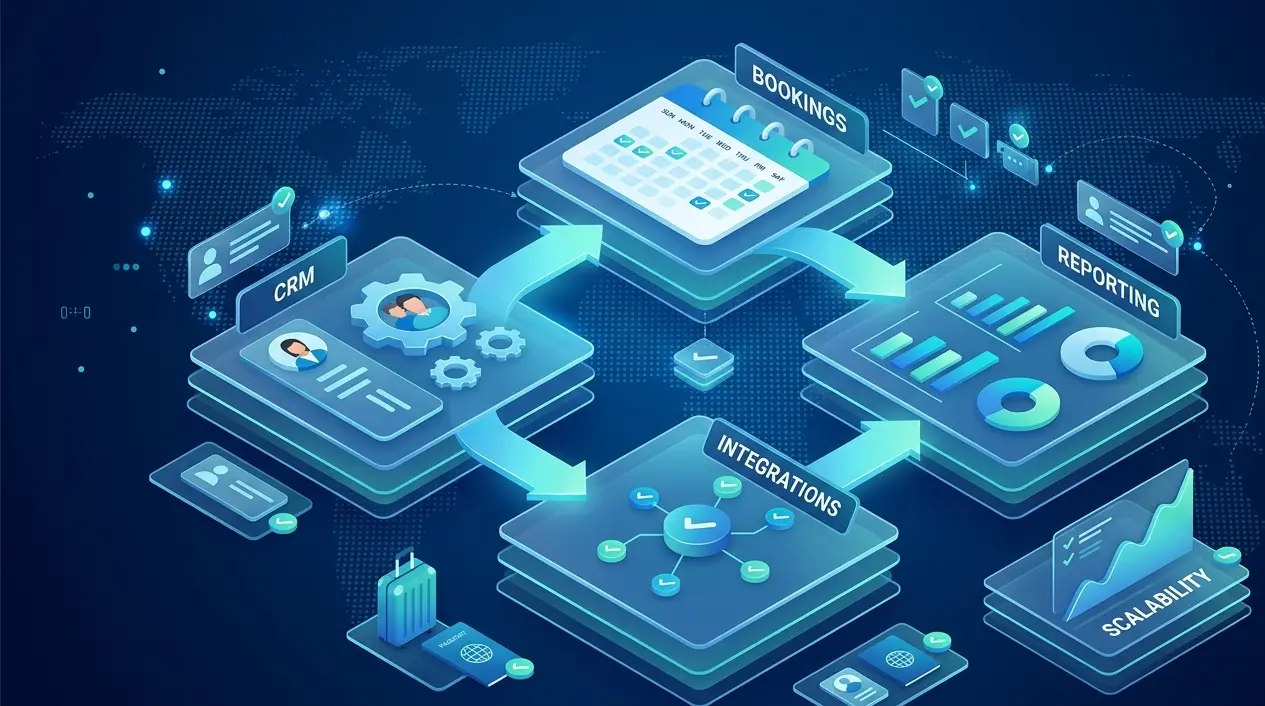
The implementation of an ERP for travel agencies involves integrating the management of customers, suppliers, tourism services, reservations, operations and financial data within a single platform.
This process requires adapting the system to the real logic of the company, migrating existing information, configuring business rules and training the team to work within the new digital environment.
For this reason, implementing an ERP is not just a technological decision. It is a process that redefines the way the company organizes its information and coordinates its daily operations. It is mainly a functional decision about the core of the business: although it is usually led by the technological area, it must be built based on how the company operates in practice, prioritizing its real processes over the tool itself.
Define the right scope when implementing ERP
One of the most common mistakes when implementing an ERP is to try to migrate the entire operation to the new system at the same time. Although it may seem logical, this approach often puts unnecessary pressure on the team and increases the risk of disruptions to daily business.
The most stable implementations start by defining an initial scope of the system. Instead of moving all the company’s processes to ERP from day one, priority is given to those that have the greatest impact on the operation, such as the management of tourism services, the customer base, suppliers or quotations.
As these processes begin to work within the system, the company can incorporate other areas of the operation. This incremental approach allows the ERP to be implemented without slowing down operations while the team becomes familiar with the new tool.
Data migration when implementing an ERP
Data migration is one of the most sensitive moments in the implementation of an ERP. Tourism companies usually have years of accumulated information in spreadsheets, accounting systems or internal databases that have been organizing the operation over time.
Migrating this data to an ERP involves reviewing existing information, identifying what data is really needed to operate and reorganizing it to fit the structure of the new system.
In many successful implementations, migration is done gradually. It starts with key information such as customers, suppliers and services, and then incorporates other operational data.
This strategy allows validating the consistency of the information while the system starts to be used in practice. In this way, the company can implement an ERP without stopping the daily operation.
Configure the ERP according to the logic of the tourism operation.
Each tourism company has a different operating logic. Agencies may have different rate structures, particular payment policies, specific business seasons or their own operating models.
During ERP implementation, the system must be configured to reflect these dynamics. This involves parameterizing business rules, service structures, payment terms and operating margins.
In many cases, this stage requires a review of processes that have been maintained informally for years. When moving the operation to the system, these processes must be more clearly defined so that they can function consistently within the ERP.
This configuration process is key for the system to faithfully represent the company’s operation.
The learning curve when implementing an ERP
One of the most important factors influencing the success of an ERP implementation is team adoption. Even the most advanced software can fail if users do not understand how to use it or do not trust it to perform their daily work.
Training is usually organized according to roles within the company. The sales team needs to learn how to manage customers and quotations within the ERP, while the operations area must coordinate services, suppliers and logistics using the system.
When training is rolled out progressively, the team begins to incorporate ERP into their routine before the implementation is fully completed. This facilitates adoption of the tool and reduces resistance to change.
How to implement an ERP without slowing down tourism operations
The implementation of an ERP does not have to happen at a single point in time. In many tourism companies, the implementation is done gradually to avoid interruptions in the operation.
For example, an agency may start using the ERP only to generate quotes and digital itineraries, while continuing to manage bookings already confirmed in its legacy system for a short period of time.
An inbound operator can first incorporate its supplier and service base into the ERP to organize operational information before entering new bookings into the system.
Similarly, a tour operator can start using the ERP to structure products and rates, while the sales team continues to work with their normal processes during the first few weeks.
This type of progressive deployment allows the system to be validated in real situations and makes it easier to implement an ERP without slowing down business operations.
The role of support in ERP implementation
One of the least visible factors when a company decides to implement an ERP is the support during the process. Many organizations focus on the functionalities of the system, but underestimate the importance of support during implementation.
Data migration, system configuration and team training require guidance. When these processes are performed without guidance, adoption is often slower and the team may temporarily revert to previous tools, creating operational confusion.
For this reason, many companies in the tourism sector opt for solutions specifically designed for their industry. In the case of specialized platforms such as Toursys, the implementation is carried out together with the agency’s team, accompanying the system parameterization, the initial loading of information and the progressive training of users, which facilitates the gradual incorporation of the system without interrupting the operation.
When an agency needs to implement an ERP
Many companies begin to evaluate the implementation of an ERP when their operation reaches a level of complexity that current tools can no longer handle with clarity.
Information begins to be dispersed among multiple files or systems, each area works with different versions of the data, and decisions require consolidating information from different places.
Everyday processes such as preparing a quote, modifying an itinerary or calculating the profitability of a booking start to take more time than necessary. Date changes require manual recalculation of fares and financial reporting requires consolidating information from different sources.
When these situations begin to affect the speed of response to the customer or the ability to grow the business, implementing an ERP ceases to be a technological improvement and becomes a strategic decision to organize the operation.