Implementing administrative software in a travel agency is not an isolated technical project or a decision that can be made in the abstract. It impacts the way information flows, how the team works and the way operational and financial decisions are made.
In tourism, the operation never stops. There are active reservations, advance collections, suppliers with different deadlines and constant adjustments. Therefore, the real challenge is not only to digitize management, but to do so without breaking the existing operational balance.
The right question is not whether to implement, but how to implement without slowing down the operation.
Implementing administrative software is not installing it
Reducing implementation to a simple installation is one of the most frequent errors. In practice, what is changed is the way in which the agency organizes, validates and uses its administrative information.
When there is no clear strategy, the software ends up superimposed on the current processes. Duplicated tasks, parallel controls and internal resistance ensue. Implementing involves deciding which administrative processes to order first, which ones can wait, and what level of depth the agency needs based on its actual stage.
Implementing administrative software without slowing down the operation: a strategic decision
Implementing administrative software without slowing down the operation requires planning, prioritization and a realistic reading of the agency’s work rhythm. It is not a matter of changing everything at the same time, but of accompanying the existing dynamics with a structure that organizes the information without generating friction.
When the implementation respects the team’s timelines and the operational logic of the business, the system integrates naturally and begins to deliver value from the earliest stages.
The administrative impact is reflected in day-to-day operations
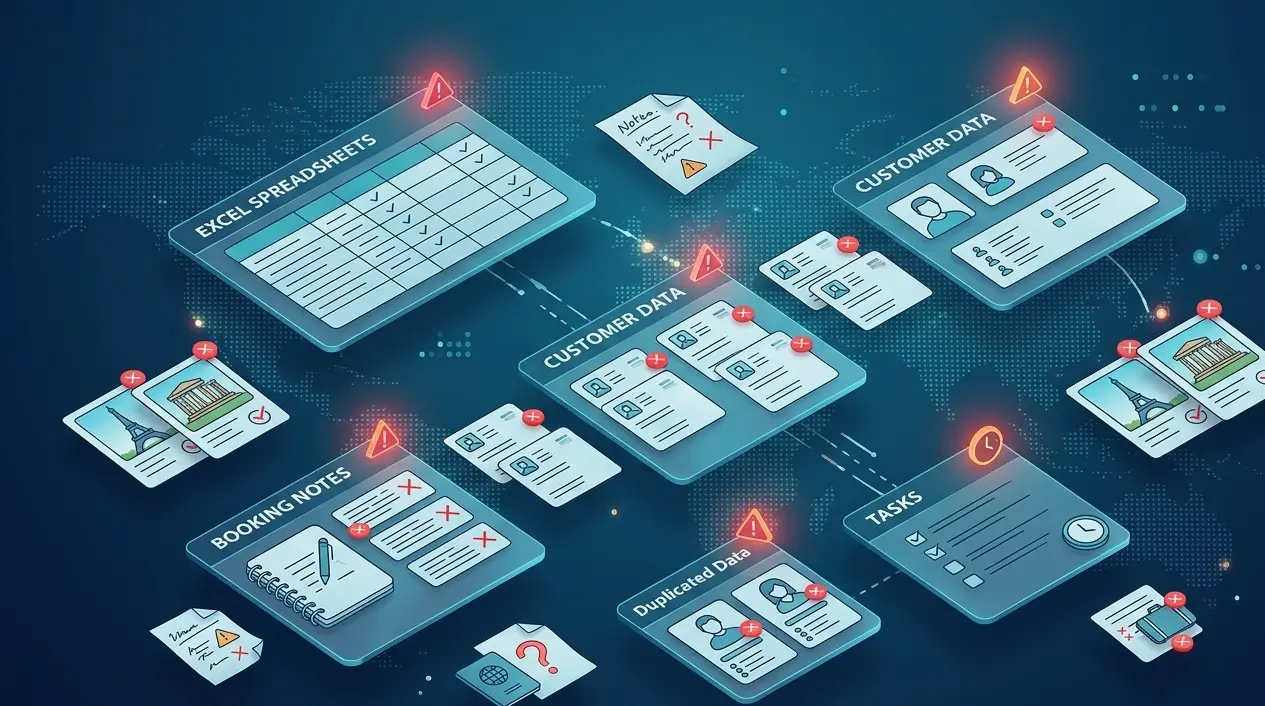
Administrative problems rarely appear abruptly. They usually manifest themselves as small mismatches: reconciliations that are postponed, data that do not close, information that arrives late. Over time, these mismatches translate into loss of control.
Well-implemented management software reduces this friction: the team stops reconstructing information and starts working with data that reflects what is really happening in the tourism operation.
When is a travel agency ready to digitize its administration?
Not all agencies need to digitize their administrative management at the same time. The indicator is not size, but operational complexity.
Some common signs are:
- increase of active reserves at the same time,
- operations in different currencies,
- difficulty in visualizing collections, payments and financial commitments,
- increasing reliance on manual controls.
When these situations become recurrent, management no longer accompanies the operation and starts to become a bottleneck.
Implementation plan: start with the stable
An implementation that does not slow down the operation rarely starts with the most chaotic processes. On the contrary, it usually starts with what is already relatively orderly: regular collections, recurring payments or clear operating expenses. From there, the agency can move forward progressively, incorporating new flows without generating operational noise.
Trying to digitize everything at the same time often has the opposite effect: more errors and increased equipment resistance.
Training and human support during implementation
The adoption of an administrative software does not depend only on the tool, but also on how the team goes through the change process.
Training is most effective when it takes place in a real context, with concrete information and live processes. At this point, having human support and real accompaniment makes a structural difference. Not only to solve technical doubts, but also to interpret operational situations, accompany decisions and help translate the system into the daily dynamics of the agency.
Without support, many teams revert to old habits. With ongoing support, adoption accelerates and becomes sustainable.
Progressive integration between tourism management and operation
In a travel agency, administration cannot be thought of as an isolated compartment.
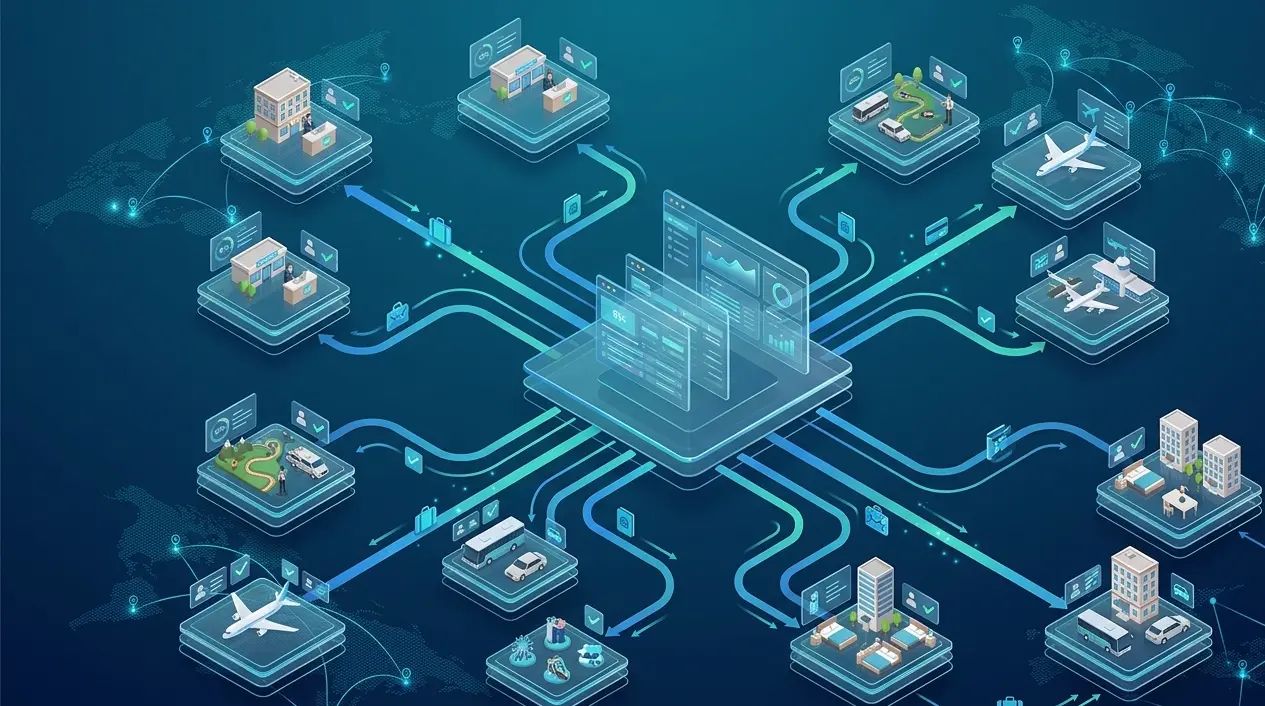
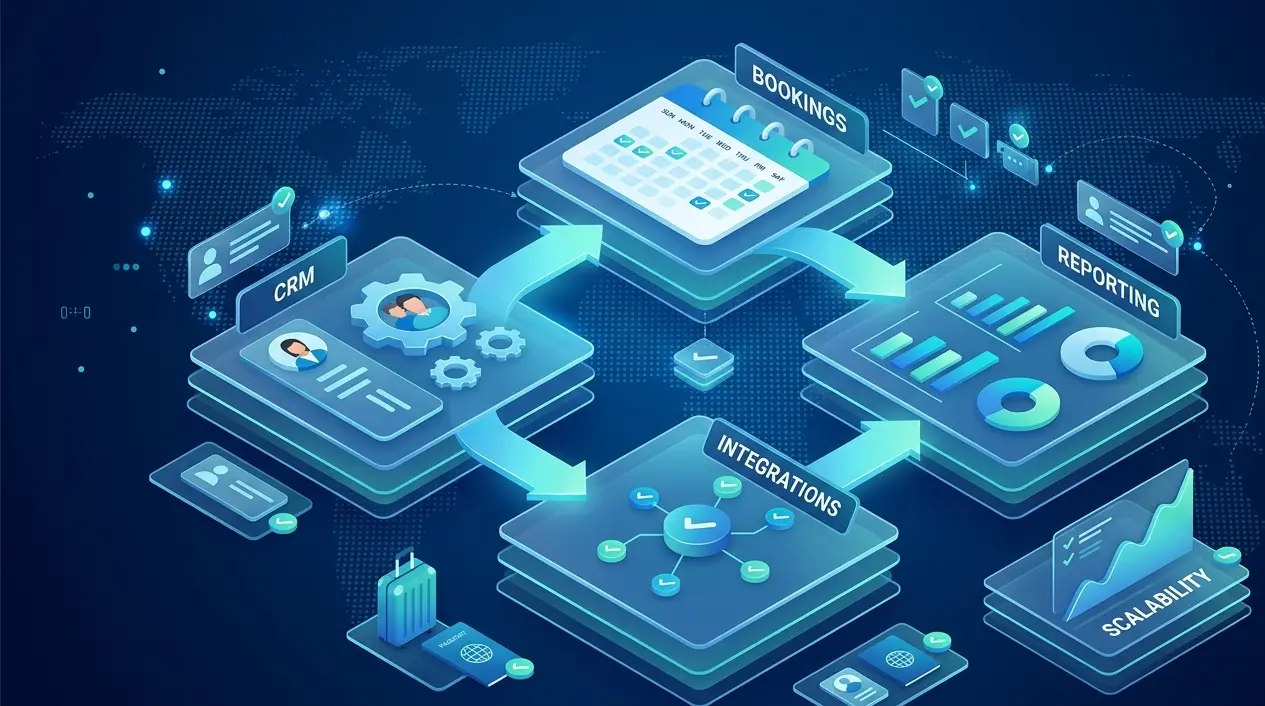
Collections, payments and results are directly linked to bookings, services and itineraries. That’s why progressive integration is key. It is not a matter of connecting everything from day one, but of allowing administrative information to begin to reflect the actual operation in an orderly fashion. This gradual progress is what allows us to gain control without losing flexibility.
Generic administrative software vs. software designed for tourism
The difference is not only in the functions, but in the underlying logic.
- Generic systems usually require the operation to be tailored to the software.
- This generates parallel processes, external controls and increased administrative burden.
An administrative software designed for tourism is part of the real operation of an agency and allows administration, reservations and operation to coexist within the same logical framework.
Toursys as a reference for a progressive implementation approach
In advanced stages of analysis, many agencies begin to evaluate solutions developed specifically for the sector. Toursys is an example of a platform that approaches administrative and accounting management from an operational logic.
Beyond the tool, the differential lies in the approach: progressive implementation, human support and understanding of the real pace of the agencies. This model makes it possible to advance in administrative digitalization without slowing down the operation or forcing abrupt changes.
Implement administrative software with a long-term vision
Implementing administrative software does not define the size of an agency, but it does define the way it manages growth. When implementation is conceived as a process – with planning, human support and progressive integration – technology ceases to be an operational risk and becomes a solid basis for making better decisions over time.