For years, Excel has been the silent ally of travel agencies, tour operators and DMCs. It is flexible, accessible and, in the initial stages, it seems sufficient. But when volume grows, suppliers multiply and markets internationalize, the question becomes structural instead of technical: is your operation designed to scale or is it supported by manual effort?
The difference is not in the tool itself, but in the operating model that the company decides to build.
Excel works… until volume changes the rules
In an agency with few simultaneous bookings, Excel can organize basic data such as client name, dates, contracted services, payments and outstanding balances. In that initial scenario, the tool does its job. The problem begins when the operational volume increases and the complexity is no longer linear.
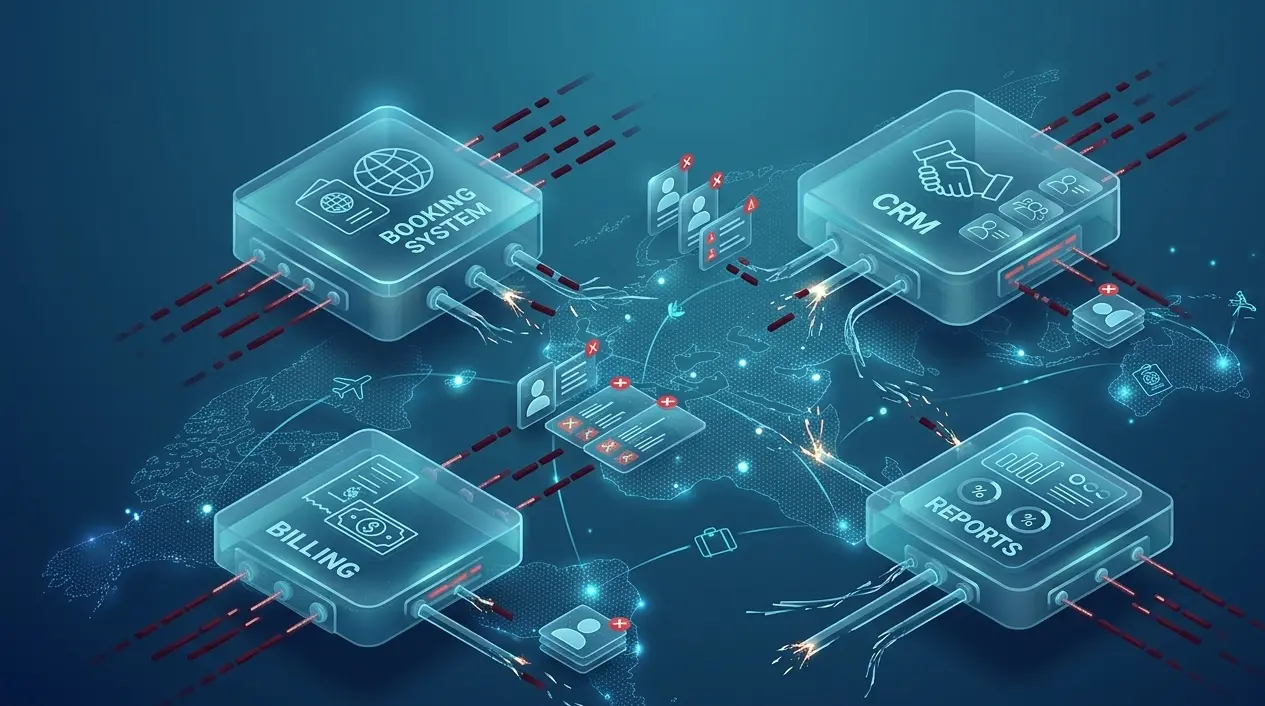
When multiple active quotations are managed in parallel, frequent changes of dates or services occur, different currencies are involved, there are dynamic rates and more than one person intervenes on the same files, the structure starts to become strained. The spreadsheet no longer acts as a flexible support, but as a system vulnerable to inconsistencies.
Manual error is not anecdotal. Various analyses on manual data management compiled by technology consultancies such as Gartner warn that processes based on manual uploading and repetitive editing significantly increase the risk of inconsistencies when multiple users and file versions are involved. While the numbers may vary depending on the type of process, the principle is clear: the greater the reliance on manual tasks and independent files, the greater the probability of cumulative error.
In tourism, this error is not limited to a poorly formulated cell. It can become a misapplied margin, an incorrect date, an outdated rate or the wrong version sent to the passenger. And in an industry where trust is central to the experience, those details have real impact.
The tourism industry is already in the midst of a digital transformation
This is not an isolated perception. The digitization of tourism is a global trend documented by multiple consulting firms.
In the report “The Future of Travel and Tourism” (Deloitte, 2023), it is highlighted that digital transformation has become a central competitive factor for companies in the sector, driven by increasingly digital consumers and the need for operational efficiency.
Deloitte notes that tourism organizations that integrate technology into their core processes achieve greater agility, better data management and a superior ability to adapt to changing demand.
For its part, KPMG (2024), in its analysis of the future of the tourism sector, stresses that digitalization and data-driven personalization will be decisive in the profitability of companies in the sector in the coming years. Technology is no longer an add-on but an infrastructure.
In addition, industry studies on customer experience in tourism indicate that more than 80% of companies in the sector plan to increase their technological investment in the coming years, consolidating a clear trend towards integrated platforms.
The conclusion is consistent: digitization is no longer optional. It is a condition of permanence.
The passenger does perceive when the management is manual
The impact is not only internal. It is visible to the customer.
According to HubSpot Research on digital consumer behavior (2022), speed of response is one of the most influential factors in the purchase decision for consultative services. In tourism, where the experience starts before the trip, this is especially relevant.
When an agency works manually:
- Quotations take longer to update.
- Each change involves recalculations.
- The itineraries are built in separate documents.
- The information is fragmented.
Passengers perceive delays, inconsistencies or unprofessional formats. And that affects trust.
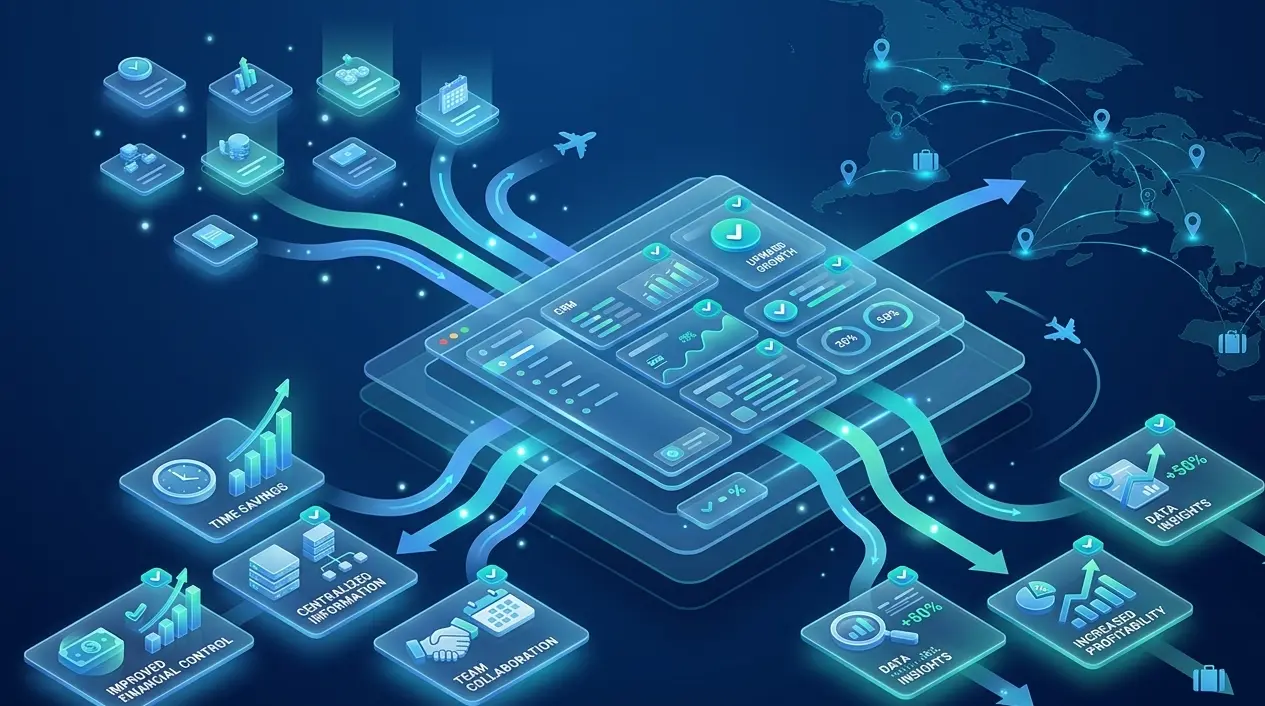
In contrast, when management is integrated into a booking system, rates are automatically recalculated, margins are updated in real time, itineraries maintain visual and structural consistency, and all information – client, supplier, payments and operation – is connected in a single flow. The experience becomes more consistent and professional.
The difference is not only operational. It is perceptual.
Case study: a reservation managed with Excel vs. with a system
Let’s imagine an outbound agency quoting a multi-destination trip for four passengers.
Scenario with Excel
- Request rates by mail.
- Load prices manually on a sheet.
- Calculate margins with formulas.
- Copy data to a document to build the itinerary.
- Send the proposal.
- If dates change, repeat the process.
Estimated time: 2 to 4 hours for a complex quotation.
Each modification involves repeating steps. Each repetition increases the risk of error.
Scenario with a reservation system
- Check rates within the platform.
- Select services and the system automatically calculates prices and margins.
- Generate a digital itinerary in minutes.
- Send the proposal.
- If there are changes, it recalculates automatically.
Estimated time: 20 to 40 minutes for a similar quote.
The difference is not just the time saved. It’s the ability to manage volume without overloading the equipment.
Growth: technology vs. equipment expansion
There is a common misconception: when the operation grows, the solution is to hire more people. But often the problem is not a lack of people, but an excess of manual tasks.
Several studies on digital business transformation show that automating repetitive processes can absorb more volume without proportionally increasing the cost structure. McKinsey, in its analysis of operational digitization, has documented that automation in administrative and business processes can free up a significant portion of team time for higher value tasks.
In tourism, this means that an agent can handle more quotes, more bookings and more changes if the technological structure is in place. Expanding equipment without redesigning processes tends to multiply complexity. Digitizing first is usually more efficient and more cost-effective.
How to choose a reservation system with strategic criteria
If you are researching how to choose a reservation system, it is worth looking beyond the interface:
- Does it support volume growth without losing traceability?
- Does it automate calculations and changes or just digitize forms?
- Does it integrate modules or function as islands of information?
- Does it allow trading in multiple currencies and markets?
- Does it improve the passenger’s perceived experience?
The right technology not only orders the current operation. It makes it possible to project the next stage.
The decision is not technical, it is strategic
Tourism already operates in a digitized environment, where speed, consistency and accuracy are minimum standards. Companies that continue to rely exclusively on manual processes not only work harder: they compete at a disadvantage.
For many growing agencies, operators and DMCs, the move from Excel to a booking manager marks the beginning of a more professional, more controlled operation that is ready to scale.
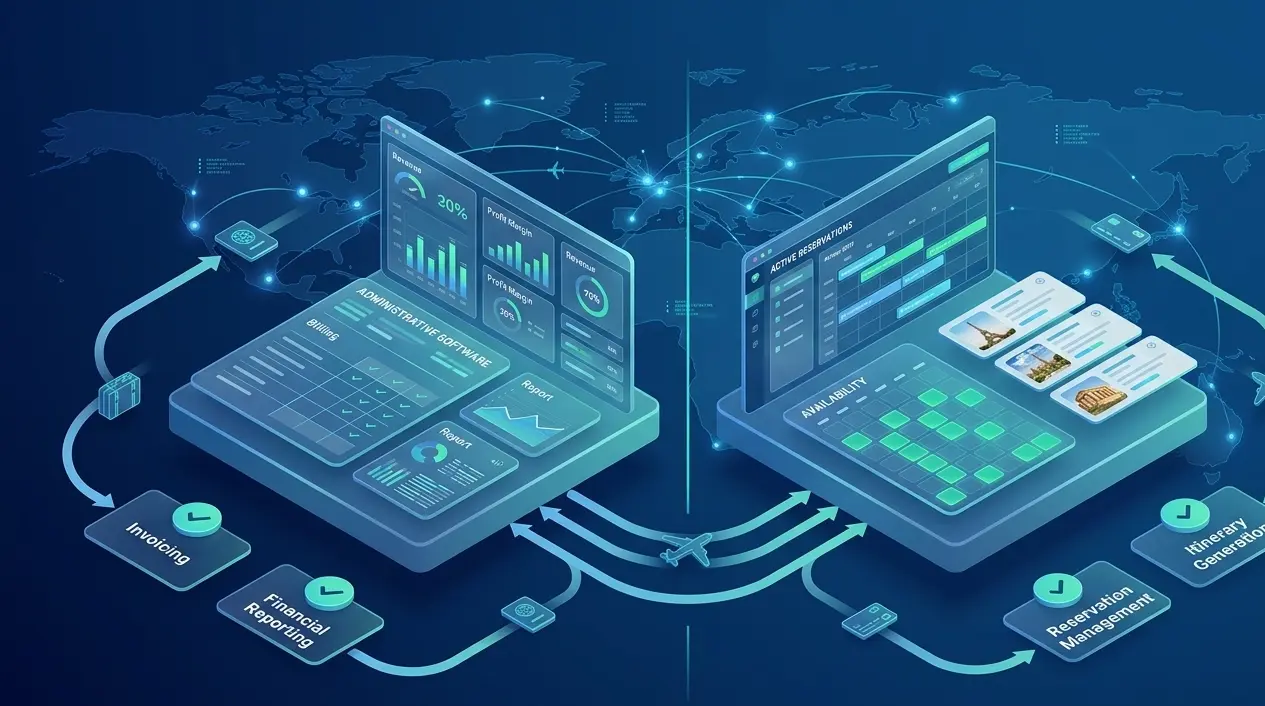
Some platforms specialized in tourism, such as Toursys, integrate reservations, itineraries, CRM and administrative modules in a single environment designed for the logic of the sector. But before evaluating suppliers, the truly strategic thing to do is to understand if your current structure is ready for the volume you want to achieve.
The difference is not in the tool. It’s in the operational architecture you decide to build for the future of your company.