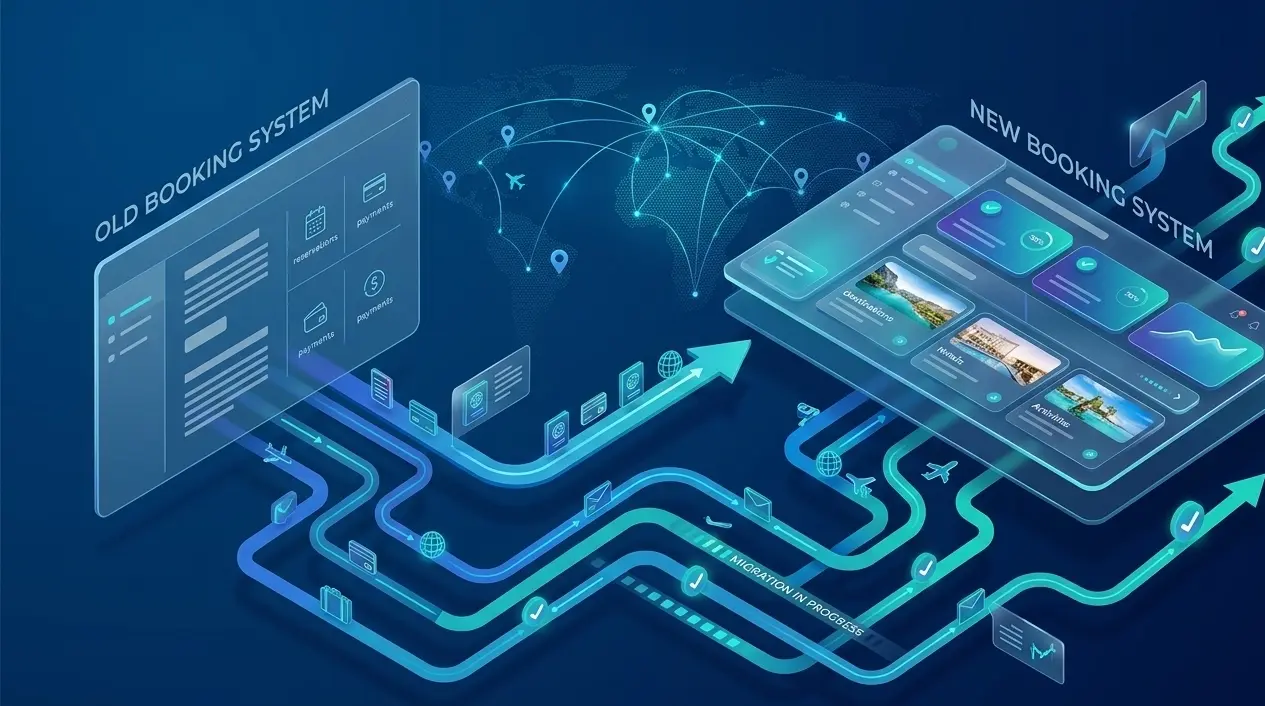
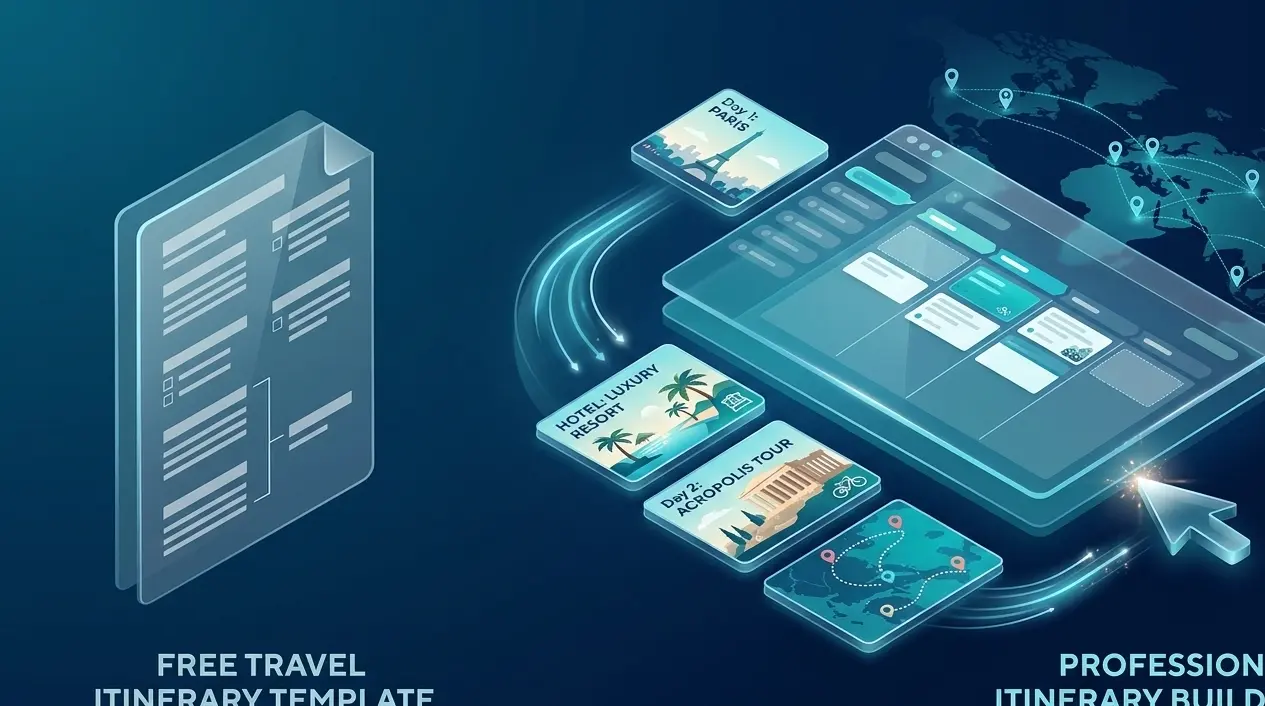
Moving from freeware to professional software is rarely an abrupt decision. In most cases, it occurs as a natural consequence of business growth. As sales, passengers and service complexity increase, the company starts to need more control, automation and coordination between areas.
Whether you are an outbound tourism agency or manage an inbound tourism platform, a free software -or a trial version- can be enough to get started, organize the first processes and professionalize the commercial presentation. Change becomes necessary when the daily operation demands more than just well-organized documents and manual controls.
This article reviews the main signs that indicate when a travel company is ready to take that step.
Signs of growth that indicate a move to professional software
When volume makes the manual inefficient
The first sign usually appears when the company manages several quotes, reservations or schedules simultaneously and simple adjustments -such as a change in dates, rates or services- imply redoing documents, recalculating prices and resending information. At that point, the time invested in keeping everything up to date starts to grow faster than the business.
When the equipment needs to work in parallel without friction
As the team expands, coordinating quotes, changes and follow-ups without a shared system begins to generate confusion. Duplicate versions, unnecessary validations, and reliance on a single person to “sort it all out” are clear signs that the current method no longer scales.
When selling online is no longer optional
Business growth often brings with it repeated inquiries, standardized products and requests that are answered over and over again manually. In this scenario, automating part of the commercial process is no longer an extra and becomes a necessity to sustain response times and quality.
When vendor management consumes more time than it contributes
Hand-crafted control of rates, availabilities and confirmations can work in the initial stages. However, when updating information or coordinating services with external providers takes up more time than the value added by such manual control, the leap to an integrated system begins to be justified.
When financial control becomes essential
Another clear sign appears when it is no longer enough to know how much is being sold. Understanding real margins, outstanding payments and results per operation becomes key to make predictable decisions and sustain growth without surprises.
When more complex operations arise
Groups, events, programs with multiple variables or coordinated services raise the level of operational risk. In these cases, a small error can have a direct impact on costs and customer experience, making the need for professional software obvious.
The role of freeware and trial versions in the early stages of software development
A free software or a well-designed demo version can be a great advantage in the early stages. It allows to organize processes, test a working methodology and professionalize the commercial presentation without assuming an immediate investment.
The key is to understand their purpose. These tools are not intended to operate indefinitely, but to evaluate how a professional system will work in practice, with real cases and controlled scenarios.
In this sense, trial versions such as Toursys Trial play a strategic role: they allow you to experience the software’s operating logic, test quotes and itineraries, and resolve doubts with human support before moving on to contracting the full platform.
Moving to a professional version does not invalidate this initial stage; it complements and extends it.
Why training and mentoring are key to scaling up
Choosing professional software is not just about adding functionality. The real impact comes when the team correctly adopts the tool and integrates it into their way of working.
An effective scaling process usually includes support for the initial configuration, so that the system reflects the actual structure of the company; hands-on training oriented to concrete day-to-day cases; and a gradual implementation that does not interrupt the business activity or the ongoing operation.
Guided adoption reduces errors, accelerates learning and prevents technology from becoming a barrier rather than an enabler.
How to scale the use of the software gradually
Initial stage – Without specialized software
Management relies on isolated mailings, documents and spreadsheets. It works in low volumes, but makes control and standardization difficult when the operation grows.
Evaluation Stage – Trial Version
The company incorporates a trial version to centralize quotes, itineraries and services, evaluate multi-currency and multi-language work, and test a professional method of sales and presentation. The objective is to understand how the system will operate once contracted.
Commercial stage – Reservation module
A booking module is incorporated to centralize confirmations, changes and status of each service, reducing reprocesses and improving the follow-up of each operation.
Operational stage – Daily management
The company adds operational modules to coordinate suppliers, assign services, manage transfers, guides or fleet and have daily visibility of the active operation.
Automation stage – Online sales
B2B or B2C booking engines are enabled to automate recurring sales, distribute products to other agencies or sell directly to the end customer with up-to-date availability.
Financial control and integration stage
Financial modules, advanced reports and integrations with external suppliers or specific modules for groups and MICE are incorporated, prepared to operate higher volumes and greater complexity.
Growing also means choosing better technology
Moving from free software or a trial version to a professional platform is not a symptom of a problem, but a sign of progress. It happens when the company needs to sustain more volume, more complexity and higher expectations without losing control and quality.
The key is not to pay early, but to do it when the operation justifies it and with a tool that accompanies the growth gradually, with real training and support.