Digitizing a travel agency has become one of the main challenges in the tourism sector. Not only because of the incorporation of technology, but also because it requires reviewing processes, organizing information and making decisions that have an impact on the entire operation.
Today’s passengers expect quick responses, clear information and well-articulated proposals from the first contact. They compare options, request adjustments and value accuracy as much as experience. Behind every query there are tight deadlines, multiple suppliers and decisions that do not allow for too many mistakes.
For travel agencies, DMCs and tour operators, this scenario demands a more orderly and connected operation. Digitizing an agency step by step does not imply adding tools in isolation, but rethinking the way of working and relying on online software designed for the specific logic of tourism.
Step 1 – Understanding what it means to digitize an agency
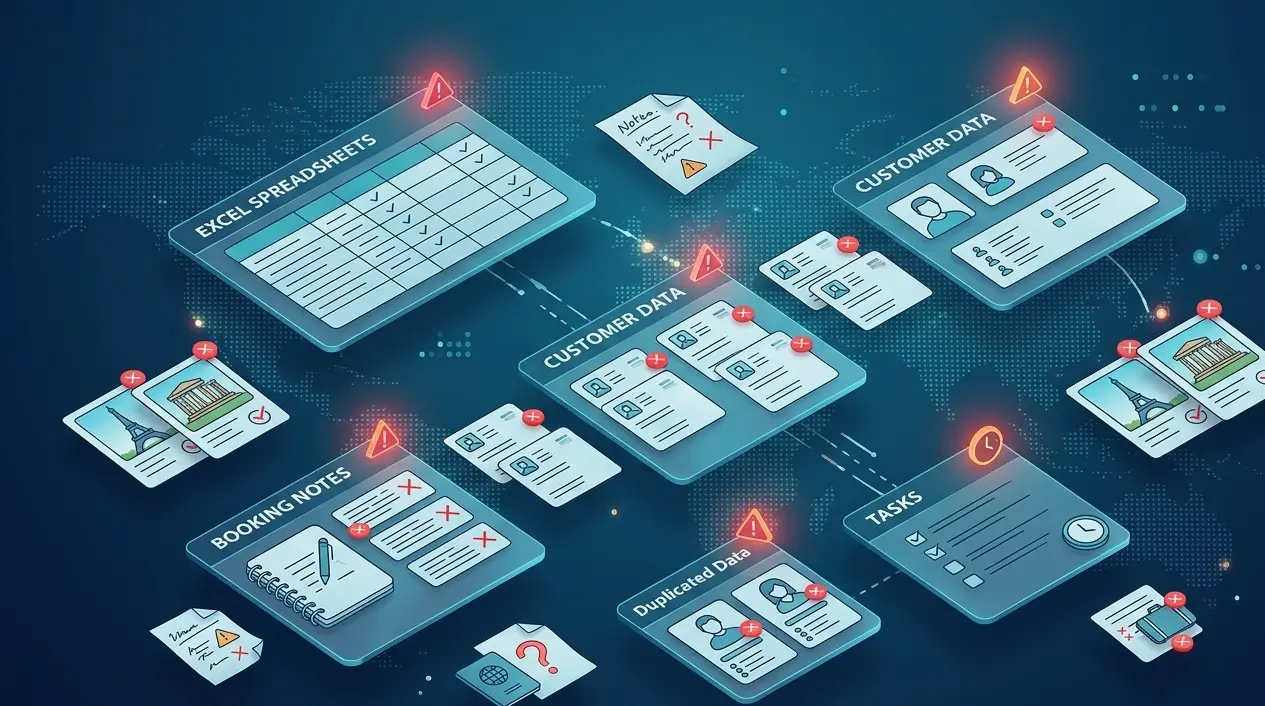
One of the most common mistakes is to associate digitalization with “using technology in the cloud”. In practice, many agencies already work with digital tools, but they do so in a fragmented and poorly integrated way.
Digitizing an agency implies changing the management logic: stop moving information between documents, emails and spreadsheets and start working on a single operational basis. The objective is not to add systems, but to reduce the dispersion that generates errors, reprocesses and loss of control.
Step 2 – Analyze the actual operation before choosing online software
Before evaluating platforms, it is useful to observe how the agency works on a day-to-day basis. Not from a theoretical point of view, but from the actual operation: how it quotes, how it negotiates with suppliers, how it confirms services and how it controls the status of each sale.
This initial analysis often reveals bottlenecks, repetitive manual tasks and excessive dependencies on key people. Digitizing an agency step by step starts by making this reality visible, because no software can order processes that are not clear.
Step 3 – Identify the processes that have the most impact on the business
Not all processes have the same operational weight. In tourism, there are areas that concentrate the greatest workload and where errors generate more costs.
Among the processes that are usually prioritized in the first stage of digitization are:
- Quotation and itinerary building
- Customer management and commercial follow-up
- Reservations and confirmations with suppliers
- Control of the status of each operation
When these processes are managed in an integrated manner, the agency gains predictability and the team can focus on higher value tasks.
Step 4 – Avoid generic solutions and think in terms of tourism
Tourism has a complexity that many systems do not contemplate. You work with future services, advance payments, seasonal rates, multiple suppliers and operations in different currencies.
Attempting to digitize an agency with generic tools often results in forced adaptations, parallel controls and duplication of information. In the short term it may seem functional, but as the operation grows, these limitations become evident.
An online software designed specifically for travel agencies starts from this logic as a basis, not as an exception.
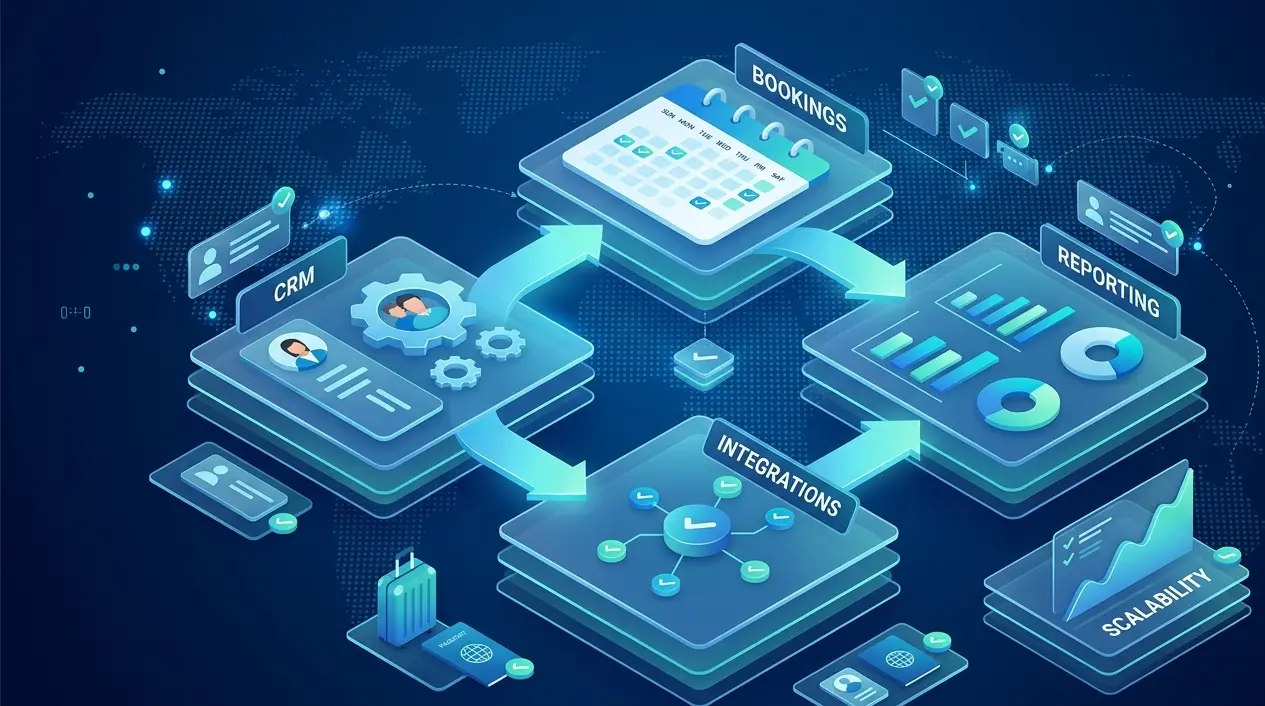
Step 5 – Integrate quoting, CRM, reservations and payments into a single system
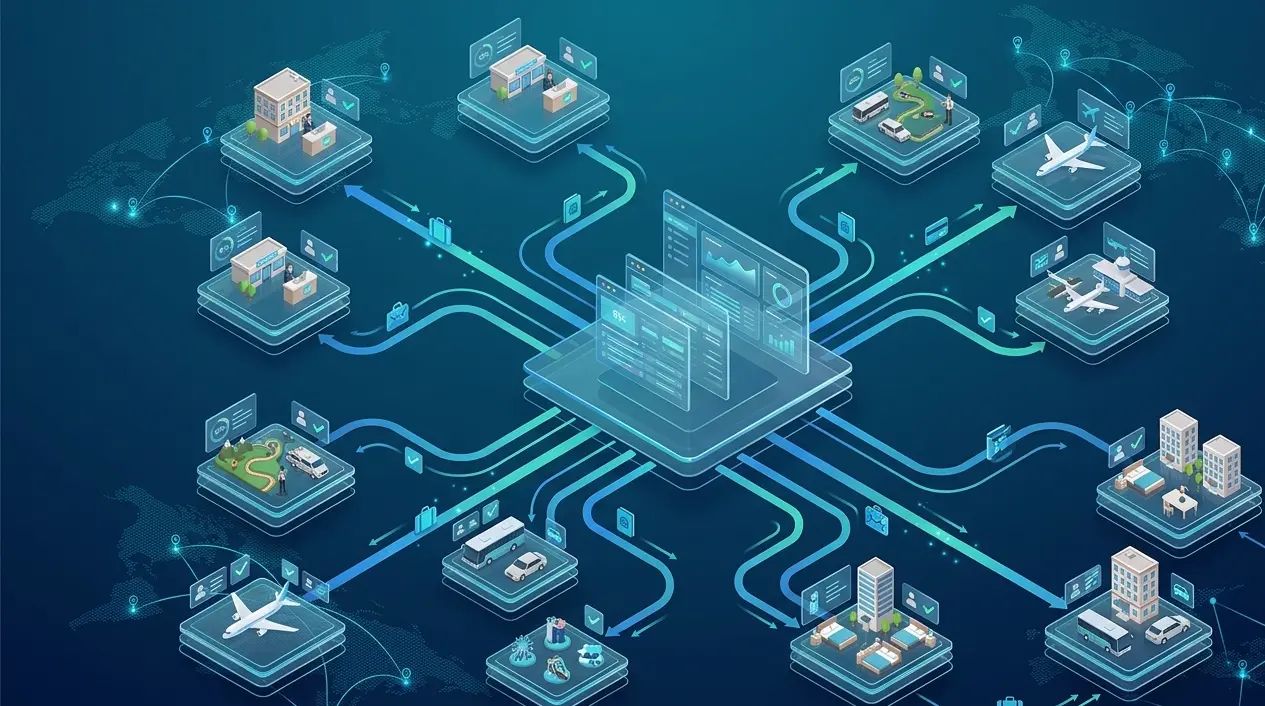
The real digital leap occurs when information stops circulating between disconnected tools. When a quotation is transformed into a booking and that booking automatically impacts the operation and payment control, the agency gains internal consistency.
This integration allows us to respond faster to passengers, reduce operational errors and have a clear view of the status of each sale. In an industry where changes are frequent, working with a single system provides stability and control.
Step 6 – Ensure human accompaniment and support during implementation
Digitalization is not only a technological change. It also involves changing work habits, internal roles and ways of organizing information.
For this reason, accompaniment during implementation and continuous human support are key factors. An online software for travel agencies must allow a progressive adoption, with training and follow-up, adapting to the operational reality of each company and not the other way around.
Step 7 – Think of digitization as a basis for growth
Digitizing an agency step by step does not only aim to organize the present. It aims to prepare the operation to grow without losing control, predictability or quality of service.
On this path, it is essential to understand how online software designed for tourism works. Analyzing different platforms, their level of integration and the support they offer allows you to make more informed decisions aligned with the real stage of each agency, especially when the objective is to scale volume, teams or markets.
Centralizing information, working in the cloud and operating with integrated processes facilitates this growth in an orderly manner. In this context, Toursys, developed specifically for travel agencies, DMCs and tour operators, proposes a comprehensive approach that connects sales, operation and administration in a single environment, with human support and a logic aligned with the reality of the sector.