When someone invests in travel, they don’t just buy services. They buy planning, judgment and responsiveness. Trust is built on several factors – agency experience, reputation, clarity of communication – and visuals are one of them. Not the only one, but a very powerful one.
In tourism, the way you present your itinerary directly influences how the passenger perceives your level of professionalism and safety. A clear, coherent and easy-to-consult document reduces uncertainty. And in an industry where multiple suppliers, sensitive dates and advance payments are involved, this reduction of uncertainty is crucial.
Why visuals influence travelers’ decisions
The data confirms that the visual and structural component weighs heavily in the purchasing process:
- Expedia Group (2023) identified that, on average, travelers consume more than 5 hours of content before booking, spread across multiple research sessions.
- Accenture (2022) reported that 55% of travelers consider images and videos to influence their decision, and for 13% they are decisive.
- Travelport (2023) noted that 58% of consumers feel overwhelmed by the number of choices when planning a trip.
In this context, a clear, visual and structured itinerary helps to organize information and facilitate comparison. It does not replace the trust built by the brand, but it does reinforce it.
What makes an itinerary professional
A career path is not only attractive. It is coherent, complete and functional. It must meet three objectives simultaneously:
- Explain the experience in an understandable way.
- Reflect operational control over each service.
- Being able to update quickly in the event of changes.
When the passenger can access a link, review your program, find schedules, inclusions and conditions without the need for multiple emails, the perception of order and support increases. This ease of access and updating directly influences the purchase decision.
How to create a visual itinerary in minutes within specialized tourism software
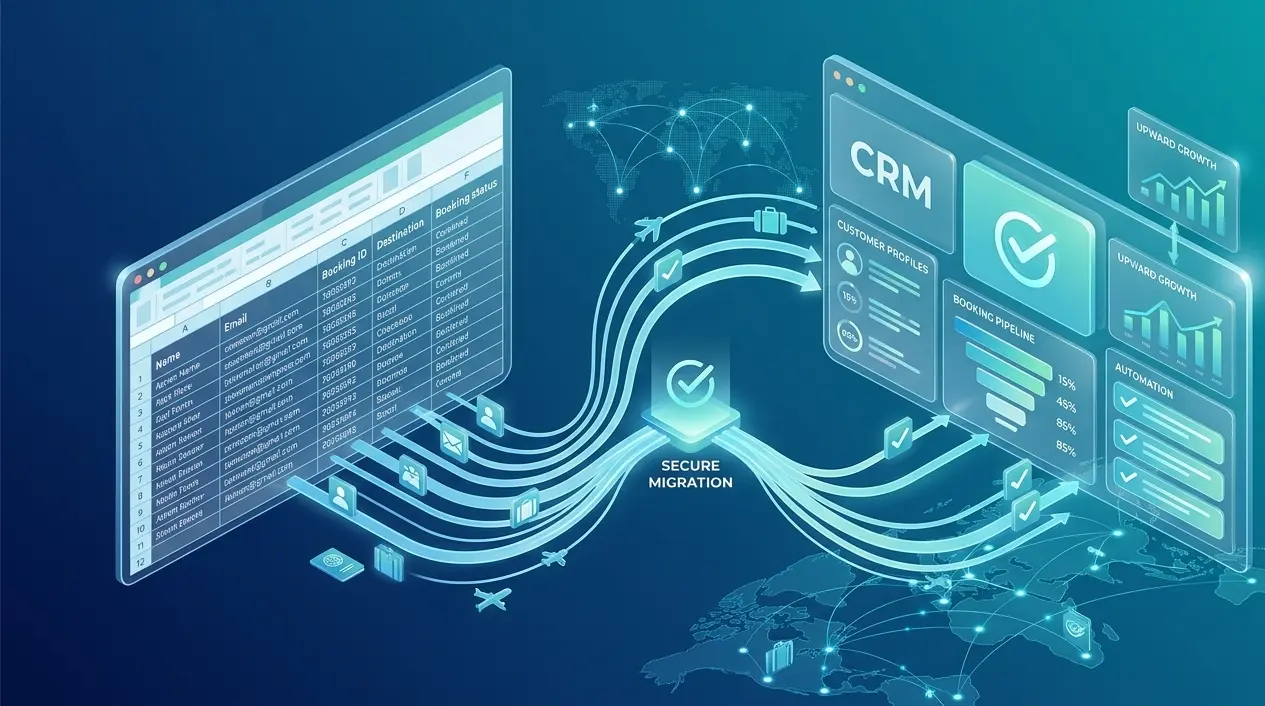
In software designed specifically for agencies and tour operators, the process does not start with writing free text. It starts with structuring services.
Taking as a reference the itinerary creation model within a specialized system such as Toursys, the flow is usually as follows:
1) Create the reserve or base contribution
First, the main data are recorded:
- B2B client or agency.
- Travel dates.
- Destinations.
- Number of passengers.
- Currency of quotation.
From that moment on, the system automatically connects the operational information with the financial structure.
2) Add parameterized services
Instead of writing each service from scratch, services previously configured in the system are selected. Each service already contains:
- Standardized description.
- Inclusions and exclusions.
- Seasonal or base rates.
- Policies.
- Supplier data.
- Categories and markup configured.
This allows to maintain visual and operational coherence in all the itineraries.
3) Organize the services per day
The system allows each service to be assigned to a specific day of the trip. The itinerary is automatically structured in a day-by-day format, maintaining design consistency.
Example of a real load adapted to the Toursys model:
Day 2 – Historical City Tour
Service previously created in the services module:
- Start time.
- Meeting point set up.
- Includes entrance fees and bilingual guide.
- Linked supplier.
- Rate applied according to selected season.
When dragged or assigned to the corresponding day, the itinerary displays it with the visual format defined by the template.
4) Customize visual template
The system can be configured within the system:
- Corporate colors.
- Logo.
- Typography.
- Block order.
- Downloadable templates in PDF or digital format.
This allows each agency to maintain its visual identity without losing technical structure.
5) Automatically recalculate in case of changes
If dates, number of passengers or season change, the system recalculates fares and updates the quote linked to the itinerary. The shared link reflects the most recent version.
This is where technology applied to tourism processes makes the difference. The passenger can quickly access the link, review his updated itinerary and see the adjusted price without the need to redo manual documents. This agility conveys control and professionalism.
Real-world examples of how the load is displayed in an environment such as Toursys
In an environment such as Toursys, the itinerary creation starts from services previously configured within the system and not from a blank document. Each transfer, excursion or accommodation already has a standardized description, inclusions, exclusions, seasons, rates and associated supplier. When incorporated into a quotation, the system automatically links this operational information with the visual structure of the itinerary, also integrating business rules and margins defined by the agency.
For example, when adding an airport-hotel transfer, the system applies the corresponding rate according to the season, associates the provider and connects the service with the reservation and financial transactions. The passenger’s view shows the date, estimated time, type of service and relevant remarks, while internally the operation is organized and updatable. The same happens with excursions and accommodations: they are assigned to the corresponding day and the itinerary is automatically structured in a day-by-day format, maintaining visual coherence and operational control within a specialized system for tourism.
Mistakes that affect the perception of professionalism
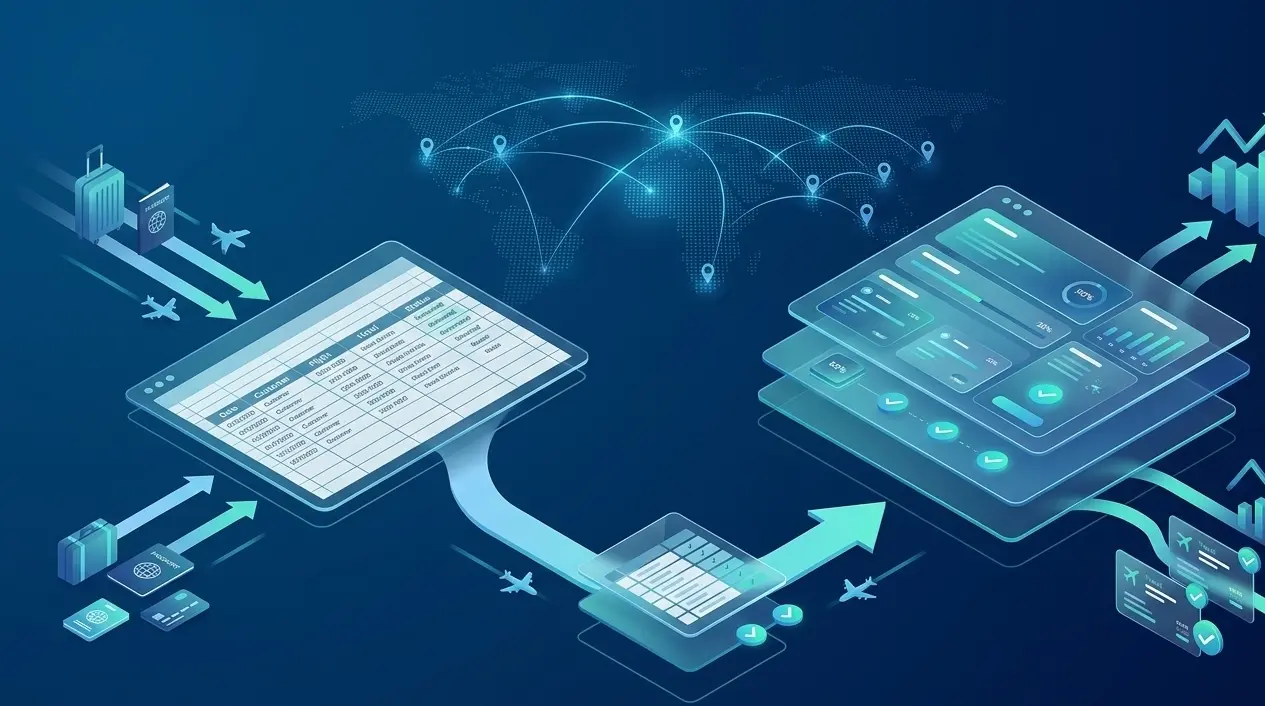
When the itinerary is built outside a specialized system, there are often problems that impact customer perception: duplicate versions sent by mail, changes that are not reflected in all documents, outdated prices after a change of dates, inconsistent descriptions between services or lack of critical information such as schedules and meeting points. These errors do not necessarily signify malicious intent, but they do convey clutter.
In tourism, where passengers delegate the coordination of their experience at the destination, the perception of disorganization can affect the final decision. A technological environment designed to centralize services, rates and templates reduces this risk and reinforces the image of a professional agency.
Technology and trust in the travel industry
Digitalization in tourism is not only internal efficiency. It is external perception. When an itinerary is generated from a specialized system such as Toursys, it not only creates an attractive visual document, but also integrates the operation, rates, suppliers and financial structure into a single flow.
This integration means that the itinerary is not a static file, but a dynamic element linked to the actual quotation. dynamic element linked to the actual quotation. When the passenger can consult the updated link and find consistency between experience and price, confidence increases.
In an industry where the traveler researches for hours before deciding, the combination of visual clarity, technical structure and technology applied to processes becomes a relevant factor to close sales and consolidate professional reputation.