Implementing a CRM in a tourism company is not a technological decision, but a strategic one. In a sector where each client requires personalized attention, constant follow-up and tailor-made proposals, having a system that organizes commercial information is key to avoid losing opportunities and improve sales results.
This guide is designed for outbound and inbound agencies, DMCs and tour operators that are in a growth stage and need to professionalize their commercial management without adding unnecessary complexity.
What is a CRM and why is it key for a tourism company?
A CRM (Customer Relationship Management) is a tool that allows you to organize, centralize and follow up on prospects, customers and business opportunities that come in through different channels: website, travel fairs, social networks, recommendations, email or direct messaging.
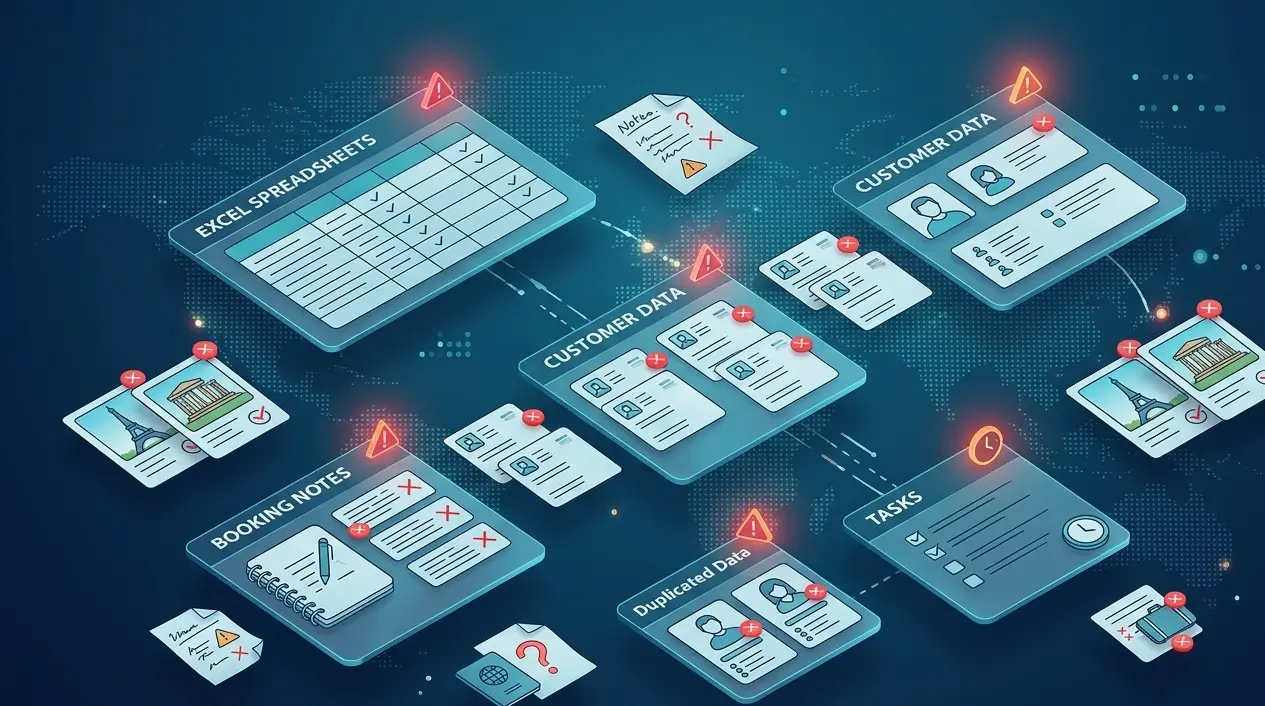
In tourism, the sales process is rarely immediate. It involves consultations, information exchange, proposal development, adjustments, negotiation and follow-up. Without a CRM, much of this process is scattered in emails, spreadsheets or single messages, leading to delays, forgetfulness and missed opportunities.
A well-implemented CRM allows you to organize this commercial journey and accompany the sales team at each stage, without interrupting their daily work.
What changes when a company really knows its target audience
Many tourism companies think they know their customers, but in practice they only have partial or disorganized information. Implementing a CRM allows transforming loose data into real business knowledge.
When the company systematically records the origin of contacts, type of travel requested, recurring interests, most active markets and decision times, clear patterns begin to emerge. This has a direct impact on business results.
With structured information, the team can better prioritize leads, design more relevant proposals, adjust the sales pitch and detect recurring sales opportunities. CRM not only helps to sell more, but to sell better, with less operational effort.
How to start using a CRM in your tourism company
Implementing a CRM in a tourism company does not imply redesigning the entire operation. On the contrary: a good implementation is based on recognizing how the team works today and bringing this process to the system in a simple and progressive way.
The objective is not to change the way of selling, but to give it structure and continuity so that the CRM accompanies the daily work from the very beginning.
A clear and easy-to-adopt business flow
Every tourism company, even without a formal system, already follows a natural commercial path: an inquiry arrives, an opportunity is generated, a proposal is sent and the sale is either finalized or not.
CRM implementation simply reflects that flow in clear and visible stages. This helps the team know where each contact stands without the need for additional meetings or external controls, facilitating follow-up and preventing opportunities from falling by the wayside.
Roles and times that order without adding operational burden
A well-configured CRM doesn’t add work, it reduces it. By simply defining who receives each new contact and when to follow up, the system acts as an operational support rather than an extra requirement.
Automatic reminders and notifications allow the team to focus on responding and moving the sale forward, without relying on memory or parallel spreadsheets.
How to implement a basic CRM step by step in tourism
An effective implementation does not require dozens of fields or advanced configurations. A basic CRM, well thought out, is usually more useful than a complex and little used one.
Configure the essential data of the prospectus
The first step is to define what information is really necessary to sell better. Name, contact details, country or market, origin of the lead and type of interest are usually enough to start with.
Uploading irrelevant information only generates rejection in the commercial team and hinders the adoption of the system.
Enable automatic contact capture
Whenever possible, leads should be automatically entered into the CRM from the main channels. Web forms, social media, trade show registrations or contacts from digital campaigns can be integrated to avoid manual loading and reduce errors.
When the salesperson receives the contact already registered, he/she can concentrate on what is important: responding and moving forward with the sale.
Create a simple and visual pipeline
The pipeline allows you to visualize the status of each opportunity. Seeing how many prospects have not been contacted, how many quotes have been sent or how many closings are pending helps to prioritize tasks and avoid forgetfulness.
A clear pipeline organizes daily work without the need for constant supervision.
Which processes does a CRM automate and which are still human?
A well-implemented CRM automates the tasks that support sales follow-up without interfering with the customer relationship. When a new contact enters, the system can automatically notify the assigned salesperson, trigger follow-up reminders, and send an initial response in the case of web inquiries. This ensures speedy service and prevents opportunities from being lost due to lack of response.
At the same time, CRM helps to organize daily work without replacing human judgment. Recording interactions such as calls, emails or messages allows keeping a clear history, while defining a next step for each contact brings continuity to the business process. With simple rules – such as not leaving leads unanswered for more than 48 to 72 hours or avoiding opportunities with no activity for several days – the team maintains control without adding unnecessary tasks.
Automation does the remembering and ordering; people focus on understanding the customer, designing the proposal and closing the sale.
Basic reports that help you sell better
One of the greatest benefits of CRM is the ability to analyze sales performance. Even with simple reports, the company can identify which channels generate the best opportunities, which markets convert the most and at which stages sales are lost.
This information allows you to adjust business strategies, improve processes and make decisions based on real data, not perceptions.
CRM training and adoption in the team
Adoption is as important as the tool. A CRM fails when it is perceived as a control system and not as a sales aid.
Training should be brief, practical and focused on the direct benefit to the salesperson. Showing how CRM facilitates follow-up, avoids oversights and improves results is often more effective than explaining technical functionalities.
Tourism CRM and orderly growth
As a tourism business grows, the volume of inquiries, quotes and customers increases. At that point, informal systems are no longer sufficient. Implementing a CRM allows you to keep up with this growth without losing control or commercial quality.
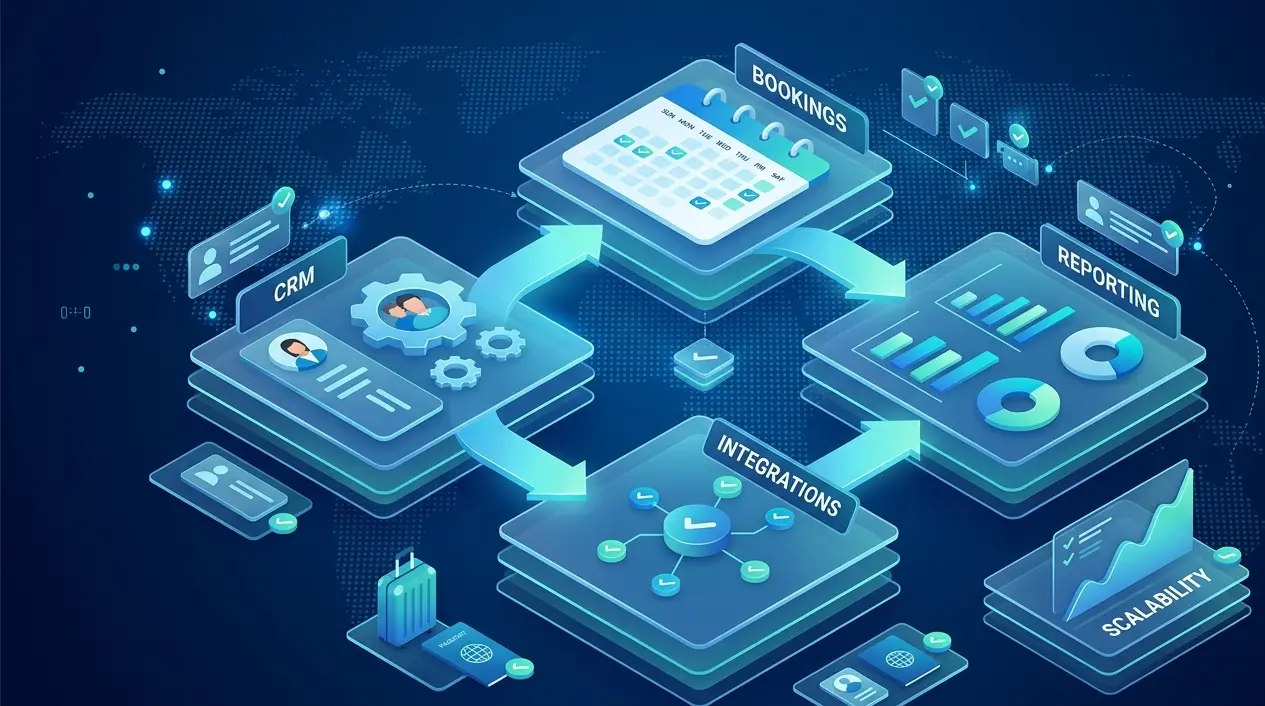
There are solutions specialized in tourism, such as Toursys, that integrate CRM with quotations, reservations and tourism operations in a single platform. This approach avoids working with isolated systems and facilitates a more orderly and scalable business management.
Implementing a basic CRM is not an end in itself, but the first step to professionalize tourism sales and build stronger and more sustainable business relationships over time.